The Story
Plant Bio
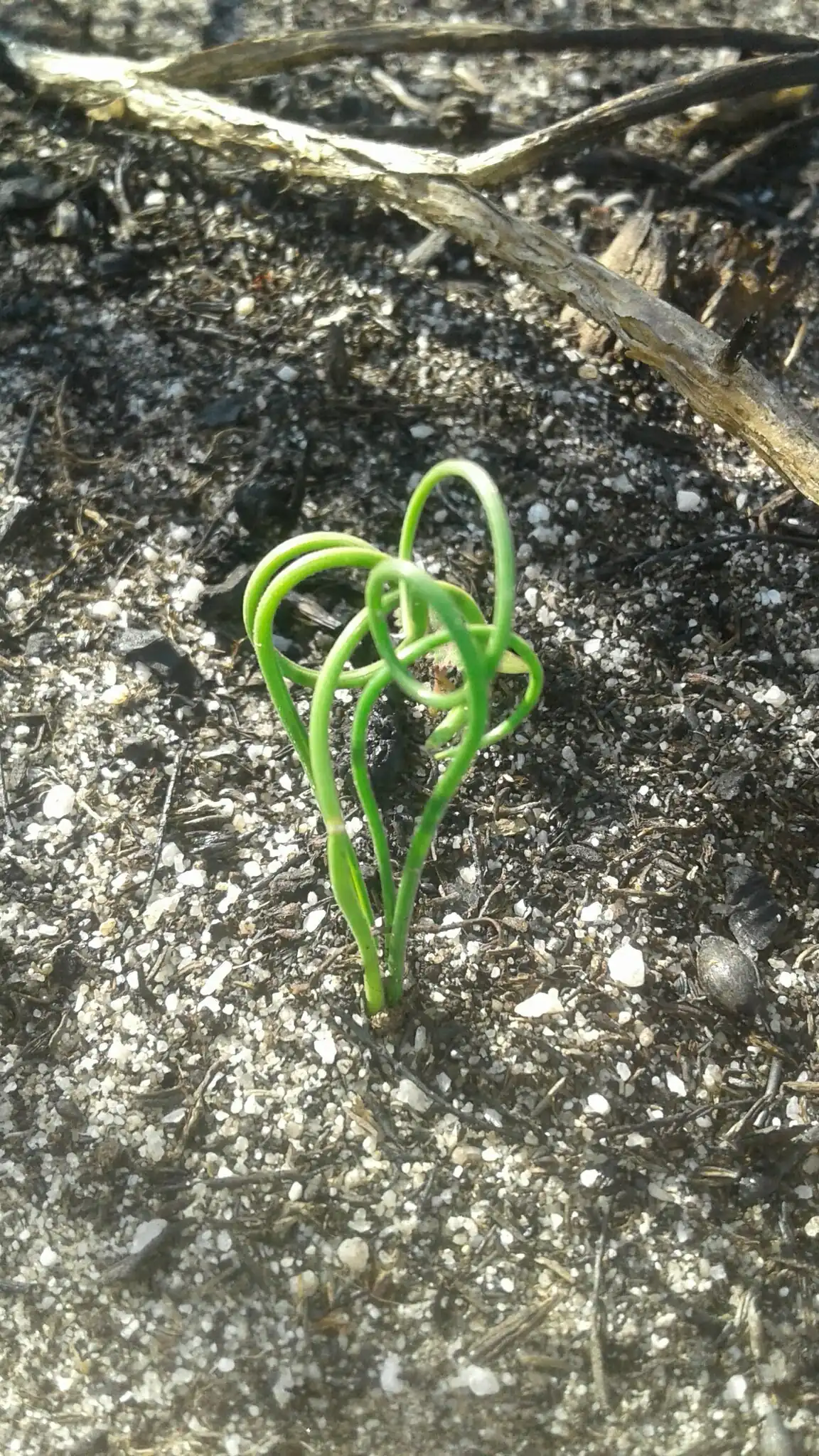
Albuca spiralis is a winter-growing deciduous bulb from the Western and Northern Cape with an ovoid bulb about two inches across and narrow fleshy leaves that emerge in fall and die back in summer. It sends up a fleshy bluish stalk to two feet carrying up to twenty nodding bells of green edged pale yellow with a vanilla scent.
What sets it apart is the degree of spiral, which tightens in very bright sun and cool 50 to 60 degree winter days and loosens in low light or warmth. Summer leaf loss is programmed dormancy, not death, and nursery stock sold as Frizzle Sizzle is a selected spiral form often confused with Albuca viscosa and Trachyandra tortilis.
Uses & Benefits:
Essentials
At a Glance
Plant Type
Bulb Corm Tuber
Height
8"
Width
6"
Light
Full Sun, Partial Sun
Zones
8, 9, 10
Water
Low
Humidity
Low
Lifespan
Perennial bulb
Native To
South Africa
Toxicity
Mildly toxic if ingested
Bloom period
Late winter – Spring
In flower about 4 months of the year
Planting
How to Grow
- Pot bulb with neck just above a very gritty cactus mix in a pot with drainage, in fall as growth resumes.
- Place in full sun to very bright partial sun with cool winter days around 50 to 60 degrees to keep coils tight.
- Water thoroughly when the top inch dries during active leaf growth and flowering, then empty the saucer.
- Withhold water as leaves yellow in early summer and keep the bulb almost dry and warm through dormancy.
- Resume watering when new spirals emerge in fall; feed once lightly with diluted balanced fertilizer during active growth, if at all.
Pro Tip
When leaves yellow and drop in summer, withhold water and keep the bulb dry until new coils emerge in fall; tight curl comes from full sun and cool 50 to 60 degree winter days.
Keep It Thriving
Care Guide
Do
- Give maximum sun for tight curl
- Use very gritty fast-draining mix and a pot with drainage
- Let mix dry between waterings in growth and keep dry in summer dormancy
Don't
- Do not water a leafless summer bulb
- Do not leave outdoors below 32F
- Do not cut green leaves to force shape
Seasonal Care Calendar
| Task | Jan | Feb | Mar | Apr | May | Jun | Jul | Aug | Sep | Oct | Nov | Dec |
|---|---|---|---|---|---|---|---|---|---|---|---|---|
| Deadhead | ||||||||||||
| Fertilize | ||||||||||||
| Lift Store | ||||||||||||
| Pest Check | ||||||||||||
| Plant |
Watch Out For
Pests & Diseases
Common Pests
Common Diseases
In the Garden
Landscape Uses & Companions
Landscape Uses
Multiply
Propagation Methods
Good to Know
Common Questions
Frizzle Sizzle questions
What zones can Frizzle Sizzle grow in?
Frizzle Sizzle is hardy in USDA Zones 8–10: in that range it survives winter in the ground. Colder than Zone 8, grow it in a container you can move to shelter for the winter, or as an annual.
When does Frizzle Sizzle bloom?
Frizzle Sizzle typically blooms from late winter to late spring. Exact timing shifts a week or two with your zone — Sow's bloom calendar maps it to your garden.
Does Frizzle Sizzle need full sun?
Frizzle Sizzle does best in full sun to part shade. In hot climates, afternoon shade keeps blooms fresher longer.
Is Frizzle Sizzle drought tolerant?
Yes — once established (usually after the first full season), Frizzle Sizzle handles dry spells with minimal watering. Water deeply its first year to build the root system that makes that possible.
Keep exploring
Explore the genus
Hardy in your zone?
Grow Frizzle Sizzle with confidence
See it in a design of your actual yard, get zone-matched care reminders, and track it season by season in your garden journal.