The Story
Plant Bio
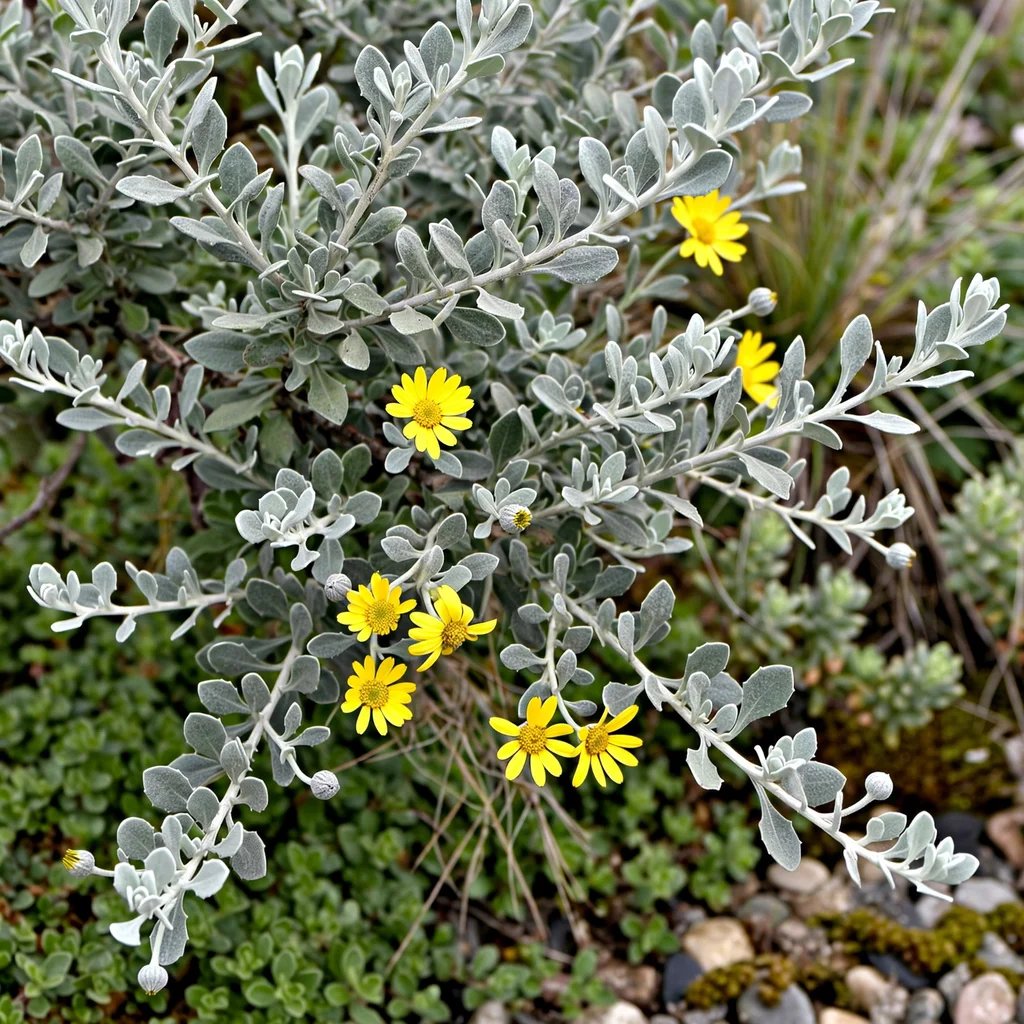
Chrysanthemoides incana is a fast-growing, low sprawling evergreen subshrub from the Western Cape to Namibia, forming a mat under 18 inches tall and 8 to 10 feet wide in cultivation. The leaves are small, ovate-spatulate and densely woolly gray, and the flowers are yellow daisies borne on and off through the year in mild climates.
Unlike its tall green-leaved relative Chrysanthemoides monilifera, this species stays low and silver-gray and does not reseed to become weedy in California gardens. The nursery trade keeps the name Chrysanthemoides incana for the compact gray-leaf clone, now placed by botanists in Osteospermum as Osteospermum incanum subsp. incanum.
Uses & Benefits:
Essentials
At a Glance
Plant Type
Groundcover
Height
18"
Width
120"
Light
Full Sun, Partial Sun
Zones
9, 10
Water
Low
Humidity
Low to moderate
Lifespan
Perennial
Native To
Western Cape, South Africa to Namibia
Toxicity
Unknown; no human toxicity reported
Bloom period
Year round
In flower about 12 months of the year
Planting
How to Grow
- Plant in full sun to light shade in sharply well-drained sandy or loamy soil, spacing 4 to 6 feet to allow spread.
- Water regularly for the first season to root out, then cut back to little to occasional deep watering.
- Top-dress with gravel or coarse mulch to keep the crown dry, not rich organic mulch.
- Tip back lightly after bloom flushes to keep the mat dense; do not cut into old bare wood.
Pro Tip
Plant high on a mound or slope and hold back summer water once rooted; a wet crown in heavy soil kills it faster than frost.
Keep It Thriving
Care Guide
Do
- Give full sun, sharp drainage, and room to spread 8 feet or more.
- Use it for coastal wind and salt exposure where other groundcovers burn.
- Water deeply but infrequently once established.
Don't
- Do not plant in heavy clay or low spots that stay wet in winter.
- Do not overwater in summer or fertilize heavily to push growth.
- Do not confuse green upright seedlings with this silver mat-forming clone.
Seasonal Care Calendar
| Task | Jan | Feb | Mar | Apr | May | Jun | Jul | Aug | Sep | Oct | Nov | Dec |
|---|---|---|---|---|---|---|---|---|---|---|---|---|
| Deadhead | ||||||||||||
| Mulch | ||||||||||||
| Pest Check | ||||||||||||
| Plant | ||||||||||||
| Prune |
Watch Out For
Pests & Diseases
Common Pests
Common Diseases
In the Garden
Landscape Uses & Companions
Landscape Uses
Multiply
Propagation Methods
Good to Know
Common Questions
Vaalbietou questions
What zones can Vaalbietou grow in?
Vaalbietou is hardy in USDA Zones 9–10: in that range it survives winter in the ground. Colder than Zone 9, grow it in a container you can move to shelter for the winter, or as an annual.
When does Vaalbietou bloom?
Vaalbietou typically blooms year-round. Exact timing shifts a week or two with your zone — Sow's bloom calendar maps it to your garden.
Does Vaalbietou need full sun?
Vaalbietou does best in full sun to part shade. In hot climates, afternoon shade keeps blooms fresher longer.
Is Vaalbietou drought tolerant?
Yes — once established (usually after the first full season), Vaalbietou handles dry spells with minimal watering. Water deeply its first year to build the root system that makes that possible.
Keep exploring
Explore the genus
Hardy in your zone?
Grow Vaalbietou with confidence
See it in a design of your actual yard, get zone-matched care reminders, and track it season by season in your garden journal.