The Story
Plant Bio
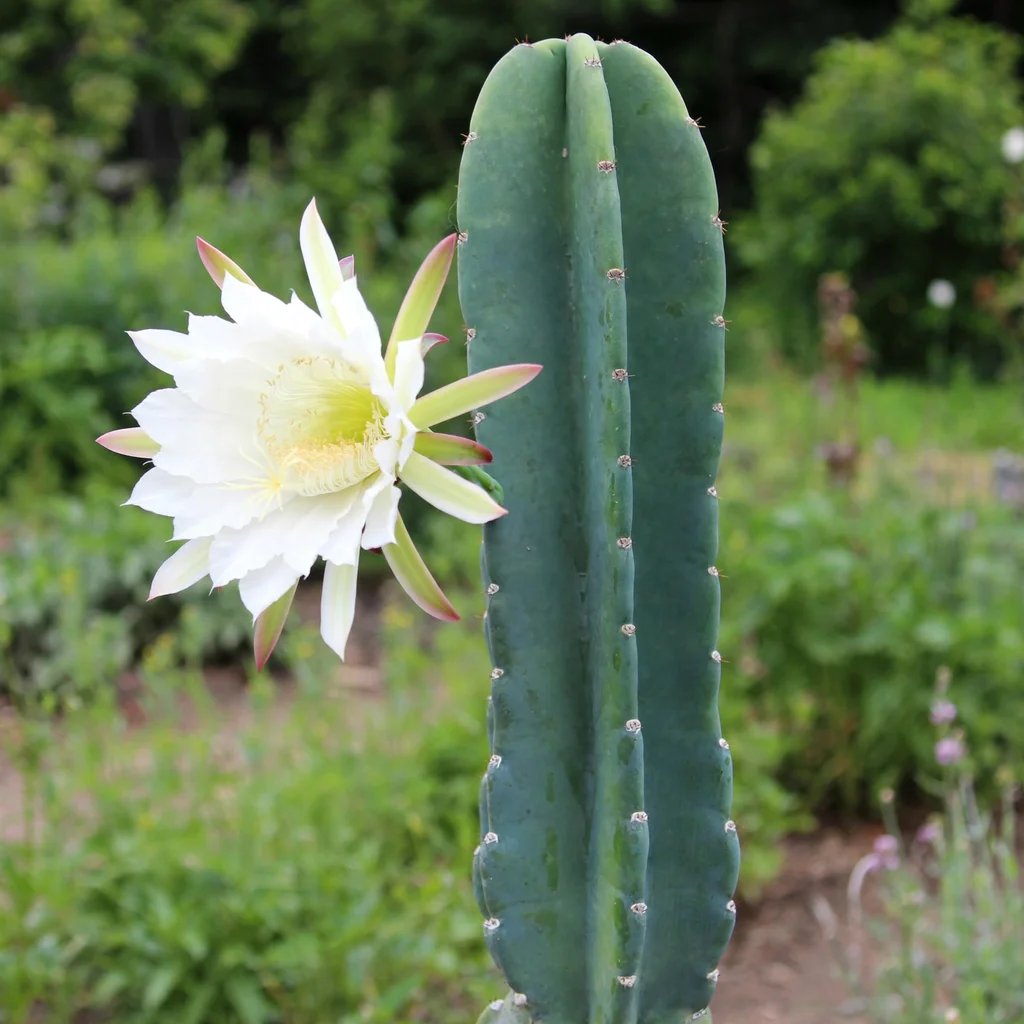
Cereus repandus is a large tree-like columnar cactus from arid South America, forming upright gray-green to blue-green ribbed stems that branch from the base with age. It carries no true leaves; photosynthesis occurs in the 8- to 13-ribbed columns, whose areoles bear gray-brown spines to 2 inches long.
Sold as Cereus peruvianus, this is the trade name for the same plant, now treated as a synonym of C. repandus and often confused with C. hildmannianus in the trade. It is distinguished by massive 4- to 8-inch-diameter columns reaching 10 to 30 feet in gardens, opening large nocturnal cream-white funnel flowers 6 to 8 inches long for a single night before forming red-yellow apple-like fruit.
Uses & Benefits:
Essentials
At a Glance
Plant Type
Cactus Succulent
Height
360"
Width
72"
Light
Full Sun, Partial Sun
Zones
9, 10
Water
Low
Humidity
Low
Lifespan
Long-lived perennial
Native To
South America
Toxicity
Non-toxic, spiny
Bloom period
Late spring – Fall
In flower about 7 months of the year
Planting
How to Grow
- Plant in full sun in a sharply draining cactus mix of about 50% potting soil with sand and perlite or gravel.
- Set container plants at the same depth as in the nursery pot, or plant landscape specimens in a raised mound where water never stands.
- Water deeply after planting, then wait until the mix is completely dry before watering again.
- Feed lightly with cactus fertilizer only during active growth in spring and summer.
- Move potted plants indoors before first frost and overwinter cool and dry at 50-55F with maximum light.
Pro Tip
Water deeply only when the mix is dry all the way through, then withhold water until it dries again; constant moisture rots the roots faster than any drought will harm the stem.
Keep It Thriving
Care Guide
Do
- Give 6 to 8 hours of direct sun, with afternoon shade only in extreme desert heat.
- Use a pot with large drainage holes and empty the saucer after watering.
- Wear heavy gloves and eye protection when handling or repotting.
Don't
- Do not overwater or leave the plant standing in wet soil or a full saucer.
- Do not cut back healthy columns to control size; it does not regrow well from hard pruning.
- Do not feed in fall or winter or use high-nitrogen fertilizer.
Seasonal Care Calendar
| Task | Jan | Feb | Mar | Apr | May | Jun | Jul | Aug | Sep | Oct | Nov | Dec |
|---|---|---|---|---|---|---|---|---|---|---|---|---|
| Fertilize | ||||||||||||
| Pest Check | ||||||||||||
| Plant | ||||||||||||
| Propagate | ||||||||||||
| Winter Prep |
Watch Out For
Pests & Diseases
Common Pests
Common Diseases
In the Garden
Landscape Uses & Companions
Landscape Uses
Multiply
Propagation Methods
Good to Know
Common Questions
Peruvian Apple Cactus questions
What zones can Peruvian Apple Cactus grow in?
Peruvian Apple Cactus is hardy in USDA Zones 9–10: in that range it survives winter in the ground. Colder than Zone 9, grow it in a container you can move to shelter for the winter, or as an annual.
Is Peruvian Apple Cactus deer resistant?
Yes — Peruvian Apple Cactus is rated deer-resistant. Deer typically pass it over, though extreme hunger can override any plant's defenses.
When does Peruvian Apple Cactus bloom?
Peruvian Apple Cactus typically blooms from late spring to late fall. Exact timing shifts a week or two with your zone — Sow's bloom calendar maps it to your garden.
Does Peruvian Apple Cactus need full sun?
Peruvian Apple Cactus does best in full sun to part shade. In hot climates, afternoon shade keeps blooms fresher longer.
Is Peruvian Apple Cactus drought tolerant?
Yes — once established (usually after the first full season), Peruvian Apple Cactus handles dry spells with minimal watering. Water deeply its first year to build the root system that makes that possible.
Keep exploring
Explore the genus
Hardy in your zone?
Grow Peruvian Apple Cactus with confidence
See it in a design of your actual yard, get zone-matched care reminders, and track it season by season in your garden journal.