The Story
Plant Bio
Thunbergia grandiflora is a woody-stemmed evergreen twiner from the eastern Himalaya to southwest China and Indochina that climbs 15 to 30 feet in a frost-free year over trellis, fence or trees. Its heart-shaped leaves are carried on wingless stalks along fast-growing stems that harden and scramble with age.
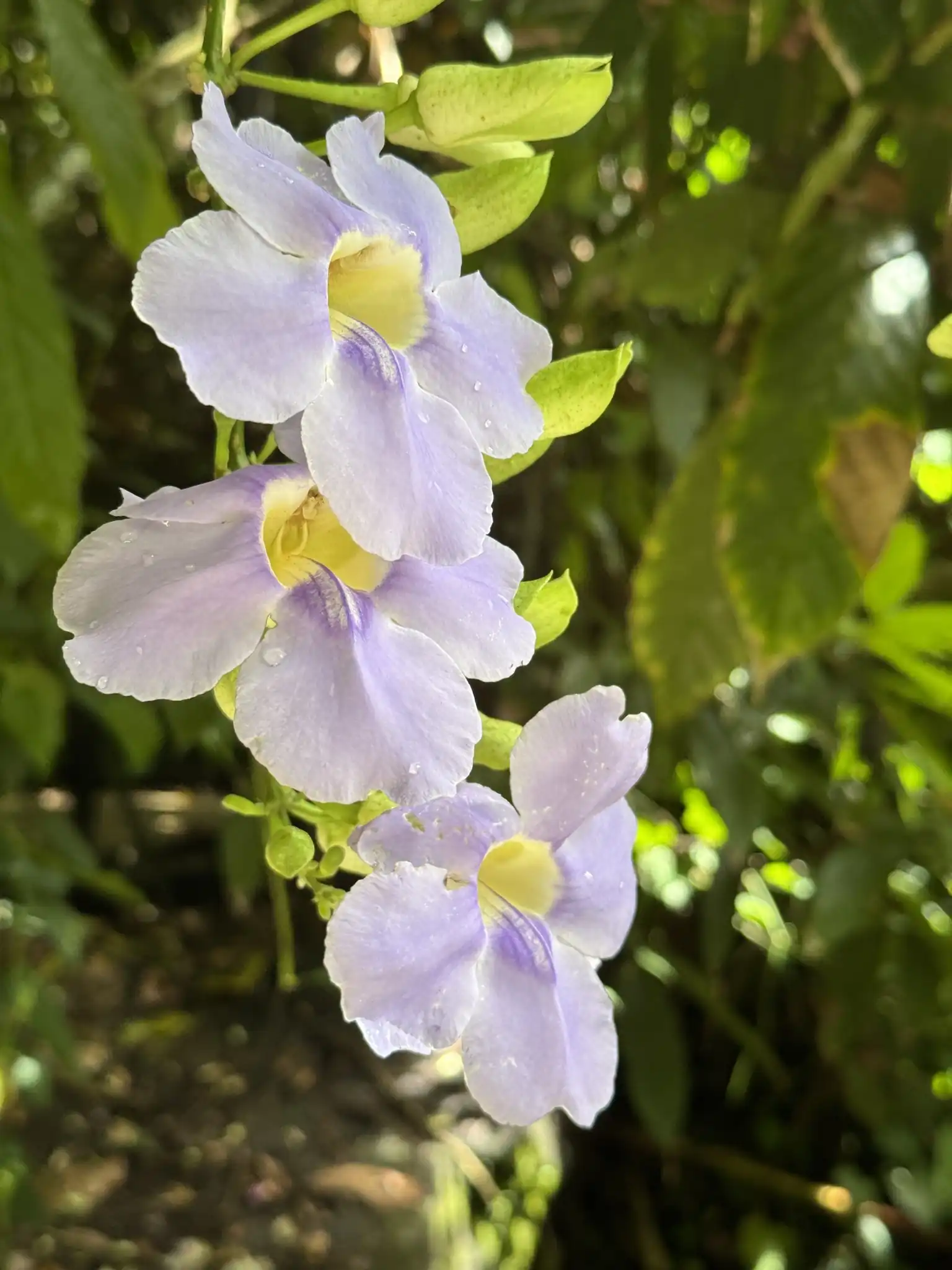
It carries large sky-blue to pale lavender trumpets with a yellow throat in hanging axillary and terminal racemes from spring to fall. A white form known as Alba is in cultivation, and cut stems resprout readily so unchecked growth smothers nearby planting.
Uses & Benefits:
Essentials
At a Glance
Plant Type
Vine
Height
300"
Width
72"
Light
Full Sun, Partial Sun
Zones
10
Water
Consistently moist
Humidity
High
Lifespan
Perennial in zones 10-11, grown as annual elsewhere
Native To
East Himalaya to Myanmar, India, Nepal, Indochina and southwest China
Toxicity
Considered non-toxic; stiff hairs may irritate skin
Bloom period
Spring – Fall
In flower about 9 months of the year
Planting
How to Grow
- Plant in full sun to partial shade in consistently moist but not waterlogged soil once frost danger has passed.
- Provide a strong trellis or fence and tie stems in early, then water regularly to keep soil evenly moist.
- Feed with balanced water-soluble fertilizer every two to three weeks during the growing season or use a single slow-release application.
- Prune to control vigor and move containers indoors to a warm sunny spot before frost.
Pro Tip
Cut back hard after flowering to hold it within bounds and bag the trimmings because stem fragments resprout.
Keep It Thriving
Care Guide
Do
- Water regularly to maintain even moisture
- Feed through the growing season
- Provide sturdy support and tie stems in early
Don't
- Do not let soil become waterlogged
- Do not plant near natural areas where it can naturalize
- Do not compost trimmings where fragments can resprout
Seasonal Care Calendar
| Task | Jan | Feb | Mar | Apr | May | Jun | Jul | Aug | Sep | Oct | Nov | Dec |
|---|---|---|---|---|---|---|---|---|---|---|---|---|
| Fertilize | ||||||||||||
| Lift Store | ||||||||||||
| Pest Check | ||||||||||||
| Plant | ||||||||||||
| Prune |
Watch Out For
Pests & Diseases
Common Pests
Common Diseases
In the Garden
Landscape Uses & Companions
Landscape Uses
Companion Plants
Multiply
Propagation Methods
Good to Know
Common Questions
Blue Trumpet Vine questions
What zones can Blue Trumpet Vine grow in?
Blue Trumpet Vine is hardy in USDA Zone 10: in that range it survives winter in the ground. Colder than Zone 10, grow it in a container you can move to shelter for the winter, or as an annual.
When does Blue Trumpet Vine bloom?
Blue Trumpet Vine typically blooms from spring to fall. Exact timing shifts a week or two with your zone — Sow's bloom calendar maps it to your garden.
Does Blue Trumpet Vine need full sun?
Blue Trumpet Vine does best in full sun to part shade. In hot climates, afternoon shade keeps blooms fresher longer.
More Thunbergia to compare
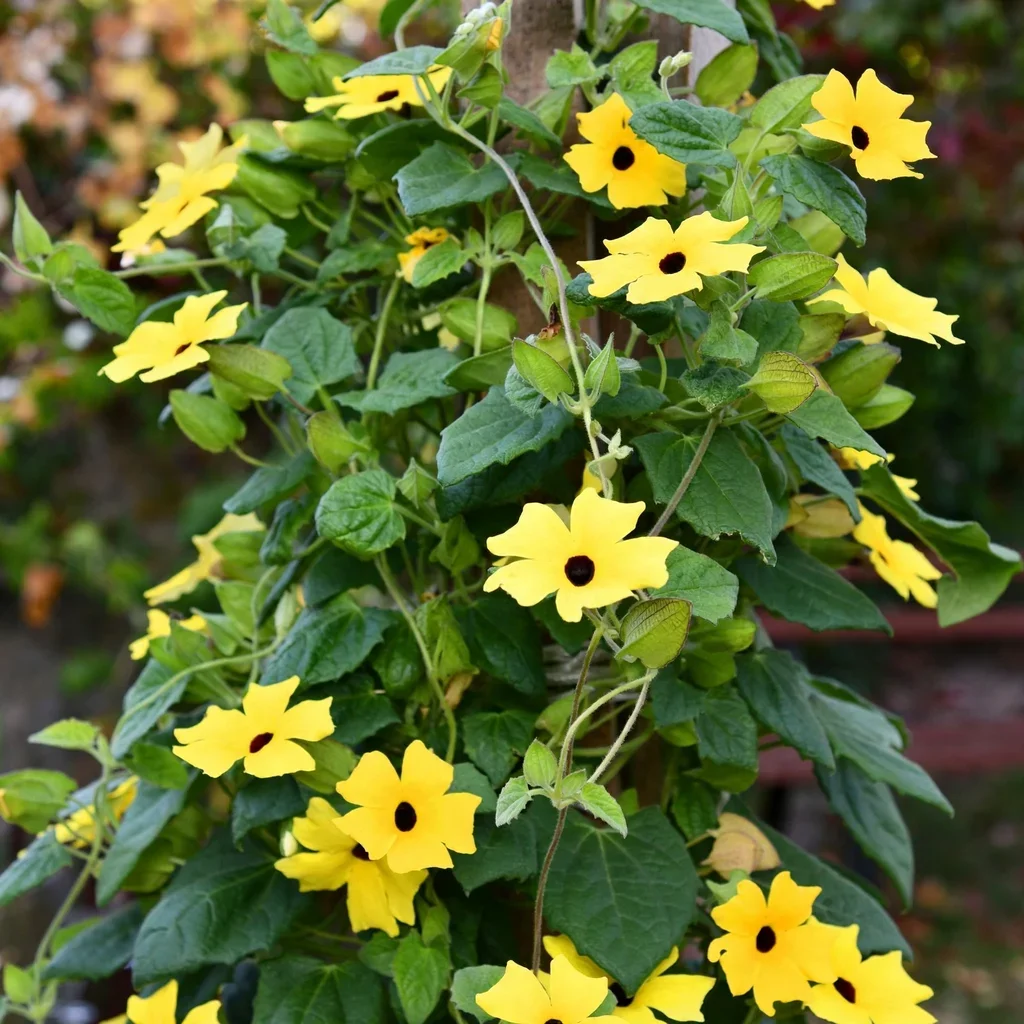
Black-eyed Susan Vine
Thunbergia alata
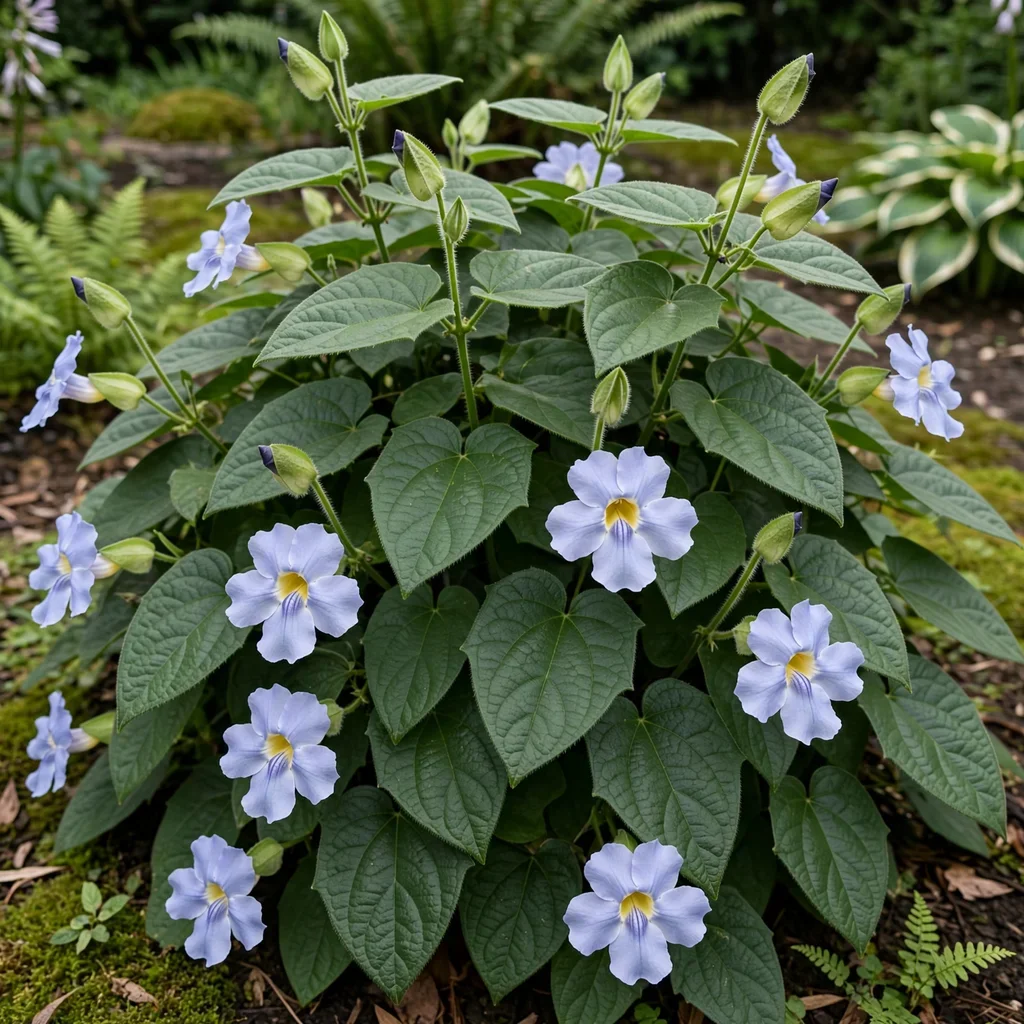
Natal Bluebell
Thunbergia natalensis
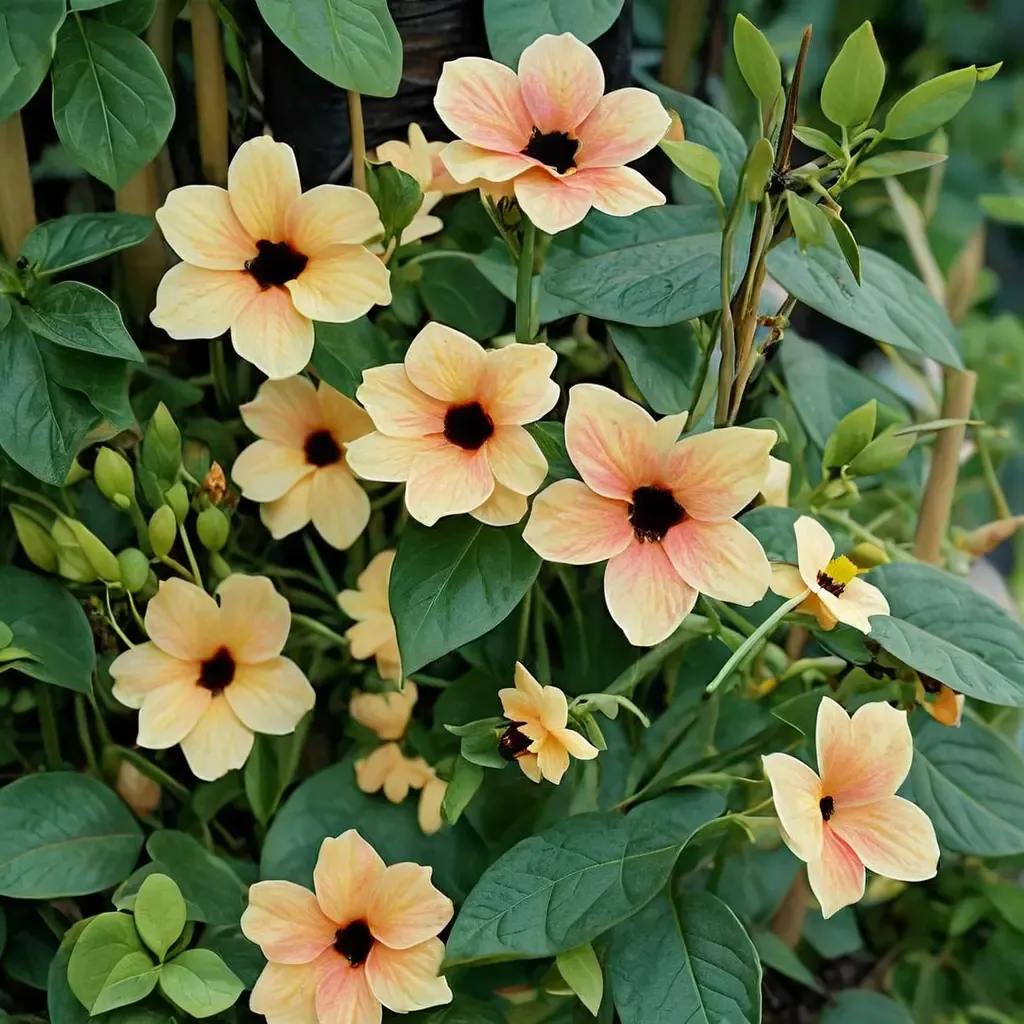
African Sunset Black-Eyed Susan Vine
Thunbergia alata 'African Sunset'
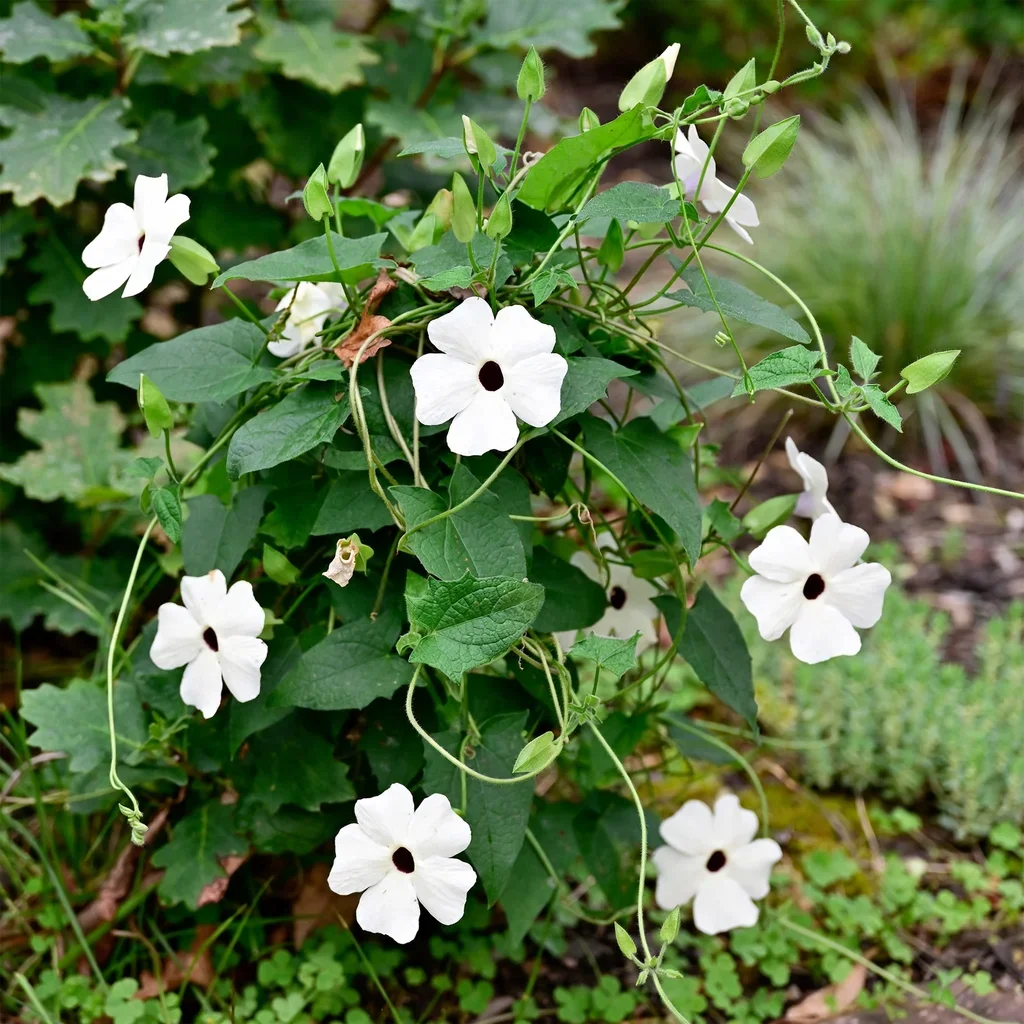
White Halo Black-eyed Susan Vine
Thunbergia alata 'White Halo'
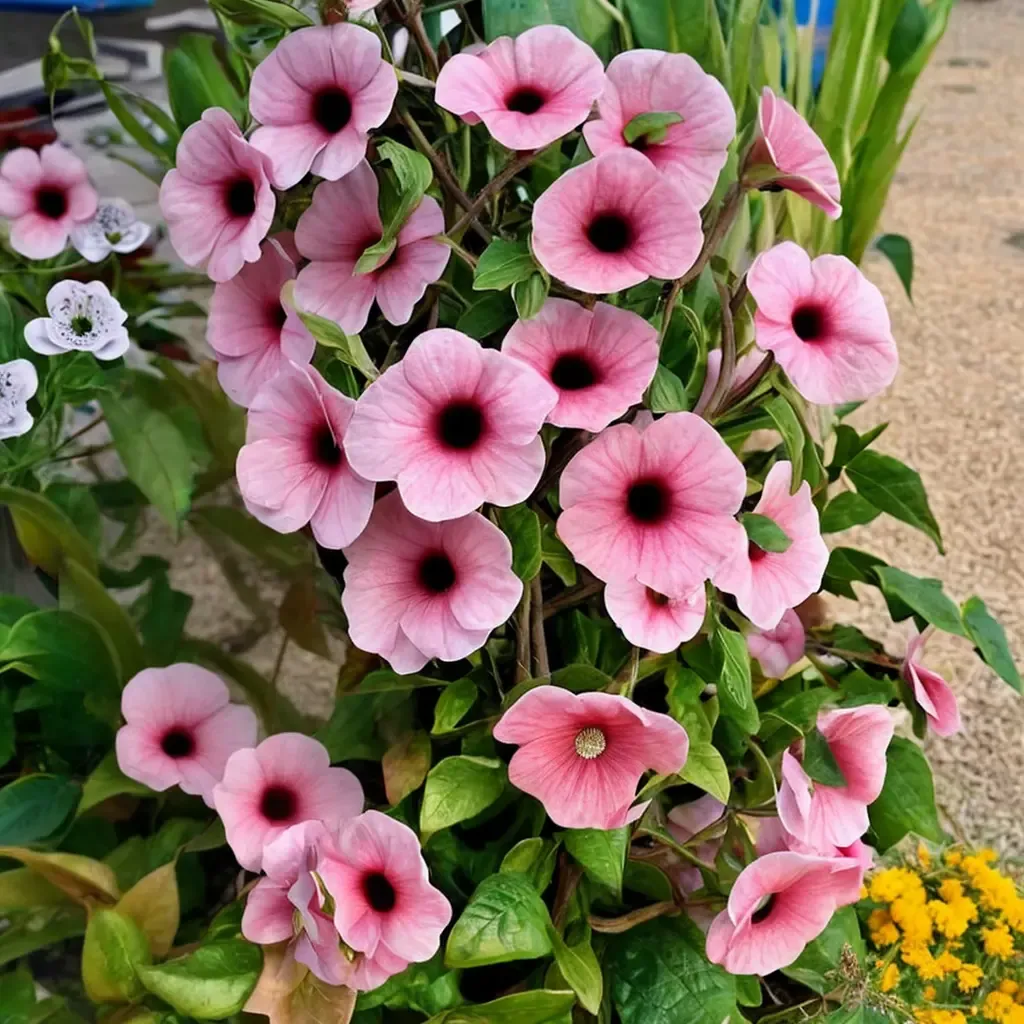
Rose Sensation Black-eyed Susan Vine
Thunbergia alata 'Rose Sensation'
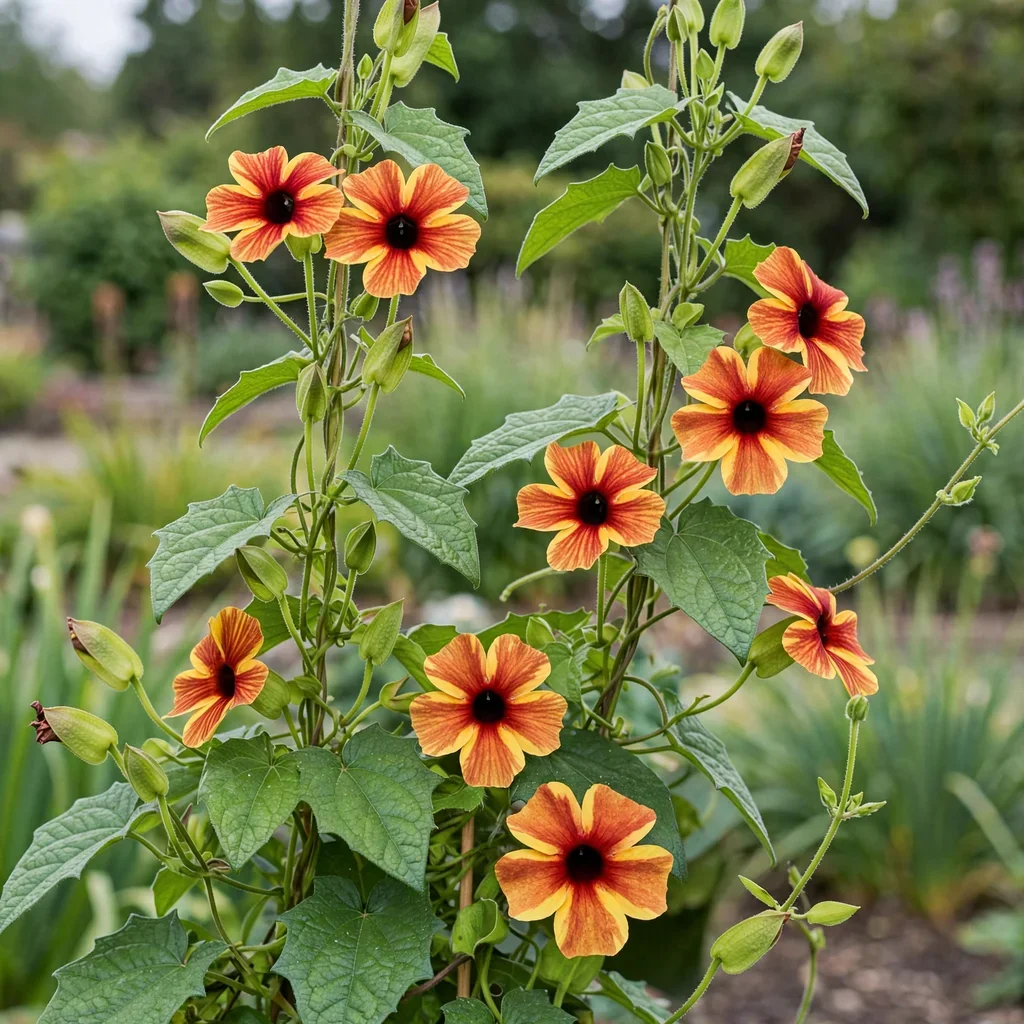
Black-eyed Susan Vine Thunbergia Amber Stripes
Thunbergia alata 'Amber Stripes'
Keep exploring
Explore the genus
Hardy in your zone?
Grow Blue Trumpet Vine with confidence
See it in a design of your actual yard, get zone-matched care reminders, and track it season by season in your garden journal.