The Story
Plant Bio
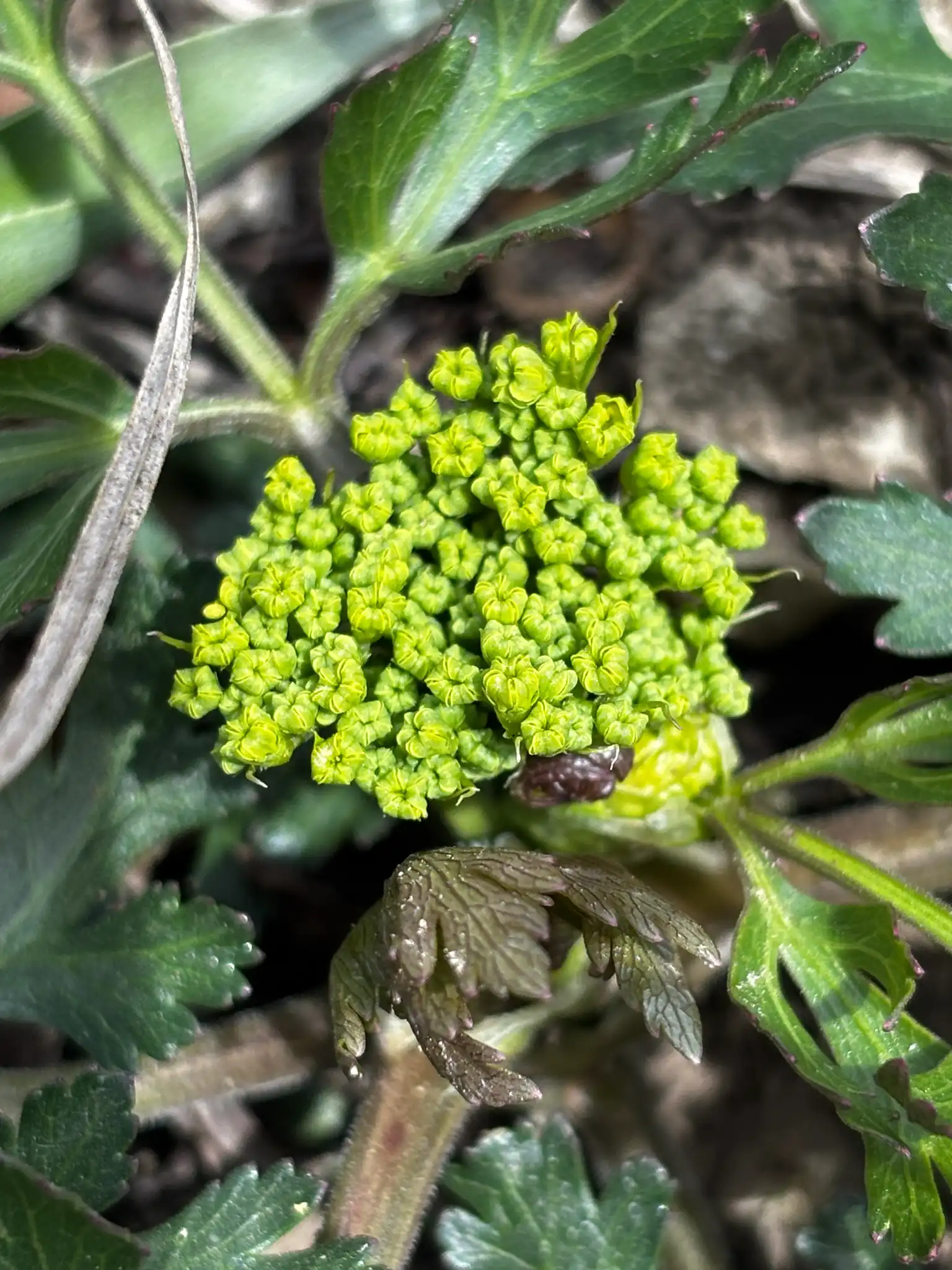
Polytaenia nuttallii is a taprooted biennial or short-lived perennial of the carrot family, forming a deeply cut basal rosette for two to four years before sending up a single stout erect stem 18 to 36 inches tall. The foliage is twice-divided with toothed leaflets to 17 inches long, and the dry stems remain standing through winter.
It blooms in spring into summer on compound umbels about 2 inches across with 10 to 20 rays of small yellow to greenish-yellow flowers, the small umbellets lacking bracts. It is a larval host for Black swallowtail and is separated from wild parsnip by finer-cut foliage and bractless umbellets, though first-year rosettes sit low for several seasons before blooming.
Uses & Benefits:
Essentials
At a Glance
Plant Type
Perennial
Height
36"
Width
16"
Light
Full Sun, Partial Sun
Zones
5, 6
Water
Low to medium
Humidity
Average
Lifespan
Biennial or short-lived perennial
Native To
Central U.S.
Toxicity
Unknown
Bloom period
Spring – Summer
In flower about 6 months of the year
Planting
How to Grow
- Sow seed in place in full sun in well-drained sandy or loamy soil.
- Sow 1/4 inch deep in fall or early spring and water to settle.
- Thin to one rosette per 16 inches and leave undisturbed to form a taproot.
- Allow bloom in year two to four, then let umbels ripen and drop seed.
- Leave dry stems standing over winter and cut to the base in early spring.
Pro Tip
Leave first-year rosettes undisturbed and never divide them; let plants self-sow to replace the short-lived crowns.
Keep It Thriving
Care Guide
Do
- Plant in full sun in well-drained soil that stays dry to medium-moist.
- Leave rosettes in place for 2 to 4 years to build the taproot.
- Allow spent umbels to ripen and self-sow to replace short-lived plants.
Don't
- Do not divide or transplant established plants.
- Do not cut winter stems until new rosette growth starts in spring.
- Do not hoe out young rosettes mistaking them for weeds.
Seasonal Care Calendar
| Task | Jan | Feb | Mar | Apr | May | Jun | Jul | Aug | Sep | Oct | Nov | Dec |
|---|---|---|---|---|---|---|---|---|---|---|---|---|
| Pest Check | ||||||||||||
| Plant | ||||||||||||
| Propagate | ||||||||||||
| Spring Cleanup |
Watch Out For
Pests & Diseases
Common Pests
Common Diseases
In the Garden
Landscape Uses & Companions
Landscape Uses
Multiply
Propagation Methods
Good to Know
Common Questions
Prairie Parsley questions
What zones can Prairie Parsley grow in?
Prairie Parsley is hardy in USDA Zones 5–6: in that range it survives winter in the ground. Colder than Zone 5, grow it in a container you can move to shelter for the winter, or as an annual. Warmer than Zone 6, winter isn't the problem: it prefers colder winters, and summer heat can shorten its life.
When does Prairie Parsley bloom?
Prairie Parsley typically blooms from spring to summer. Exact timing shifts a week or two with your zone — Sow's bloom calendar maps it to your garden.
Does Prairie Parsley need full sun?
Prairie Parsley does best in full sun to part shade. In hot climates, afternoon shade keeps blooms fresher longer.
Is Prairie Parsley drought tolerant?
Yes — once established (usually after the first full season), Prairie Parsley handles dry spells with minimal watering. Water deeply its first year to build the root system that makes that possible.
Keep exploring
Explore the genus
Hardy in your zone?
Grow Prairie Parsley with confidence
See it in a design of your actual yard, get zone-matched care reminders, and track it season by season in your garden journal.