The Story
Plant Bio
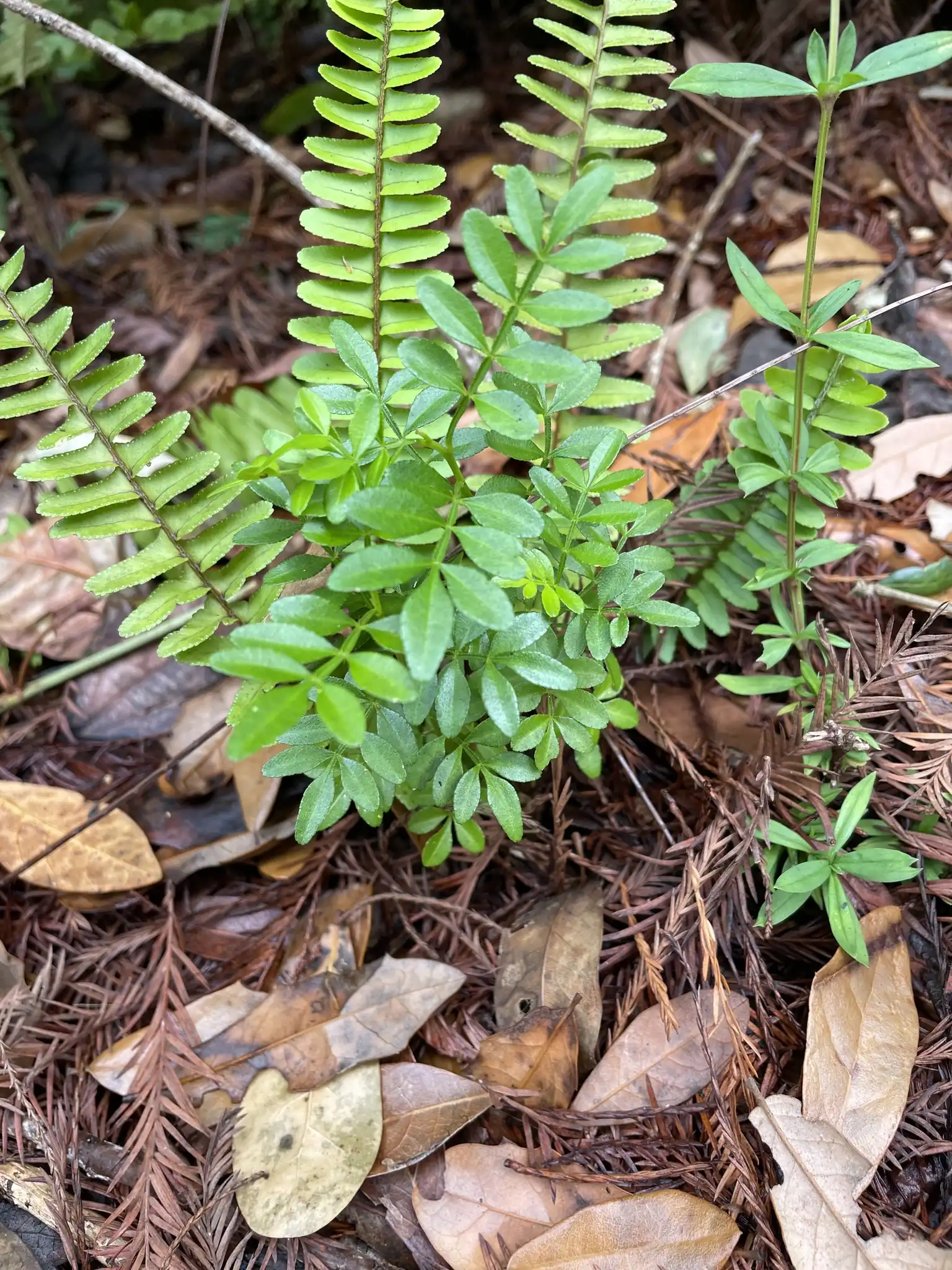
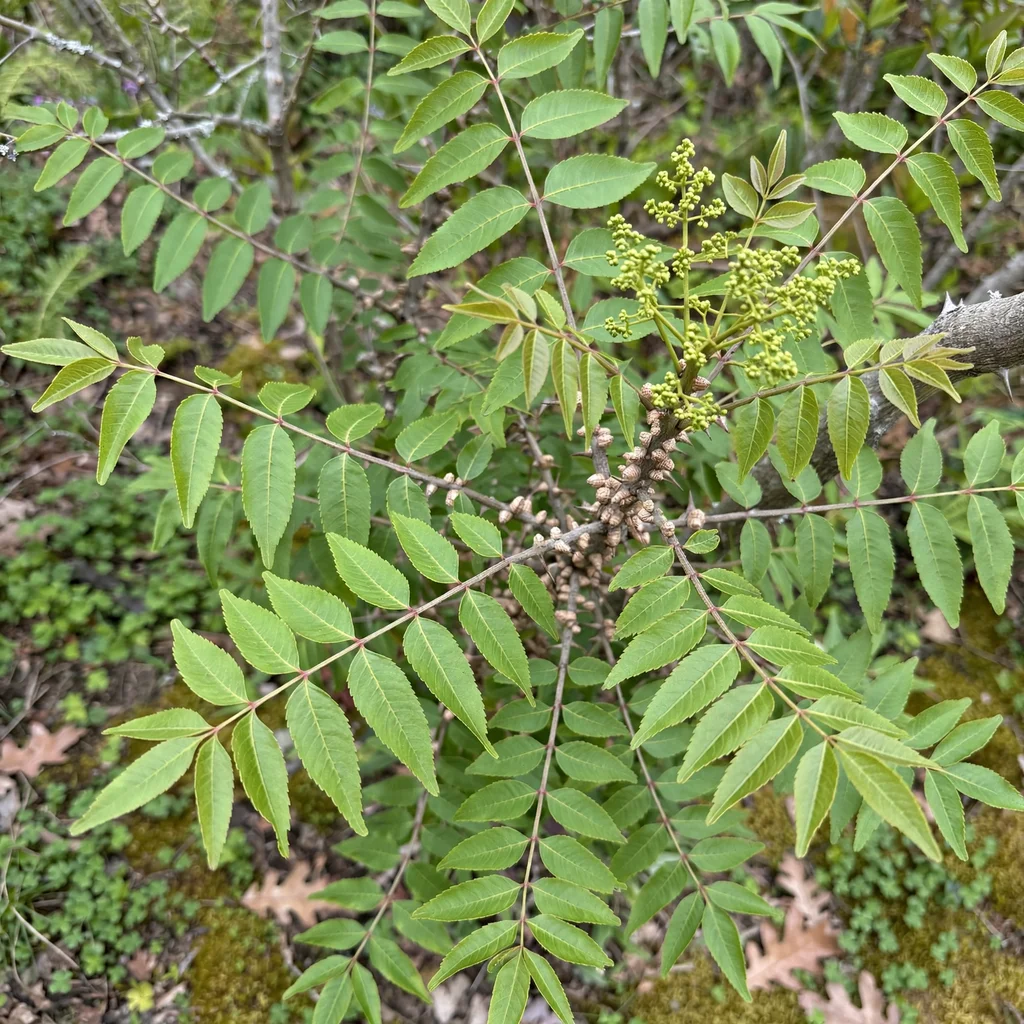
Zanthoxylum fagara is an evergreen shrub to small tree reaching 15 to 25 feet with a spreading rounded crown on a short leaning trunk and zigzag branchlets. The leaves are pinnately compound 3 to 4 inches long with small shiny oval leaflets dotted with oil glands that release a lime scent when crushed.
Unlike a true lime, this citrus cousin carries sharp hooked spines to half an inch long at the leaf bases and grows as separate male and female plants, with fruit forming only on females near a male. Crushed leaves and fruit tingle then numb the mouth like Sichuan pepper, and the foliage is a primary larval food for giant and Schaus swallowtails.
Uses & Benefits:
Essentials
At a Glance
Plant Type
Shrub
Height
240"
Width
210"
Light
Full Sun, Partial Sun, Shade
Zones
8, 9, 10
Water
Low
Humidity
Tolerant
Lifespan
Long-lived woody shrub
Native To
South Florida, South Texas to Paraguay
Toxicity
Non-toxic but spiny; foliage numbs mouth
Bloom period
Winter – Summer
In flower about 9 months of the year
Planting
How to Grow
- Plant in full sun to part shade in sand, loam, or clay that drains freely.
- Set the root ball level with the soil and water in deeply to settle.
- Mulch 2 to 3 inches deep, keeping mulch off the trunk.
- Water regularly until established, then cut back to low supplemental water.
Pro Tip
Set it well back from paths and prune in late winter to contain sprawl, wearing heavy gloves against the hooked spines.
Keep It Thriving
Care Guide
Do
- Give it full sun for densest growth and best flowering.
- Prune only as needed to control sprawl or train as a hedge.
- Wear eye protection and heavy gloves when pruning around spines.
Don't
- Do not plant beside walkways, patios, or play areas.
- Do not overwater or set in soil that stays soggy.
- Do not shear into old bare wood expecting fast regrowth.
Seasonal Care Calendar
| Task | Jan | Feb | Mar | Apr | May | Jun | Jul | Aug | Sep | Oct | Nov | Dec |
|---|---|---|---|---|---|---|---|---|---|---|---|---|
| Mulch | ||||||||||||
| Pest Check | ||||||||||||
| Plant | ||||||||||||
| Prune |
Watch Out For
Pests & Diseases
Common Pests
Common Diseases
In the Garden
Landscape Uses & Companions
Landscape Uses
Multiply
Propagation Methods
Good to Know
Common Questions
Wild Lime questions
What zones can Wild Lime grow in?
Wild Lime is hardy in USDA Zones 8–10: in that range it survives winter in the ground. Colder than Zone 8, grow it in a container you can move to shelter for the winter.
When does Wild Lime bloom?
Wild Lime typically blooms from winter to summer. Exact timing shifts a week or two with your zone — Sow's bloom calendar maps it to your garden.
Does Wild Lime need full sun?
Wild Lime does best in full sun to part shade. In hot climates, afternoon shade keeps blooms fresher longer.
Is Wild Lime drought tolerant?
Yes — once established (usually after the first full season), Wild Lime handles dry spells with minimal watering. Water deeply its first year to build the root system that makes that possible.
More Zanthoxylum to compare
Keep exploring
Explore the genus
Hardy in your zone?
Grow Wild Lime with confidence
See it in a design of your actual yard, get zone-matched care reminders, and track it season by season in your garden journal.