The Story
Plant Bio
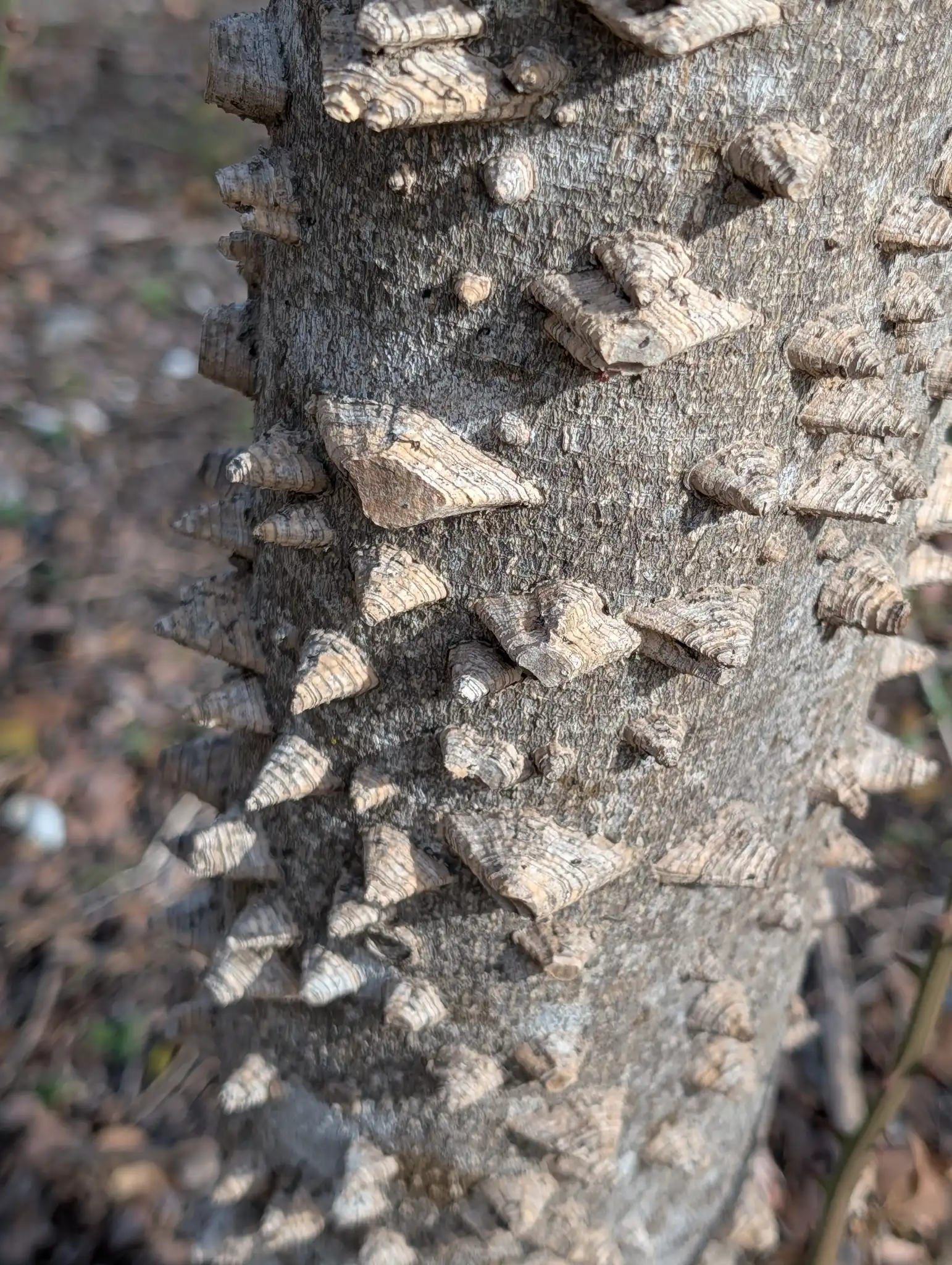
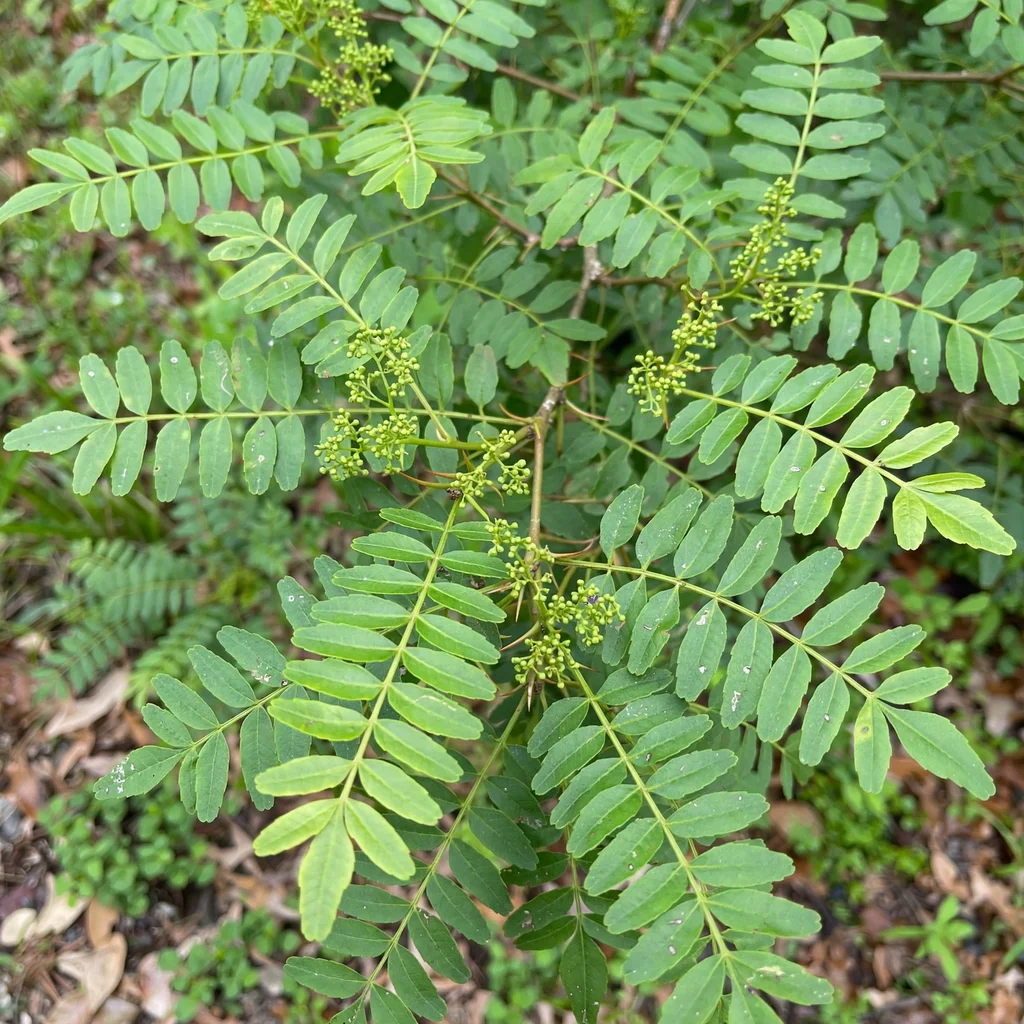
Zanthoxylum clava-herculis, Hercules' club, is a deciduous spiny tree of the citrus family reaching 10 to 20 feet in gardens and to 30 feet in the wild, with gray bark armed with warty cone-based prickles. The once-pinnate aromatic leaves carry tiny oil glands, and small greenish-yellow flowers open in branched terminal panicles to 8 inches long in spring before the leaves expand.
Unlike Aralia spinosa, which shares the Hercules-club name, this species bears once-divided leaves and stout warty thorns on trunk and branches rather than giant twice-compound leaves. Plants are dioecious and sucker to form thickets, with female plants carrying clusters of red follicles that ripen dark red to black, and bark and leaves that numb the tongue when chewed.
Uses & Benefits:
Essentials
At a Glance
Plant Type
Tree
Height
360"
Width
180"
Light
Full Sun, Partial Sun
Zones
7, 8, 9
Water
Medium
Humidity
Tolerant
Lifespan
Long-lived tree
Native To
Southeastern USA
Toxicity
Spiny; mouth-numbing bark and leaves
Bloom period
Spring
In flower about 3 months of the year
Planting
How to Grow
- Plant in full sun to part shade in moist well-drained sandy soil, in zones 7-9.
- Set the root ball level with the soil surface and water in deeply.
- Mulch 2 inches deep, kept back from the trunk.
- Give it room to spread and keep it well back from walkways and play areas.
- Remove root suckers in winter if a single-trunk tree is wanted.
Pro Tip
Site it well back from paths and cut root suckers at the base each winter to hold a single trunk.
Keep It Thriving
Care Guide
Do
- Do plant away from foot traffic because of trunk and branch spines.
- Do grow in moist but well-drained soil and avoid waterlogged spots.
- Do leave female fruit clusters for wildlife.
Don't
- Don't plant beside narrow paths, patios, or mailboxes.
- Don't let suckers run if you want a single tree form.
- Don't chew bark, leaves, or twigs; they tingle and numb the mouth.
Seasonal Care Calendar
| Task | Jan | Feb | Mar | Apr | May | Jun | Jul | Aug | Sep | Oct | Nov | Dec |
|---|---|---|---|---|---|---|---|---|---|---|---|---|
| Mulch | ||||||||||||
| Pest Check | ||||||||||||
| Plant | ||||||||||||
| Propagate | ||||||||||||
| Prune |
Watch Out For
Pests & Diseases
Common Pests
Common Diseases
In the Garden
Landscape Uses & Companions
Landscape Uses
Companion Plants
Multiply
Propagation Methods
Good to Know
Common Questions
Hercules' Club questions
What zones can Hercules' Club grow in?
Hercules' Club is hardy in USDA Zones 7–9: in that range it survives winter in the ground. Colder than Zone 7, winters are too cold for it to survive outdoors. Warmer than Zone 9, winter isn't the problem: it prefers colder winters, and summer heat can shorten its life.
When does Hercules' Club bloom?
Hercules' Club typically blooms in spring. Exact timing shifts a week or two with your zone — Sow's bloom calendar maps it to your garden.
Does Hercules' Club need full sun?
Hercules' Club does best in full sun to part shade. In hot climates, afternoon shade keeps blooms fresher longer.
More Zanthoxylum to compare
Keep exploring
Explore the genus
Hardy in your zone?
Grow Hercules' Club with confidence
See it in a design of your actual yard, get zone-matched care reminders, and track it season by season in your garden journal.