The Story
Plant Bio
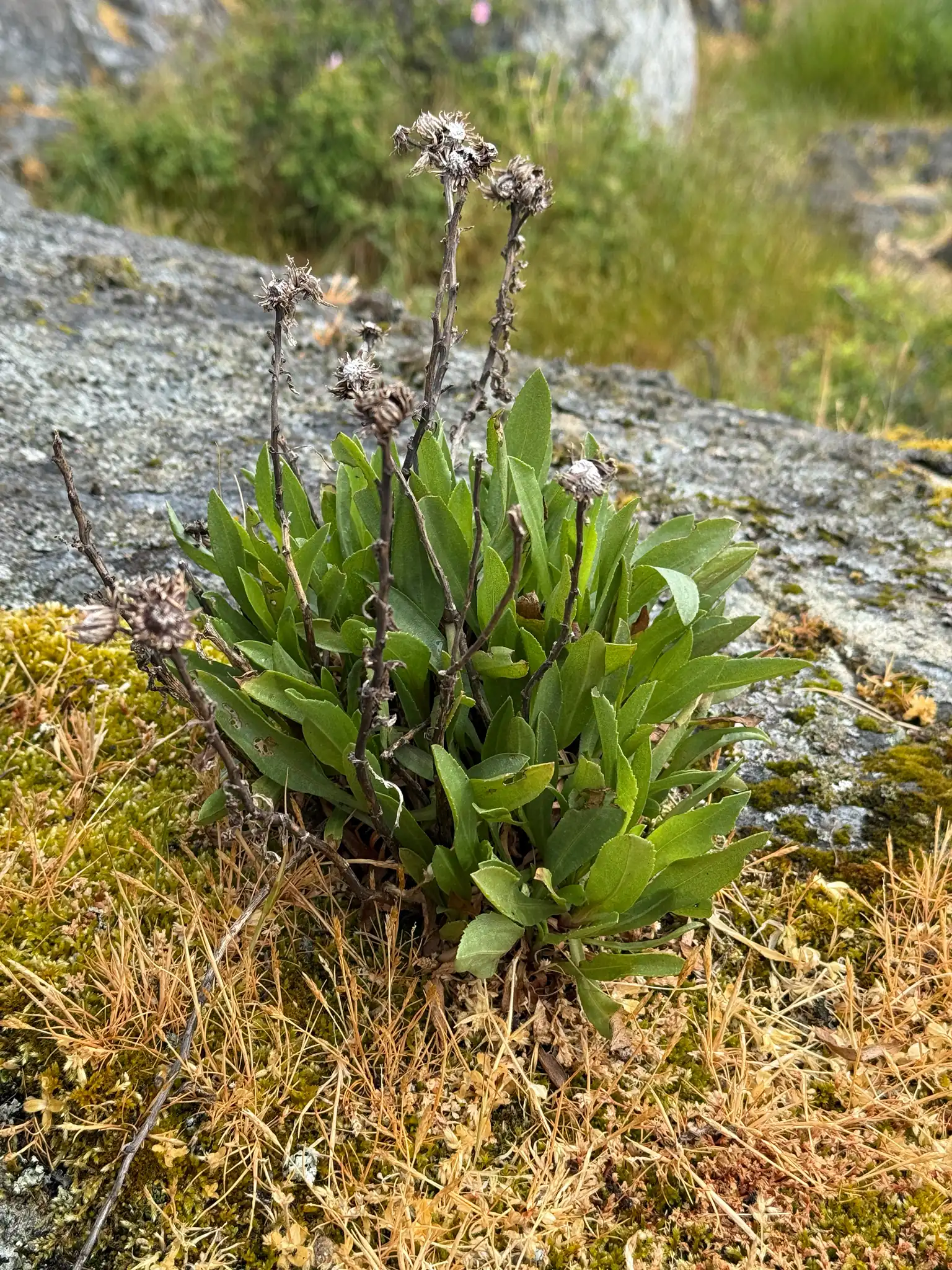
Grindelia integrifolia is an herbaceous perennial or subshrub native to coastal headlands, salt marshes, and moist valleys of the Pacific Northwest. It forms a stout, branching woody base with narrow foliage covered in fine hairs and dotted with a sticky, resinous gum.
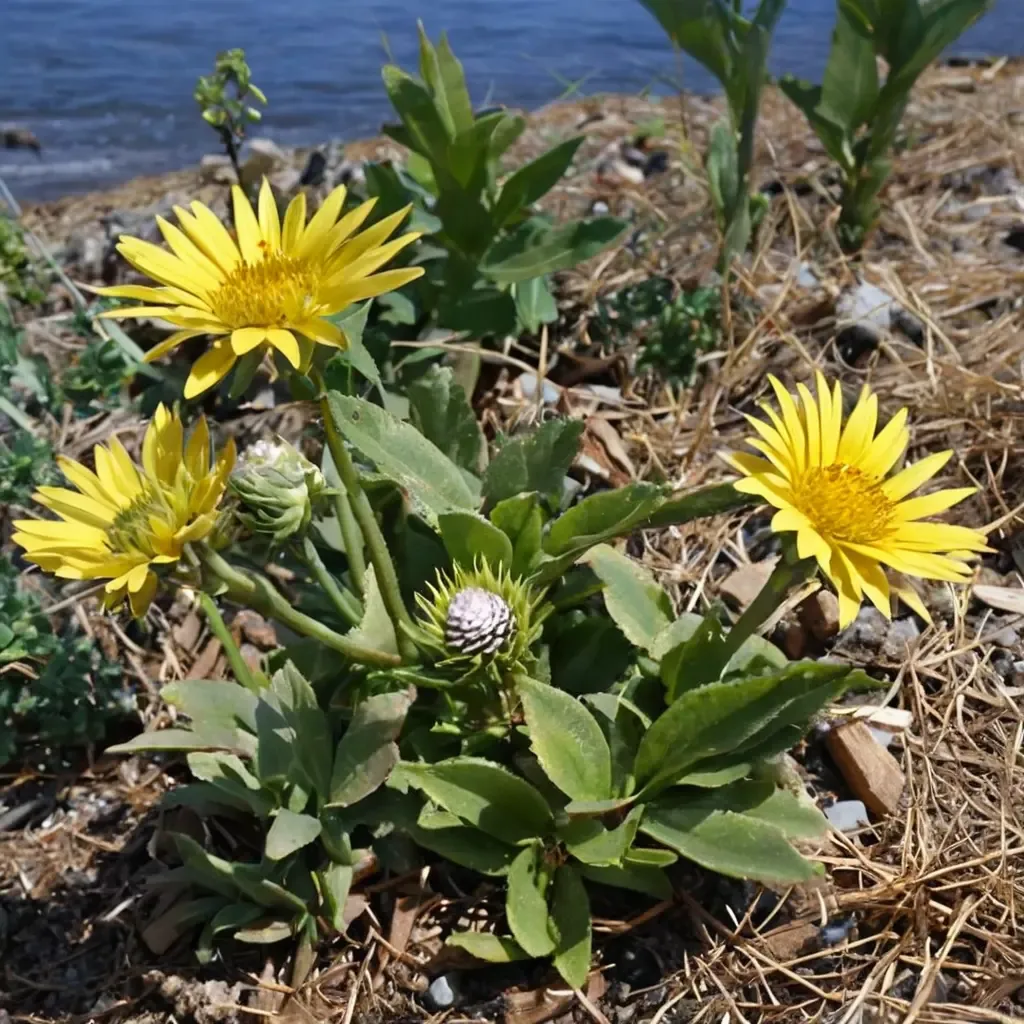
Distinguished by its spherical, sticky flower buds armed with recurved bracts, this species bears bright yellow daisy-like flower heads from early summer into fall. The aromatic resin seals in foliage moisture during summer drought and actively deters browsing deer and rabbits.
Uses & Benefits:
Essentials
At a Glance
Plant Type
Perennial
Height
31"
Width
31"
Light
Full Sun
Zones
6, 7, 8, 9, 10
Water
Low
Humidity
Tolerates maritime coastal humidity
Lifespan
Perennial
Native To
Western North America
Toxicity
Resin may cause mild skin irritation
Bloom period
Early summer – Early fall
In flower about 4 months of the year
Planting
How to Grow
- Select a site in full sun with average to heavy soil, ensuring space for a mature width of up to three feet.
- Plant container stock in spring or fall, setting the crown level with the surrounding soil.
- Water regularly during the first growing season to assist root establishment in heavy or clay soils.
- Taper off irrigation entirely by the second summer to allow the plant to enter its natural drought-tolerant phase.
Pro Tip
Withhold supplemental summer water once established, as warm, wet soil encourages root rot and disrupts its natural coastal growth cycle.
Keep It Thriving
Care Guide
Do
- Do prune back dead winter stems near the woody base in late winter or early spring.
- Do allow soil to dry out completely between waterings during warm summer months.
Don't
- Do not over-water during summer heat, which can lead to fungal root rot.
- Do not cut aggressively into old, leafless woody wood near the soil line.
Seasonal Care Calendar
| Task | Jan | Feb | Mar | Apr | May | Jun | Jul | Aug | Sep | Oct | Nov | Dec |
|---|---|---|---|---|---|---|---|---|---|---|---|---|
| Pest Check | ||||||||||||
| Plant | ||||||||||||
| Propagate | ||||||||||||
| Prune |
Watch Out For
Pests & Diseases
Common Pests
Common Diseases
In the Garden
Landscape Uses & Companions
Landscape Uses
Companion Plants
Multiply
Propagation Methods
Good to Know
Common Questions
Puget Sound Gumweed questions
What zones can Puget Sound Gumweed grow in?
Puget Sound Gumweed is hardy in USDA Zones 6–10: in that range it survives winter in the ground. Colder than Zone 6, grow it in a container you can move to shelter for the winter, or as an annual.
Is Puget Sound Gumweed deer resistant?
Yes — Puget Sound Gumweed is rated deer-resistant. Deer typically pass it over, though extreme hunger can override any plant's defenses.
When does Puget Sound Gumweed bloom?
Puget Sound Gumweed typically blooms from early summer to early fall. Exact timing shifts a week or two with your zone — Sow's bloom calendar maps it to your garden.
Does Puget Sound Gumweed need full sun?
Puget Sound Gumweed does best in full sun (6+ hours).
Is Puget Sound Gumweed drought tolerant?
Yes — once established (usually after the first full season), Puget Sound Gumweed handles dry spells with minimal watering. Water deeply its first year to build the root system that makes that possible.
More Grindelia to compare
Keep exploring
Explore the genus
Hardy in your zone?
Grow Puget Sound Gumweed with confidence
See it in a design of your actual yard, get zone-matched care reminders, and track it season by season in your garden journal.