The Story
Plant Bio
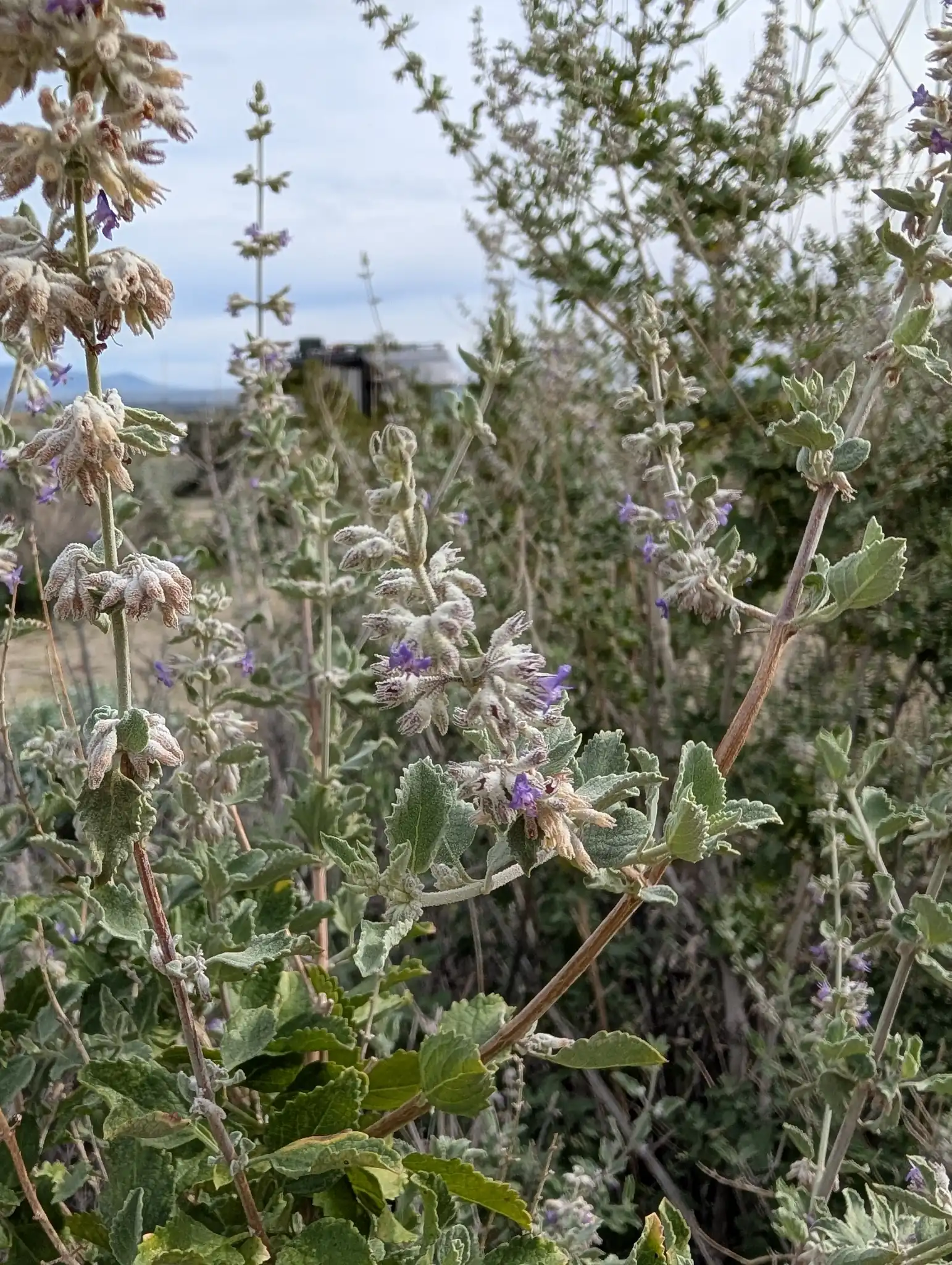
Condea emoryi, commonly known as desert lavender, is an upright, multi-stemmed evergreen shrub native to dry washes and rocky desert slopes across the southwestern United States and northwestern Mexico. Its wiry, square stems are clothed in crenate leaves densely coated in star-shaped hairs that produce a distinct silvery-gray sheen and release a strong sage-lavender scent when crushed.
From winter into spring, short clusters of tiny, tubular violet-purple flowers appear at the stem tips and leaf axils. The plant functions as a primary nectar source for hummingbirds and bees in native desert ecosystems while enduring extreme heat, drought, and winter temperatures down to 15°F.
Uses & Benefits:
Essentials
At a Glance
Plant Type
Shrub
Height
118"
Width
118"
Light
Full Sun
Zones
8, 9, 10
Water
Low
Humidity
Low
Lifespan
Perennial
Native To
Southwestern United States, Northwestern Mexico
Toxicity
Non-toxic
Bloom period
Winter – Spring
In flower about 6 months of the year
Planting
How to Grow
- Choose a full-sun location with coarse, gravelly, or sandy soil.
- Dig a hole matching the depth of the root ball and twice as wide.
- Backfill with native soil without adding rich compost or fertilizers.
- Water thoroughly at planting, then reduce irrigation to allow the root zone to dry completely between waterings.
Pro Tip
Grow in lean, gravelly soil with zero organic soil amendments and withhold summer irrigation once established to prevent crown rot and stem collapse.
Keep It Thriving
Care Guide
Do
- Provide sharp, rapid drainage in lean, unamended soil.
- Position in full sun to maintain dense foliage and silver coloration.
- Prune lightly in early spring after frost danger passes.
Don't
- Do not overwater or apply heavy summer irrigation.
- Do not amend planting soil with rich organic matter or peat.
- Do not over-fertilize, which causes weak, flopping stem growth.
Seasonal Care Calendar
| Task | Jan | Feb | Mar | Apr | May | Jun | Jul | Aug | Sep | Oct | Nov | Dec |
|---|---|---|---|---|---|---|---|---|---|---|---|---|
| Pest Check | ||||||||||||
| Propagate | ||||||||||||
| Prune | ||||||||||||
| Spring Cleanup |
Watch Out For
Pests & Diseases
Common Pests
Common Diseases
In the Garden
Landscape Uses & Companions
Landscape Uses
Multiply
Propagation Methods
Good to Know
Common Questions
Desert Lavender questions
What zones can Desert Lavender grow in?
Desert Lavender is hardy in USDA Zones 8–10: in that range it survives winter in the ground. Colder than Zone 8, grow it in a container you can move to shelter for the winter.
Is Desert Lavender deer resistant?
Yes — Desert Lavender is rated deer-resistant. Deer typically pass it over, though extreme hunger can override any plant's defenses.
When does Desert Lavender bloom?
Desert Lavender typically blooms from winter to spring. Exact timing shifts a week or two with your zone — Sow's bloom calendar maps it to your garden.
Does Desert Lavender need full sun?
Desert Lavender does best in full sun (6+ hours).
Is Desert Lavender drought tolerant?
Yes — once established (usually after the first full season), Desert Lavender handles dry spells with minimal watering. Water deeply its first year to build the root system that makes that possible.
Keep exploring
Explore the genus
Hardy in your zone?
Grow Desert Lavender with confidence
See it in a design of your actual yard, get zone-matched care reminders, and track it season by season in your garden journal.