The Story
Plant Bio
Huernia zebrina is a low-growing perennial stem-succulent that forms spreading clumps of erect to decumbent gray-green stems. The stems are 4- to 6-angled with deltoid tubercles tipped by a slender tooth, mottled purple in strong light, and leafless, carrying out photosynthesis in the stem tissue.
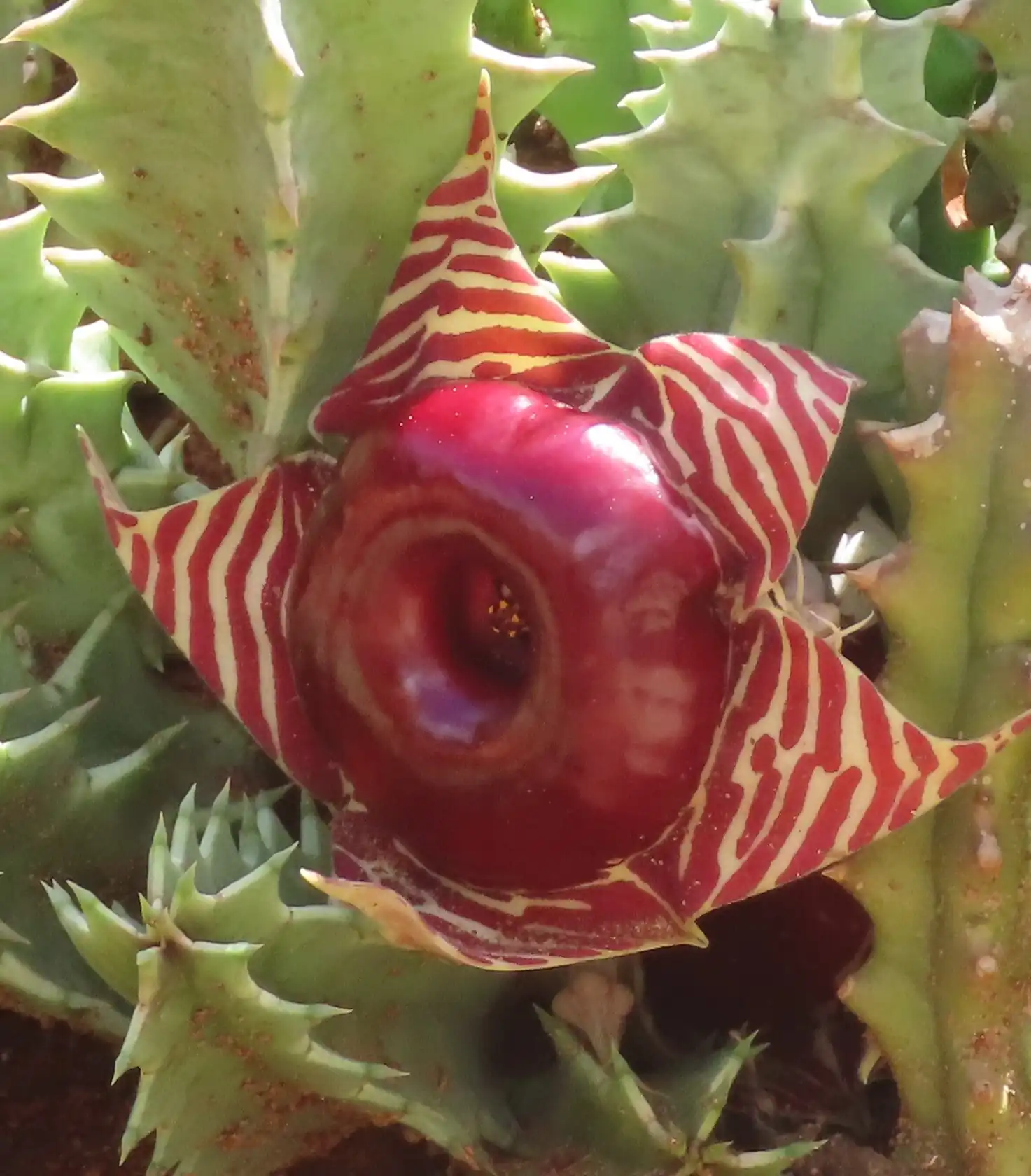
It produces successive star-shaped flowers to 2 inches across, cream to greenish-yellow banded with red to maroon zebra stripes around a glossy raised red-maroon ring. The blooms are carrion-scented and fly-pollinated, opening from late spring into early fall on short stalks held low among the stems.
Uses & Benefits:
Essentials
At a Glance
Plant Type
Cactus Succulent
Height
8"
Width
6"
Light
Full Sun, Partial Sun
Zones
9, 10
Water
Low
Humidity
Low to moderate
Lifespan
Perennial
Native To
Southern Africa
Toxicity
Uncertain - conflicting reports; milky sap may irritate skin and eyes
Bloom period
Late spring – Early fall
In flower about 5 months of the year
Planting
How to Grow
- Pot in a shallow container with drainage holes using 50 to 70 percent mineral grit with coarse sand, pumice or perlite.
- Place in bright light with afternoon shade on the hottest days; give indoor plants the brightest window to prevent thin weak stems.
- Water thoroughly only when the mix is fully dry, then withhold water almost entirely in winter to about once a month.
- Feed only in the growing season with water-soluble fertilizer diluted to half strength.
- Keep above 30 degrees Fahrenheit and bring pots indoors before first frost for a dry warm winter rest.
Pro Tip
Water deeply only when the gritty mix is completely dry, then keep it almost dry and warm through winter; cold wet soil rots the stems faster than any neglect.
Keep It Thriving
Care Guide
Do
- Give bright light with afternoon shade in heat
- Use gritty fast-draining mix in a pot with drainage holes
- Repot every 2 to 3 years in spring in dry mix
Don't
- Do not overwater or leave cold and wet in winter
- Do not use rich moisture-holding soil
- Do not cut healthy stems; remove only rotted stems
Seasonal Care Calendar
| Task | Jan | Feb | Mar | Apr | May | Jun | Jul | Aug | Sep | Oct | Nov | Dec |
|---|---|---|---|---|---|---|---|---|---|---|---|---|
| Fertilize | ||||||||||||
| Pest Check | ||||||||||||
| Plant | ||||||||||||
| Propagate | ||||||||||||
| Winter Prep |
Watch Out For
Pests & Diseases
Common Pests
Common Diseases
In the Garden
Landscape Uses & Companions
Landscape Uses
Multiply
Propagation Methods
Good to Know
Common Questions
Lifesaver Plant questions
What zones can Lifesaver Plant grow in?
Lifesaver Plant is hardy in USDA Zones 9–10: in that range it survives winter in the ground. Colder than Zone 9, grow it in a container you can move to shelter for the winter, or as an annual.
When does Lifesaver Plant bloom?
Lifesaver Plant typically blooms from late spring to early fall. Exact timing shifts a week or two with your zone — Sow's bloom calendar maps it to your garden.
Does Lifesaver Plant need full sun?
Lifesaver Plant does best in full sun to part shade. In hot climates, afternoon shade keeps blooms fresher longer.
Is Lifesaver Plant drought tolerant?
Yes — once established (usually after the first full season), Lifesaver Plant handles dry spells with minimal watering. Water deeply its first year to build the root system that makes that possible.
Keep exploring
Explore the genus
Hardy in your zone?
Grow Lifesaver Plant with confidence
See it in a design of your actual yard, get zone-matched care reminders, and track it season by season in your garden journal.