The Story
Plant Bio
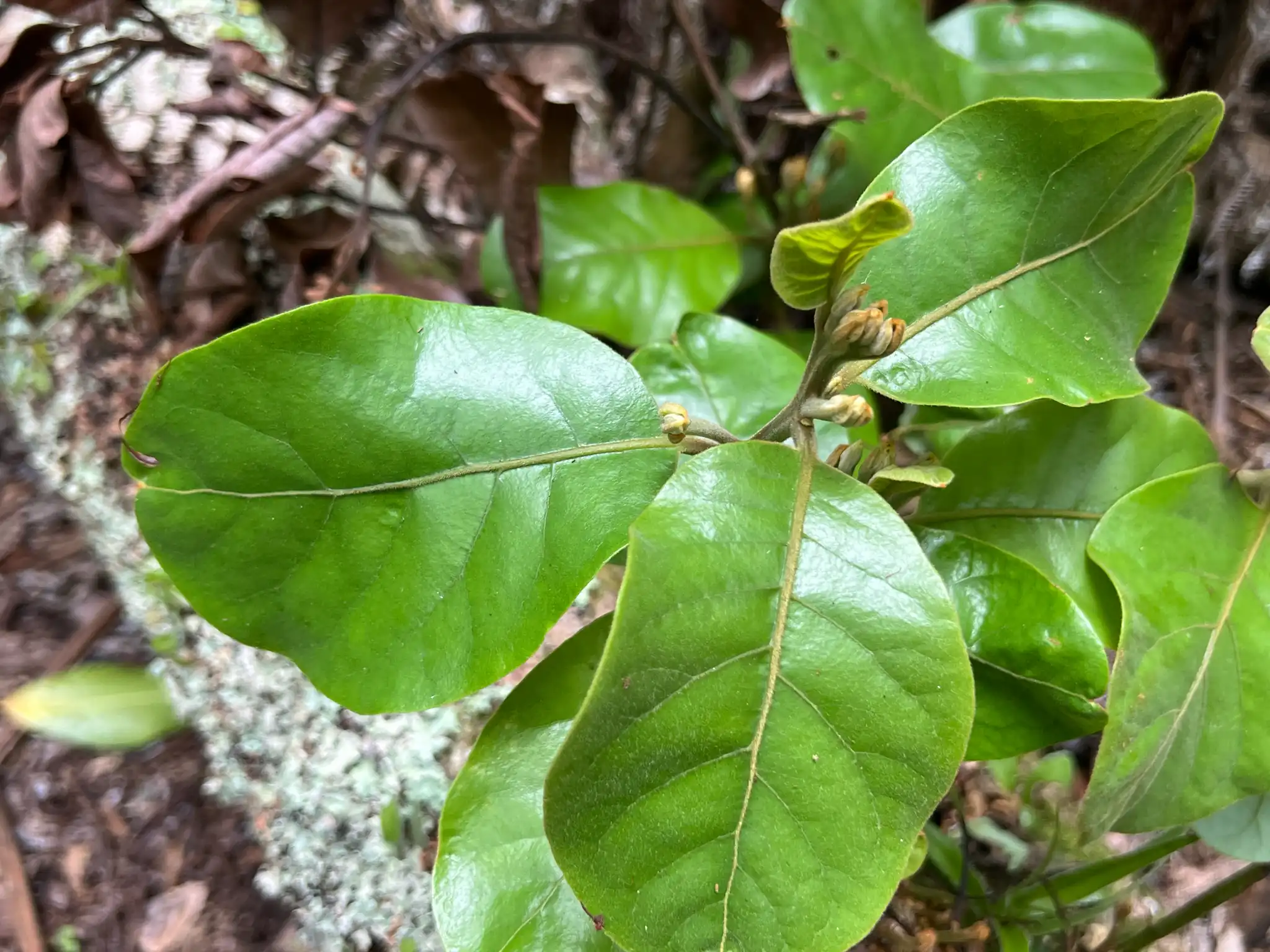
Beilschmiedia tarairi, commonly called taraire, is an evergreen canopy tree native to New Zealand that grows up to seventy feet tall with a broad, spreading crown. Its thick leathery leaves feature deeply depressed veins on glossy dark green upper surfaces and glaucous undersides densely lined with reddish-brown down.
The species is distinguished by its conspicuous velvety brown tomentum covering young shoots and panicles of small greenish spring flowers. Large oval fruits turn bright purple as they ripen, providing high wildlife value in mild coastal and subtropical landscapes.
Uses & Benefits:
Essentials
At a Glance
Plant Type
Tree
Height
866"
Width
394"
Light
Full Sun, Partial Sun
Zones
9, 10
Water
Moderate
Humidity
High
Lifespan
Long-lived
Native To
New Zealand
Toxicity
Non-toxic
Bloom period
Spring – Late spring
In flower about 3 months of the year
Planting
How to Grow
- Select a planting site with rich, organic soil that drains freely.
- Provide dappled shade or shelter for young saplings during their first few years.
- Dig a hole twice as wide as the root ball and backfill with humic compost.
- Water deeply and regularly during the establishment phase.
- Apply a broad ring of organic mulch to conserve moisture and regulate soil temperature.
Pro Tip
Clean all fleshy purple pericarp off the seeds immediately after collection to ensure reliable germination.
Keep It Thriving
Care Guide
Do
- Keep soil consistently moist while young plants establish.
- Provide windbreak shelter from harsh, freezing gales.
- Maintain a thick layer of organic mulch around the base.
Don't
- Do not plant in heavy, waterlogged clay soils.
- Avoid cutting back heavily into old, leafless wood.
- Do not expose young trees to strong, unshaded afternoon sun.
Seasonal Care Calendar
| Task | Jan | Feb | Mar | Apr | May | Jun | Jul | Aug | Sep | Oct | Nov | Dec |
|---|---|---|---|---|---|---|---|---|---|---|---|---|
| Fertilize | ||||||||||||
| Mulch | ||||||||||||
| Pest Check | ||||||||||||
| Prune |
Watch Out For
Pests & Diseases
Common Pests
Common Diseases
In the Garden
Landscape Uses & Companions
Landscape Uses
Multiply
Propagation Methods
Good to Know
Common Questions
Taraire questions
What zones can Taraire grow in?
Taraire is hardy in USDA Zones 9–10: in that range it survives winter in the ground. Colder than Zone 9, winters are too cold for it to survive outdoors.
When does Taraire bloom?
Taraire typically blooms in spring. Exact timing shifts a week or two with your zone — Sow's bloom calendar maps it to your garden.
Does Taraire need full sun?
Taraire does best in full sun to part shade. In hot climates, afternoon shade keeps blooms fresher longer.
More Beilschmiedia to compare
Keep exploring
Explore the genus
Hardy in your zone?
Grow Taraire with confidence
See it in a design of your actual yard, get zone-matched care reminders, and track it season by season in your garden journal.