The Story
Plant Bio
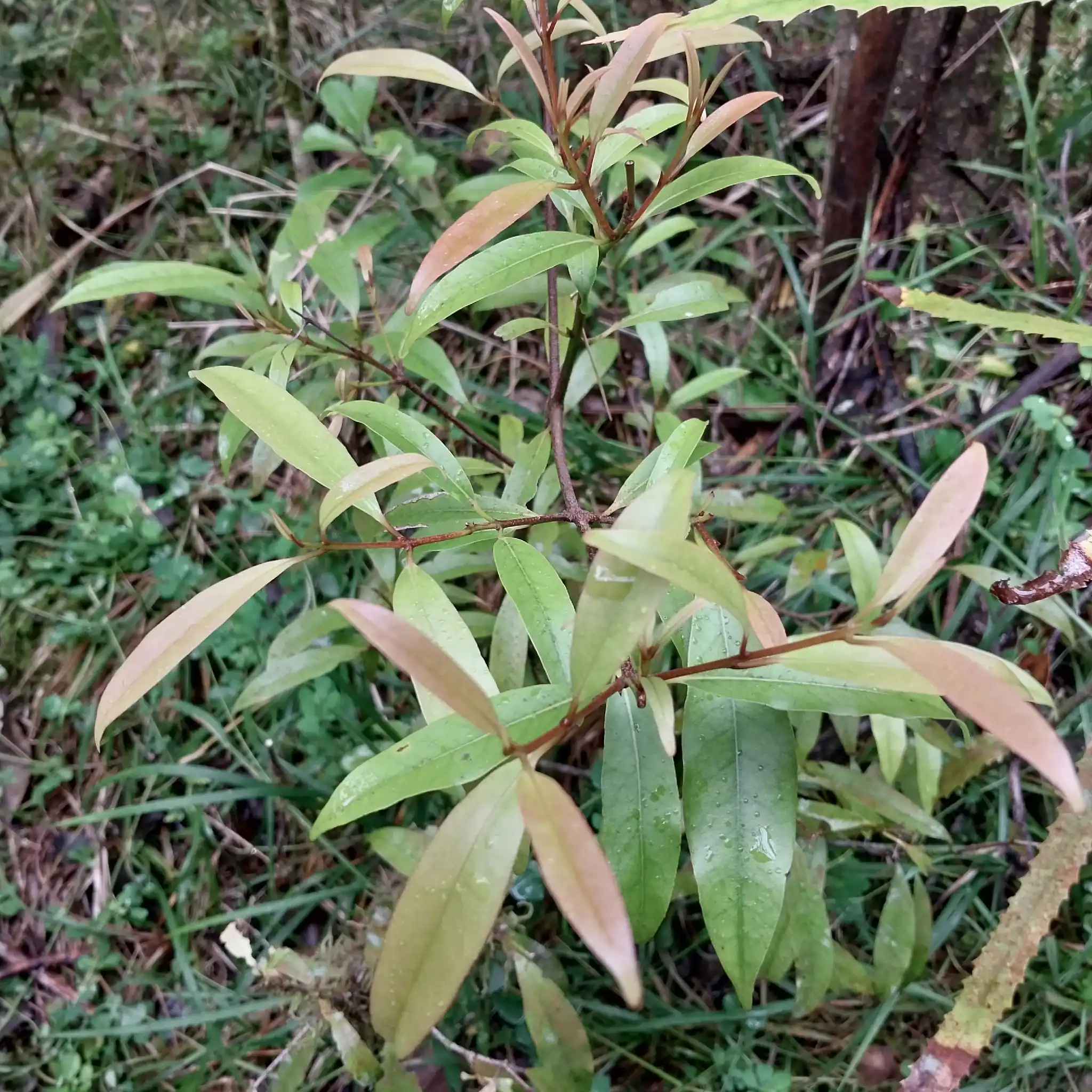
Beilschmiedia tawa is a tall evergreen forest tree native to New Zealand, developing a dark trunk with buttress roots and a dense crown of weeping branches. Its narrow, leathery leaves emerge with a golden-pubescent down before maturing to glossy yellow-green with pale blue-glaucous undersides.
The species produces small, pale green flowers on axillary panicles during late spring and early summer, followed by large dark purple plum-like fruits. Its pendulous foliage creates a distinct layered canopy structure that offers year-round architectural presence.
Uses & Benefits:
Essentials
At a Glance
Plant Type
Tree
Height
1181"
Width
394"
Light
Full Sun, Partial Sun
Zones
9, 10
Water
Moderate to high
Humidity
Moderate
Lifespan
Perennial
Native To
New Zealand
Toxicity
Non-toxic
Bloom period
Late spring – Mid summer
In flower about 3 months of the year
Planting
How to Grow
- Select a planting site in partial shade to full sun with rich, moist, well-draining soil.
- Plant young saplings into humus-rich soil and provide shelter from harsh winds and hard frosts.
- Apply an organic mulch layer over the root zone to preserve moisture and suppress weeds.
- Water regularly during hot, dry weather to ensure the soil remains consistently moist.
Pro Tip
Sow seed immediately after harvesting and removal of the fleshy pulp; drying out even briefly destroys seed viability.
Keep It Thriving
Care Guide
Do
- Keep soil consistently moist around young establishing trees.
- Plant fresh seeds immediately after removing fleshy fruit pulp.
- Provide partial shade and wind protection for young saplings.
Don't
- Do not allow harvested seeds to dry out before planting.
- Do not prune heavily into old, leafless wood.
- Do not expose young plants to hard, unprotected frosts.
Seasonal Care Calendar
| Task | Jan | Feb | Mar | Apr | May | Jun | Jul | Aug | Sep | Oct | Nov | Dec |
|---|---|---|---|---|---|---|---|---|---|---|---|---|
| Fertilize | ||||||||||||
| Mulch | ||||||||||||
| Pest Check | ||||||||||||
| Propagate | ||||||||||||
| Prune |
Watch Out For
Pests & Diseases
Common Pests
Common Diseases
In the Garden
Landscape Uses & Companions
Landscape Uses
Multiply
Propagation Methods
Good to Know
Common Questions
Tawa questions
What zones can Tawa grow in?
Tawa is hardy in USDA Zones 9–10: in that range it survives winter in the ground. Colder than Zone 9, winters are too cold for it to survive outdoors.
When does Tawa bloom?
Tawa typically blooms from late spring to mid-summer. Exact timing shifts a week or two with your zone — Sow's bloom calendar maps it to your garden.
Does Tawa need full sun?
Tawa does best in full sun to part shade. In hot climates, afternoon shade keeps blooms fresher longer.
More Beilschmiedia to compare
Keep exploring
Explore the genus
Hardy in your zone?
Grow Tawa with confidence
See it in a design of your actual yard, get zone-matched care reminders, and track it season by season in your garden journal.