The Story
Plant Bio
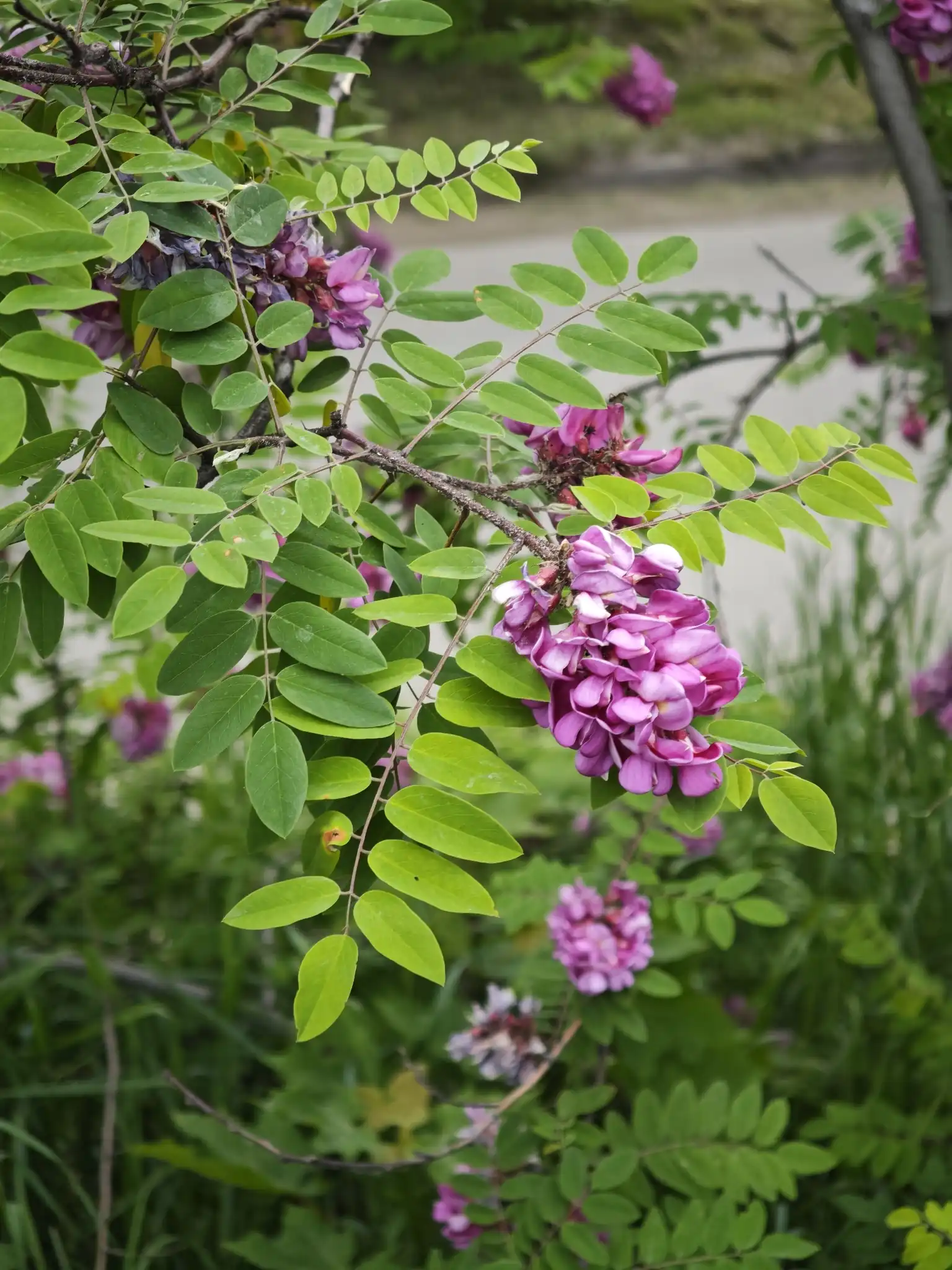
Robinia viscosa is a deciduous, suckering tree native to the southeastern United States, characterized by an open, spreading crown and twigs covered in sticky, glandular hairs. In late spring and early summer, it produces pendulous racemes of showy, dark pink to rose-purple pea-like flowers.
The species is distinguished from other locusts by the prominent, clammy secretions on its young shoots, leafstalks, and seed pods. It features alternate, pinnately compound leaves with 13 to 21 leaflets that emerge mid-green and lack the heavy thorns common to black locust.
Uses & Benefits:
Essentials
At a Glance
Plant Type
Tree
Height
472"
Width
315"
Light
Full Sun, Partial Sun
Zones
4, 5, 6, 7, 8, 9
Water
Low to Medium
Humidity
Moderate to High
Lifespan
30-50 years
Native To
Southeastern United States
Toxicity
Toxic if Ingested
Bloom period
Spring – Early summer
In flower about 4 months of the year
Planting
How to Grow
- Select a planting site in full sun to light shade with well-drained soil.
- Dig a hole twice the width of the root ball and set the plant at its original container depth.
- Water thoroughly at planting and maintain consistent moisture until the root system establishes.
- Apply a layer of organic mulch around the base to suppress weeds, keeping it clear of the trunk.
Pro Tip
Prune only in late summer after flowering to prevent excessive bleeding of sap, and avoid cutting back into old, leafless wood where dormant buds fail to break.
Keep It Thriving
Care Guide
Do
- Prune in late summer to avoid sap bleeding.
- Wear gloves when handling to avoid mild contact dermatitis from the sticky glandular hairs.
- Plant in poor or sandy soils where other trees struggle, as it fixes its own nitrogen.
Don't
- Do not apply nitrogen-heavy fertilizers, which trigger excessive, weak vegetative growth.
- Do not prune aggressively into old, leafless wood.
- Do not plant near delicate garden beds where its aggressive root suckers will crowd out other species.
Seasonal Care Calendar
| Task | Jan | Feb | Mar | Apr | May | Jun | Jul | Aug | Sep | Oct | Nov | Dec |
|---|---|---|---|---|---|---|---|---|---|---|---|---|
| Mulch | ||||||||||||
| Pest Check | ||||||||||||
| Propagate | ||||||||||||
| Prune |
Watch Out For
Pests & Diseases
Common Pests
Common Diseases
In the Garden
Landscape Uses & Companions
Landscape Uses
Companion Plants
Multiply
Propagation Methods
Good to Know
Common Questions
Clammy Locust questions
What zones can Clammy Locust grow in?
Clammy Locust is hardy in USDA Zones 4–9. Inside that range it survives winter in the ground; outside it, grow it as an annual or a container plant you protect.
Is Clammy Locust deer resistant?
Not reliably. Deer may browse Clammy Locust, especially tender spring growth — plan on repellents or fencing where pressure is high.
When does Clammy Locust bloom?
Clammy Locust typically blooms in spring through early summer. Exact timing shifts a week or two with your zone — Sow's bloom calendar maps it to your garden.
Does Clammy Locust need full sun?
Clammy Locust does best in full sun to part shade. In hot climates, afternoon shade keeps blooms fresher longer.
Is Clammy Locust drought tolerant?
Yes — once established (usually after the first full season), Clammy Locust handles dry spells with minimal watering. Water deeply its first year to build the root system that makes that possible.
More Robinia to compare
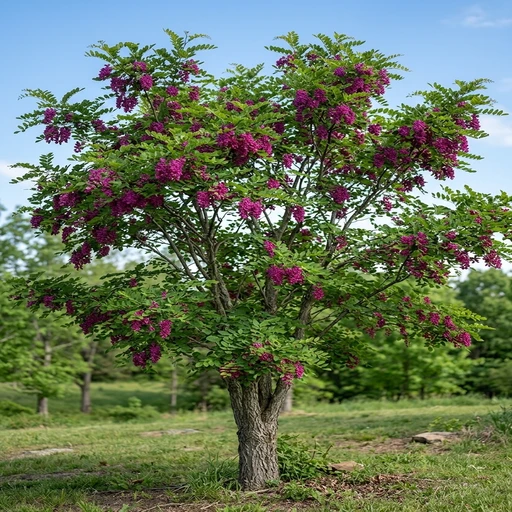
Purple Robe Black Locust
Robinia pseudoacacia 'Purple Robe'
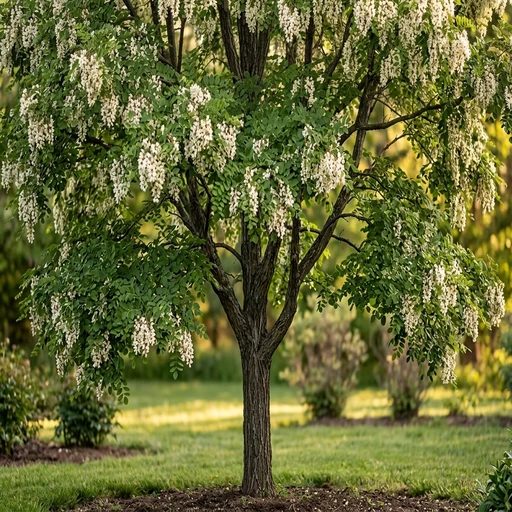
Black Locust
Robinia pseudoacacia
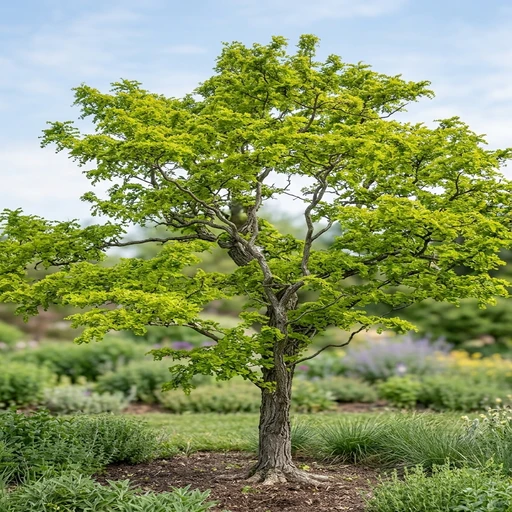
Twisty Baby Black Locust
Robinia pseudoacacia 'Lace Lady'
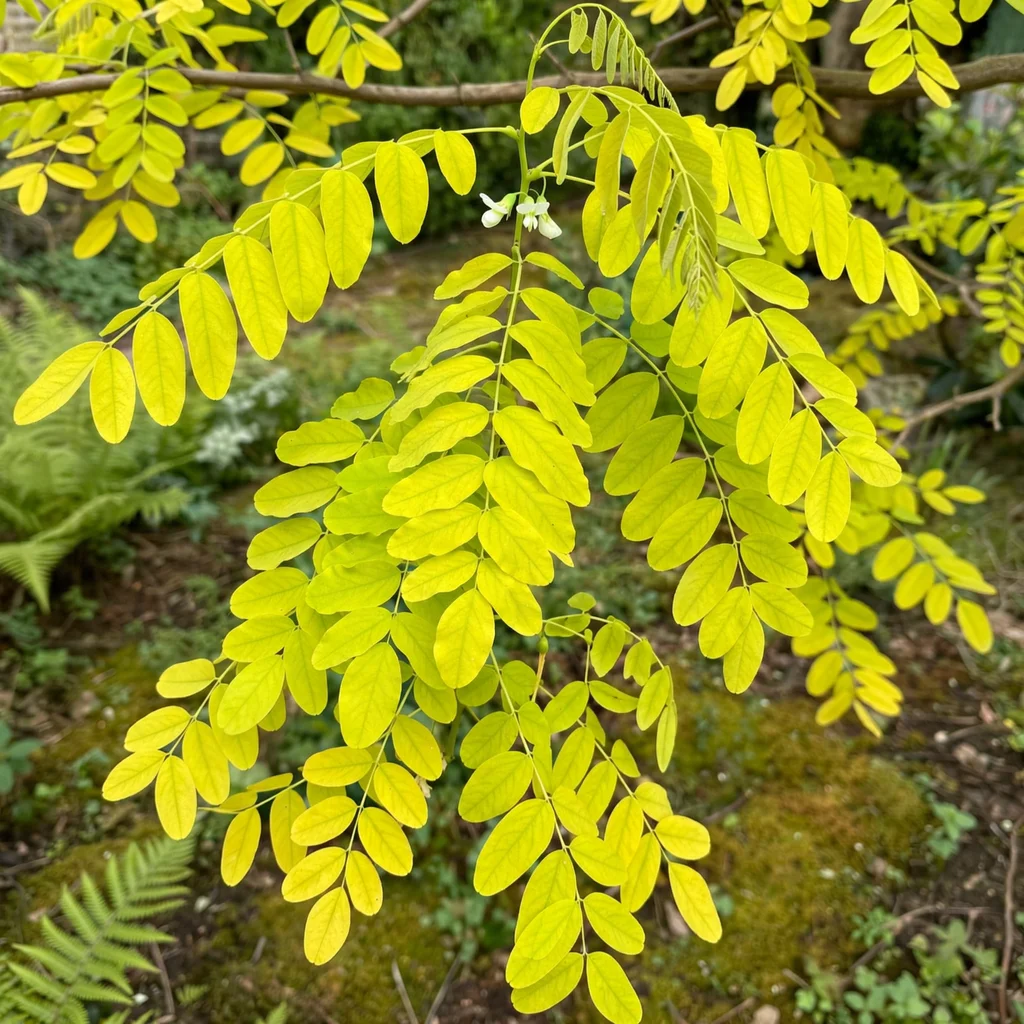
Golden Robinia
Robinia pseudoacacia 'Frisia'
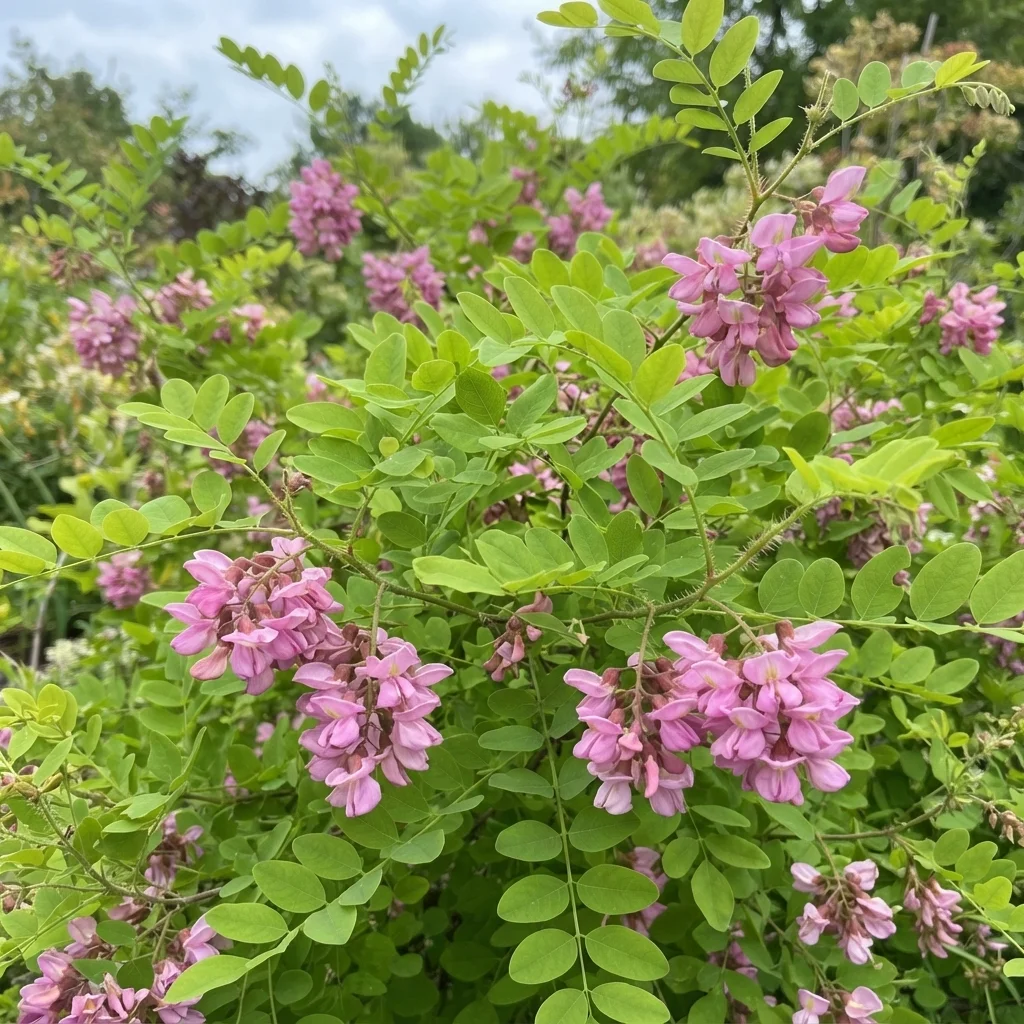
Bristly Locust
Robinia hispida
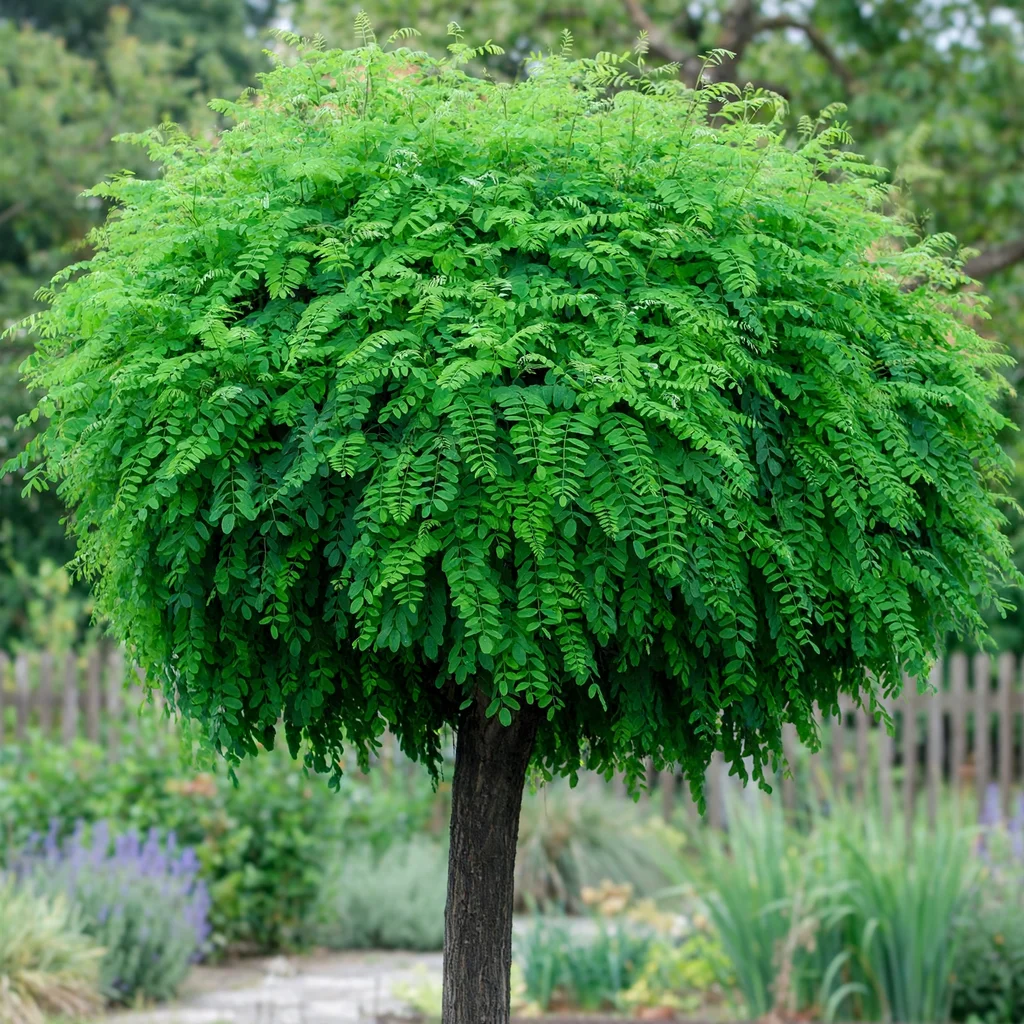
Globe Locust
Robinia pseudoacacia 'Umbraculifera'
Keep exploring
Explore the genus
Grow Clammy Locust with confidence
See it in a design of your actual yard, get zone-matched care reminders, and track it season by season in your garden journal.