The Story
Plant Bio
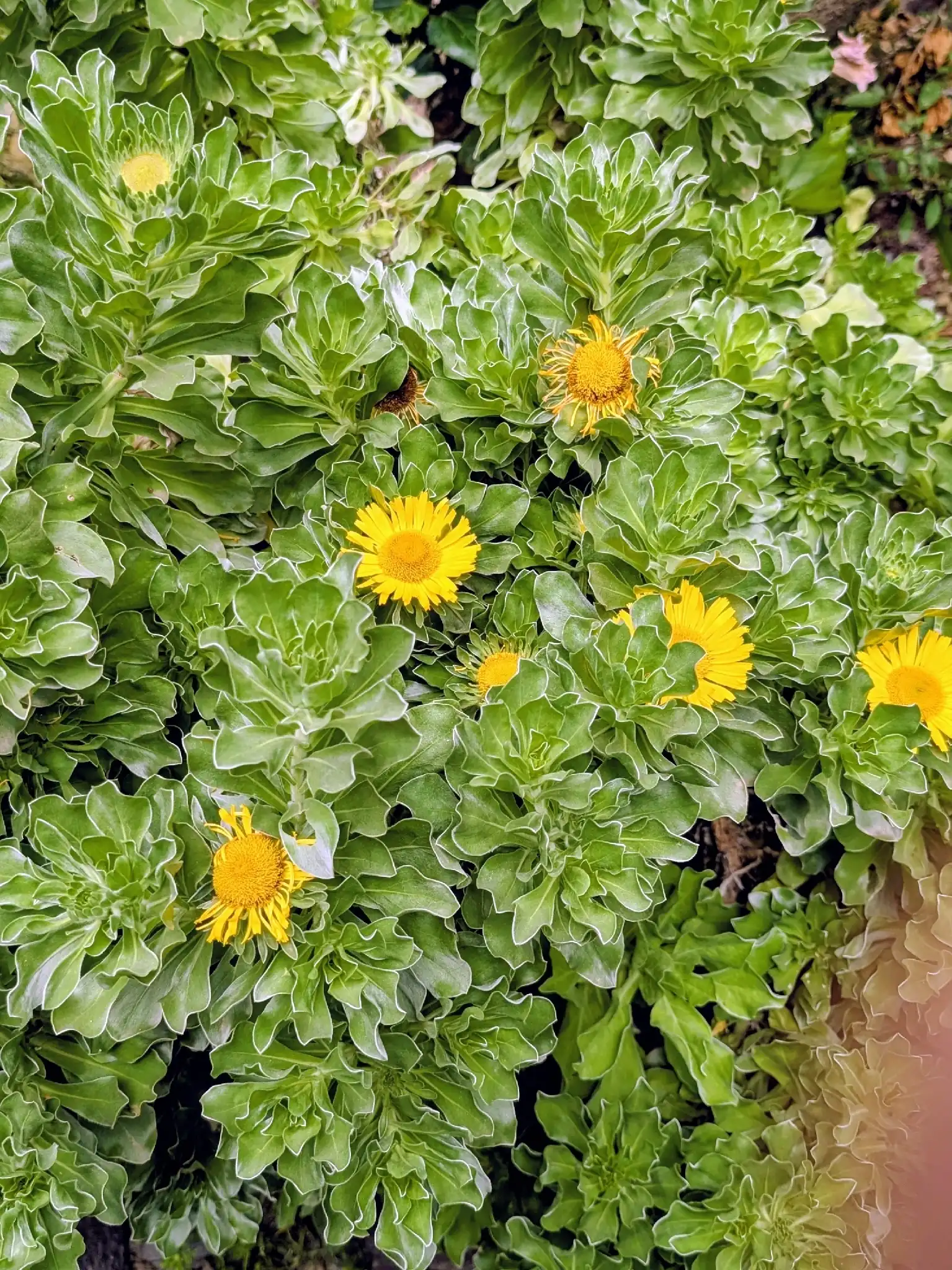
Asteriscus sericeus is an evergreen subshrub from Fuerteventura in the Canary Islands, forming a dense silvery mound two to three feet tall and three to four feet wide in cultivation. Stems carry rosettes of thick lance-shaped leaves coated in fine silky hairs, and solitary bright yellow daisy heads to three inches across rise from the rosette centers.
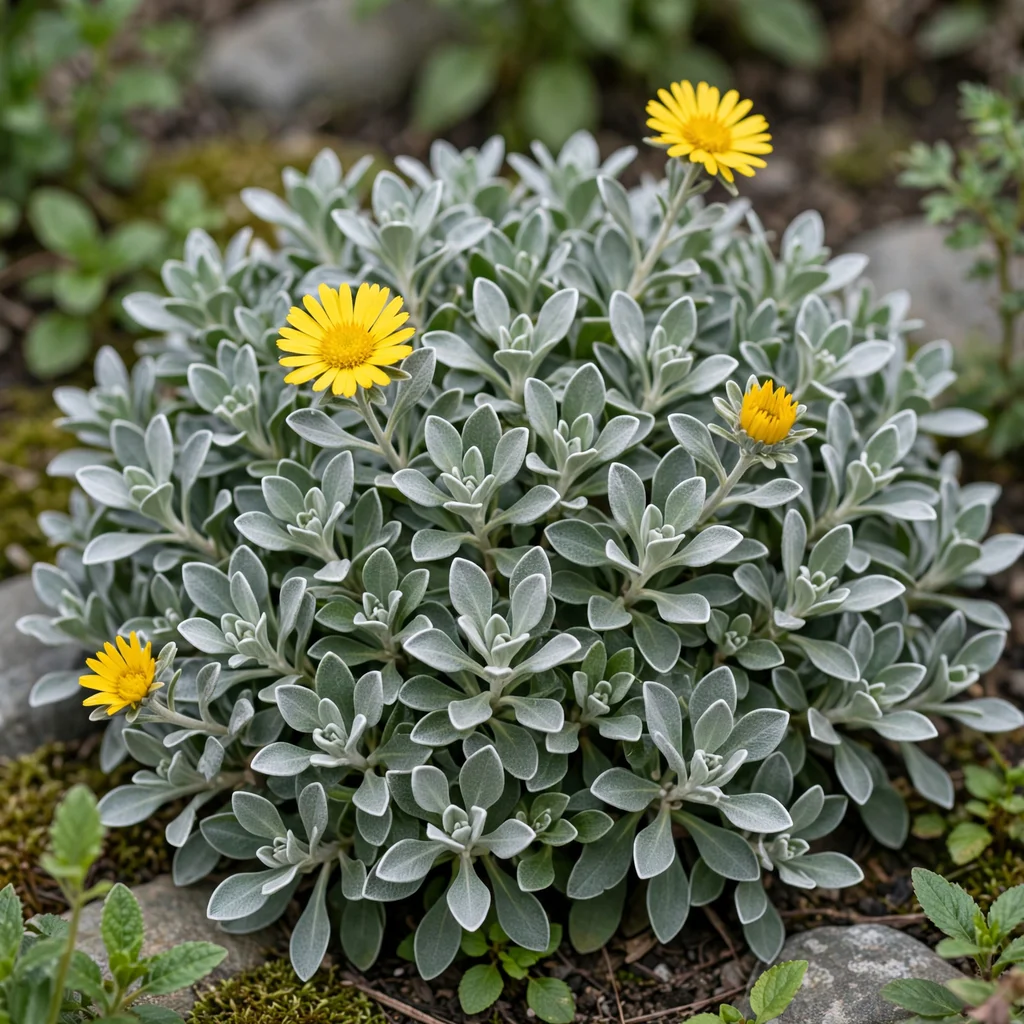
Unlike the low, spreading Asteriscus maritimus, this species builds an upright woody framework that opens with age to expose dark gray stems. Plants hold a tight mound for about five years before thinning, and the planting renews itself best when self-sown seedlings are moved into place.
Uses & Benefits:
Essentials
At a Glance
Plant Type
Shrub
Height
30"
Width
42"
Light
Full Sun
Zones
9, 10
Water
Low
Humidity
Low
Lifespan
~5 years
Native To
Fuerteventura, Canary Islands
Toxicity
Unknown
Bloom period
Late winter – Early summer
In flower about 5 months of the year
Planting
How to Grow
- Plant in full sun on a low mound of sandy or gravelly, fast-draining soil.
- Space plants three to four feet apart to allow the mature mound to develop.
- Water in once, then water sparingly only until established.
- Leave a few spent heads to set seed for replacements and avoid winter wet.
Pro Tip
Expect the mound to open after about five years; leave old plants to self-seed and move the seedlings to renew the planting, always on a low mound with no water held against the crown.
Keep It Thriving
Care Guide
Do
- Plant on a mound in fast-draining soil.
- Water sparingly and keep the crown dry.
- Allow self-seeding to replace aging plants.
Don't
- Do not plant in heavy clay or low spots that hold water.
- Do not overfertilize or overwater.
- Do not cut old plants back hard into bare wood.
Seasonal Care Calendar
| Task | Jan | Feb | Mar | Apr | May | Jun | Jul | Aug | Sep | Oct | Nov | Dec |
|---|---|---|---|---|---|---|---|---|---|---|---|---|
| Deadhead | ||||||||||||
| Pest Check | ||||||||||||
| Plant | ||||||||||||
| Propagate | ||||||||||||
| Prune |
Watch Out For
Pests & Diseases
Common Pests
Common Diseases
In the Garden
Landscape Uses & Companions
Landscape Uses
Multiply
Propagation Methods
Good to Know
Common Questions
Canary Island Daisy questions
What zones can Canary Island Daisy grow in?
Canary Island Daisy is hardy in USDA Zones 9–10: in that range it survives winter in the ground. Colder than Zone 9, grow it in a container you can move to shelter for the winter.
When does Canary Island Daisy bloom?
Canary Island Daisy typically blooms from late winter to early summer. Exact timing shifts a week or two with your zone — Sow's bloom calendar maps it to your garden.
Does Canary Island Daisy need full sun?
Canary Island Daisy does best in full sun (6+ hours).
Is Canary Island Daisy drought tolerant?
Yes — once established (usually after the first full season), Canary Island Daisy handles dry spells with minimal watering. Water deeply its first year to build the root system that makes that possible.
More Asteriscus to compare
Keep exploring
Explore the genus
Hardy in your zone?
Grow Canary Island Daisy with confidence
See it in a design of your actual yard, get zone-matched care reminders, and track it season by season in your garden journal.