The Story
Plant Bio
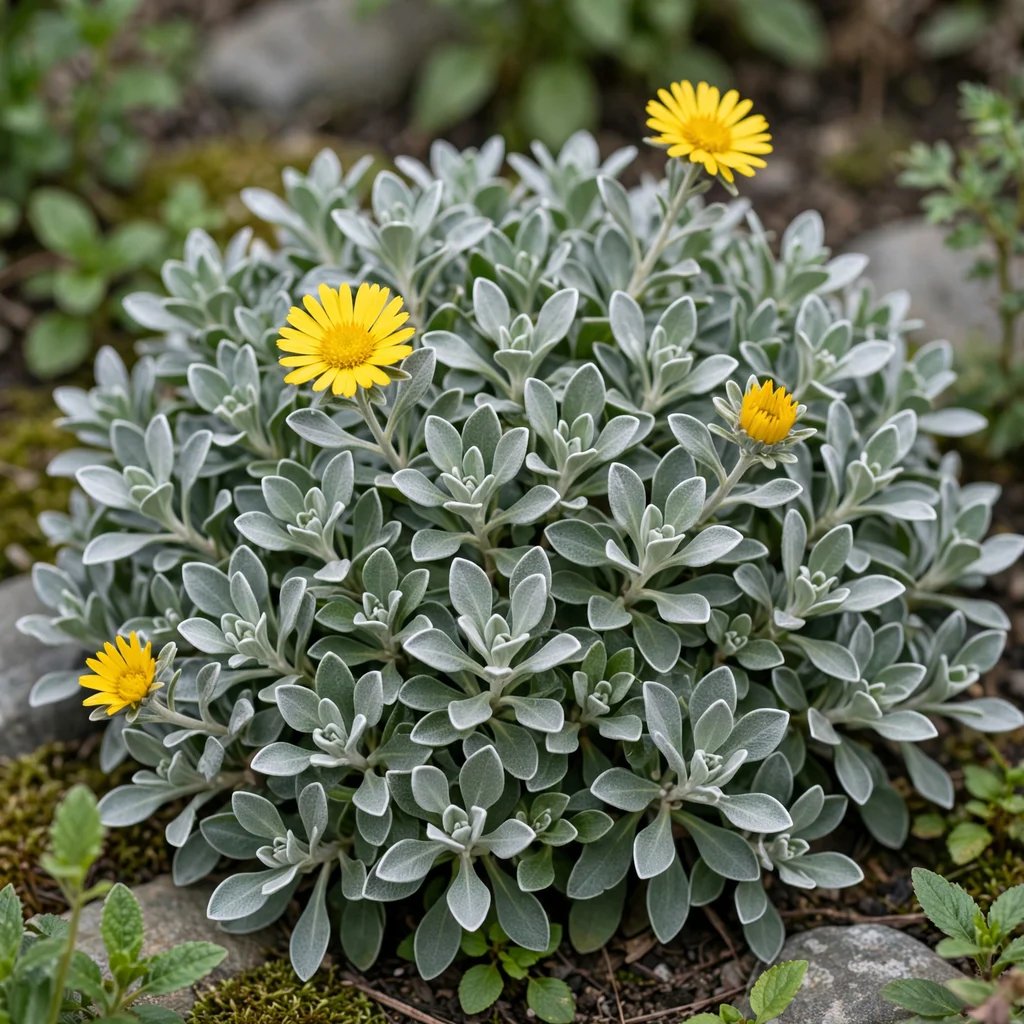
Asteriscus maritimus, now accepted as Pallenis maritima but still sold under the old name, is an evergreen subshrub from near-coastal Mediterranean shores from southern Portugal to Greece and the Canary Islands. It forms a low spreading mound of small spoon-shaped green to silver-gray leaves, with solitary golden-yellow daisy heads about 1.5 inches wide held just above the foliage.
It holds through heat and salt spray where richer bedding plants fail, thriving in lean sandy soil with sharp drainage. Bloom runs spring into summer with scattered flowers through the year in mild winters, and deadheading keeps the mat tidy and flowering.
Uses & Benefits:
Essentials
At a Glance
Plant Type
Groundcover
Height
12"
Width
48"
Light
Full Sun
Zones
8, 9, 10
Water
Low
Humidity
Low - prefers dry coastal air
Lifespan
Perennial, grown as annual in cold climates
Native To
Mediterranean coast from Portugal to Greece and Canary Islands
Toxicity
Unknown - no authoritative record
Bloom period
Spring – Summer
In flower about 6 months of the year
Planting
How to Grow
- Plant in full sun in light sandy soil with sharp drainage, crown level with the soil surface.
- Water deeply at planting, then water infrequently once roots establish.
- Deadhead spent daisies to keep the mound dense and extend bloom.
- Shear lightly after the main flush; divide only if the center grows woody and open.
- In zones below 8 grow as a warm-season annual and replace each spring.
Pro Tip
Give it full sun and gritty, fast-draining soil and keep water infrequent once settled; wet, rich clay rots the crown faster than drought ever will.
Keep It Thriving
Care Guide
Do
- Plant in full sun with sandy, fast-draining soil.
- Water sparingly once established.
- Deadhead to prolong bloom.
Don't
- Do not plant in heavy clay or rich moisture-holding loam.
- Do not overwater or leave the crown wet in winter.
- Do not cut hard into old leafless wood.
Seasonal Care Calendar
| Task | Jan | Feb | Mar | Apr | May | Jun | Jul | Aug | Sep | Oct | Nov | Dec |
|---|---|---|---|---|---|---|---|---|---|---|---|---|
| Deadhead | ||||||||||||
| Lift Store | ||||||||||||
| Pest Check | ||||||||||||
| Plant | ||||||||||||
| Prune |
Watch Out For
Pests & Diseases
Common Pests
Common Diseases
In the Garden
Landscape Uses & Companions
Landscape Uses
Multiply
Propagation Methods
Good to Know
Common Questions
Gold Coin Daisy questions
What zones can Gold Coin Daisy grow in?
Gold Coin Daisy is hardy in USDA Zones 8–10: in that range it survives winter in the ground. Colder than Zone 8, grow it in a container you can move to shelter for the winter, or as an annual.
When does Gold Coin Daisy bloom?
Gold Coin Daisy typically blooms from spring to summer. Exact timing shifts a week or two with your zone — Sow's bloom calendar maps it to your garden.
Does Gold Coin Daisy need full sun?
Gold Coin Daisy does best in full sun (6+ hours).
Is Gold Coin Daisy drought tolerant?
Yes — once established (usually after the first full season), Gold Coin Daisy handles dry spells with minimal watering. Water deeply its first year to build the root system that makes that possible.
More Asteriscus to compare
Keep exploring
Explore the genus
Hardy in your zone?
Grow Gold Coin Daisy with confidence
See it in a design of your actual yard, get zone-matched care reminders, and track it season by season in your garden journal.