The Story
Plant Bio
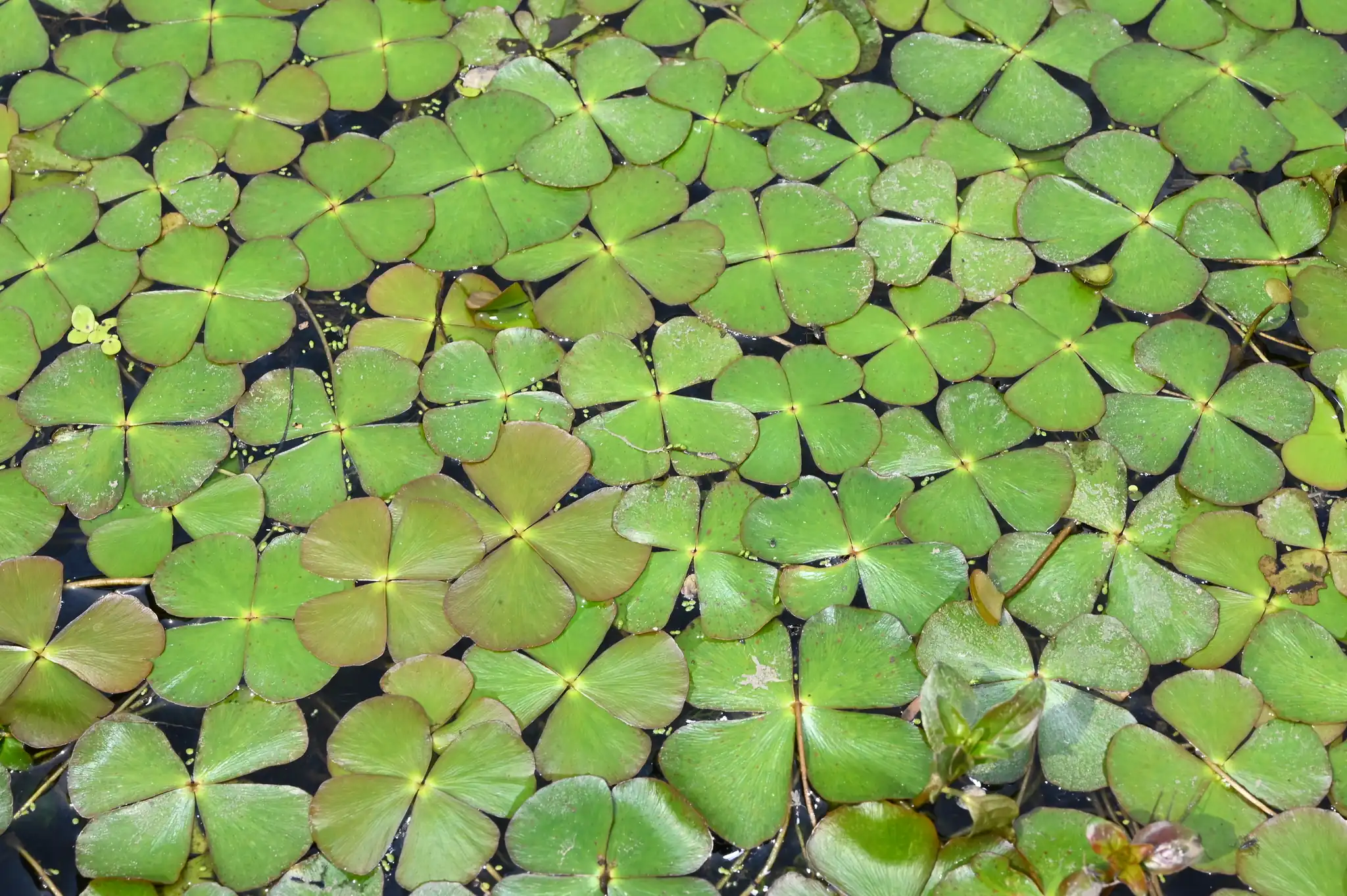
Marsilea quadrifolia, commonly known as European water clover, is an aquatic creeping fern featuring four-parted, shamrock-like leaves that float on calm water or rise slightly above saturated mud. Rooted via slender horizontal rhizomes anchored in organic sediment, it spreads continuously to form dense green mats along pond margins and water garden shelves.
This spore-bearing aquatic fern produces hard, bean-like sporocarps at the petiole bases during late summer and fall rather than flowering. Its light green leaflets fold closed at night or under overcast skies, adjusting their elevation on flexible petioles as water depths fluctuate.
Uses & Benefits:
Essentials
At a Glance
Plant Type
Aquatic
Height
6"
Width
36"
Light
Full Sun, Partial Sun, Shade
Zones
6, 7, 8, 9, 10
Water
High / Saturated
Humidity
High
Lifespan
Perennial
Native To
Eurasia
Toxicity
Non-toxic
Planting
How to Grow
- Fill an unperforated aquatic container with heavy loam or fine mineral soil mixed with a small amount of organic sediment.
- Press the creeping rhizomes horizontally into the damp soil, burying them roughly half an inch deep with the growing tips exposed.
- Submerge the pot into a water feature so the soil rim sits two to six inches beneath the water surface in full sun or partial shade.
- Thin overcrowded rhizomes manually in mid-summer if leaf petioles become excessively congested or push foliage above the surface.
Pro Tip
Plant into submerged aquatic baskets without drainage holes to restrict the creeping rhizomes and prevent the plant from colonizing natural waterways or choking small water features.
Keep It Thriving
Care Guide
Do
- Maintain saturated soil or standing water over the root system at all times.
- Keep containers contained within artificial water features to prevent accidental wild spread.
- Trim back dead top growth down to the mudline in early spring before new petioles emerge.
Don't
- Do not allow the growing medium to dry out completely during the active season.
- Do not apply heavy mineral fertilizers directly to pond water, as this triggers algae blooms.
- Do not plant directly into natural mud banks where escape into nearby streams is possible.
Seasonal Care Calendar
| Task | Jan | Feb | Mar | Apr | May | Jun | Jul | Aug | Sep | Oct | Nov | Dec |
|---|---|---|---|---|---|---|---|---|---|---|---|---|
| Divide | ||||||||||||
| Prune | ||||||||||||
| Spring Cleanup | ||||||||||||
| Winter Prep |
Watch Out For
Pests & Diseases
Common Pests
Common Diseases
In the Garden
Landscape Uses & Companions
Landscape Uses
Multiply
Propagation Methods
Good to Know
Common Questions
European Water Clover questions
What zones can European Water Clover grow in?
European Water Clover is hardy in USDA Zones 6–10: in that range it survives winter in the ground. Colder than Zone 6, grow it in a container you can move to shelter for the winter, or as an annual.
Does European Water Clover need full sun?
European Water Clover does best in full sun to part shade. In hot climates, afternoon shade keeps blooms fresher longer.
More Marsilea to compare
Keep exploring
Explore the genus
Hardy in your zone?
Grow European Water Clover with confidence
See it in a design of your actual yard, get zone-matched care reminders, and track it season by season in your garden journal.