The Story
Plant Bio
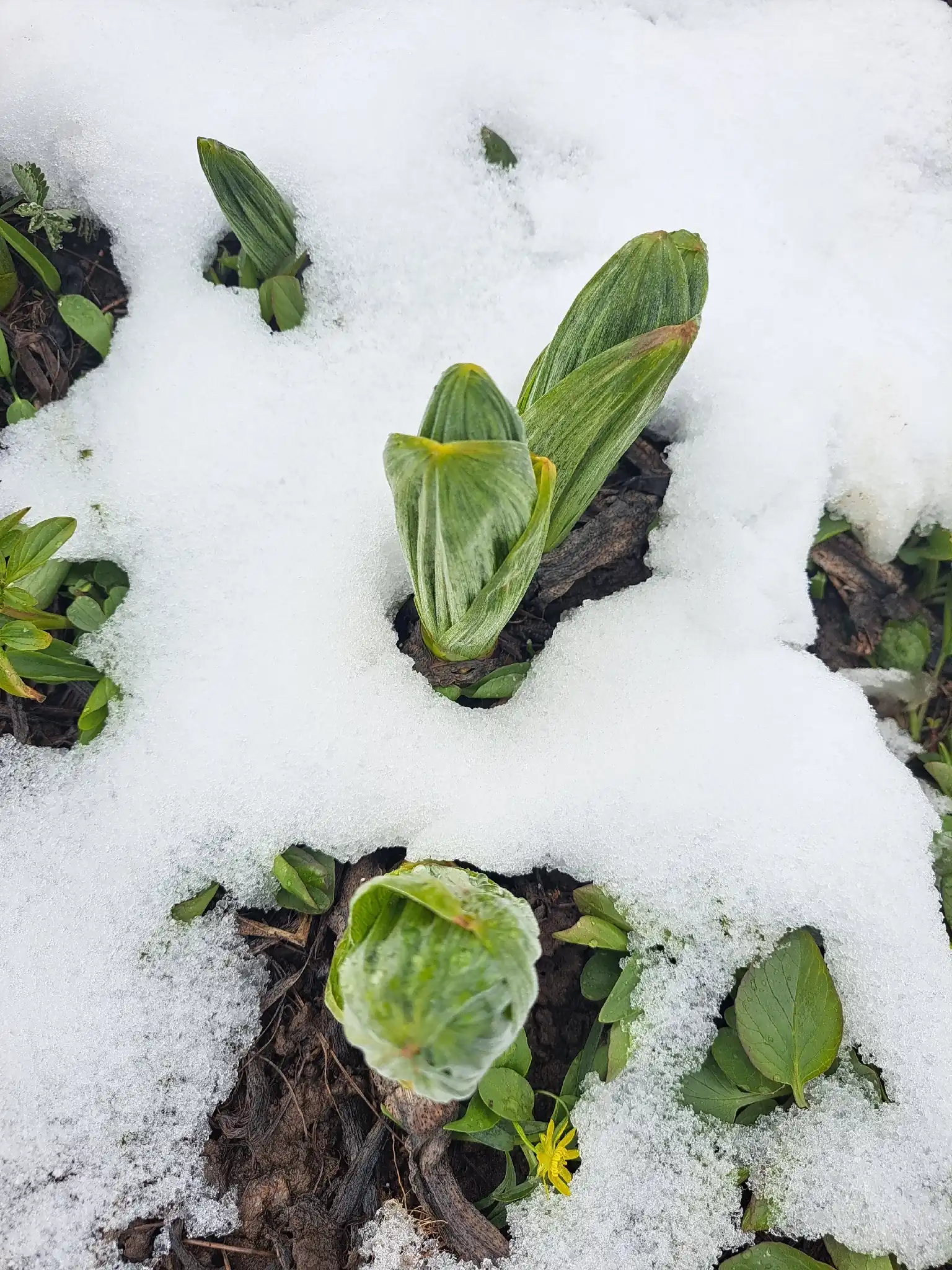
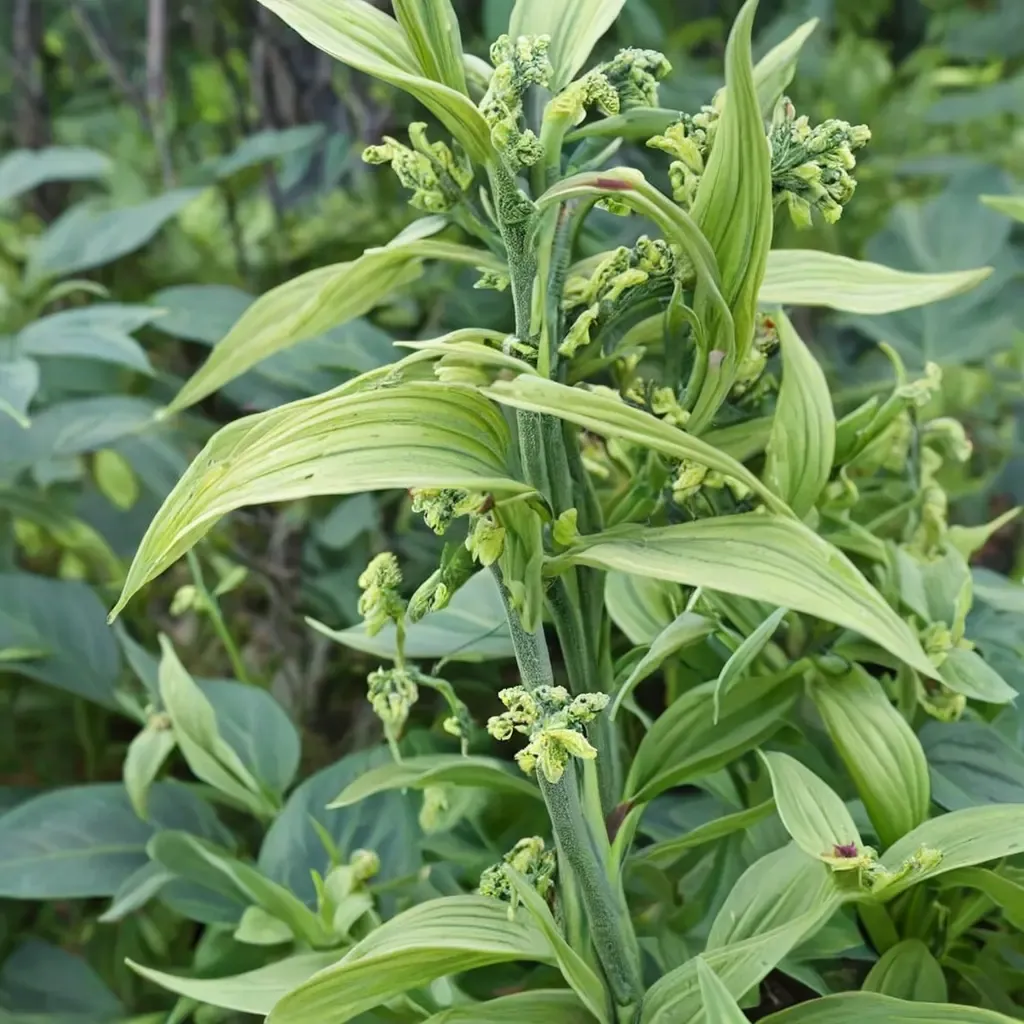
Veratrum californicum is a robust, rhizomatous herbaceous perennial native to damp mountain meadows across western North America, growing five to eight feet tall. It forms bold, unbranched stalks clad in large, oval, heavily veined pleated leaves that resemble corn stalks before crowning in massive branching panicles of star-shaped white and green flowers in summer.
The species is distinguished by its accordion-pleated foliage and mast-seeding habit, producing synchronized, spectacular mass displays only in select years while remaining largely vegetative in intervening seasons. All parts contain toxic steroidal alkaloids, rendering the foliage immune to browsing deer and livestock.
Uses & Benefits:
Essentials
At a Glance
Plant Type
Perennial
Height
94"
Width
47"
Light
Full Sun, Partial Sun
Zones
4, 5, 6, 7, 8, 9
Water
High
Humidity
Moderate to High
Lifespan
Perennial
Native To
Western North America
Toxicity
High (Steroidal alkaloids in all parts)
Bloom period
Summer – Late summer
In flower about 3 months of the year
Planting
How to Grow
- Select a planting site in full sun to dappled shade with rich, moisture-retentive organic soil.
- Work several inches of organic compost into the top layer of soil to enhance water retention.
- Plant dormant rhizomes or potted specimens level with the surrounding soil grade and water deeply.
- Maintain consistent soil moisture throughout spring and summer using thick organic mulches.
Pro Tip
Plant in rich soil that remains perpetually moist and never allow established rhizomes to dry out entirely, as moisture stress triggers early leaf scorch and premature fall dormancy.
Keep It Thriving
Care Guide
Do
- Keep soil constantly moist, especially through hot summer spells.
- Top-dress clumps with well-rotted organic compost each spring.
- Leave foliage intact until it turns completely brown in late fall.
Don't
- Do not allow soil around rhizomes to dry out during active growth.
- Do not prune green leaves during spring or summer.
- Do not plant near livestock pastures or areas frequented by grazing animals.
Seasonal Care Calendar
| Task | Jan | Feb | Mar | Apr | May | Jun | Jul | Aug | Sep | Oct | Nov | Dec |
|---|---|---|---|---|---|---|---|---|---|---|---|---|
| Divide | ||||||||||||
| Fertilize | ||||||||||||
| Pest Check | ||||||||||||
| Prune |
Watch Out For
Pests & Diseases
Common Pests
Common Diseases
In the Garden
Landscape Uses & Companions
Landscape Uses
Multiply
Propagation Methods
Good to Know
Common Questions
California False Hellebore questions
What zones can California False Hellebore grow in?
California False Hellebore is hardy in USDA Zones 4–9: in that range it survives winter in the ground. Warmer than Zone 9, winter isn't the problem: it prefers colder winters, and summer heat can shorten its life.
Is California False Hellebore deer resistant?
Yes — California False Hellebore is rated deer-resistant. Deer typically pass it over, though extreme hunger can override any plant's defenses.
When does California False Hellebore bloom?
California False Hellebore typically blooms in summer. Exact timing shifts a week or two with your zone — Sow's bloom calendar maps it to your garden.
Does California False Hellebore need full sun?
California False Hellebore does best in full sun to part shade. In hot climates, afternoon shade keeps blooms fresher longer.
More Veratrum to compare
Keep exploring
Explore the genus
Grow California False Hellebore with confidence
See it in a design of your actual yard, get zone-matched care reminders, and track it season by season in your garden journal.