The Story
Plant Bio
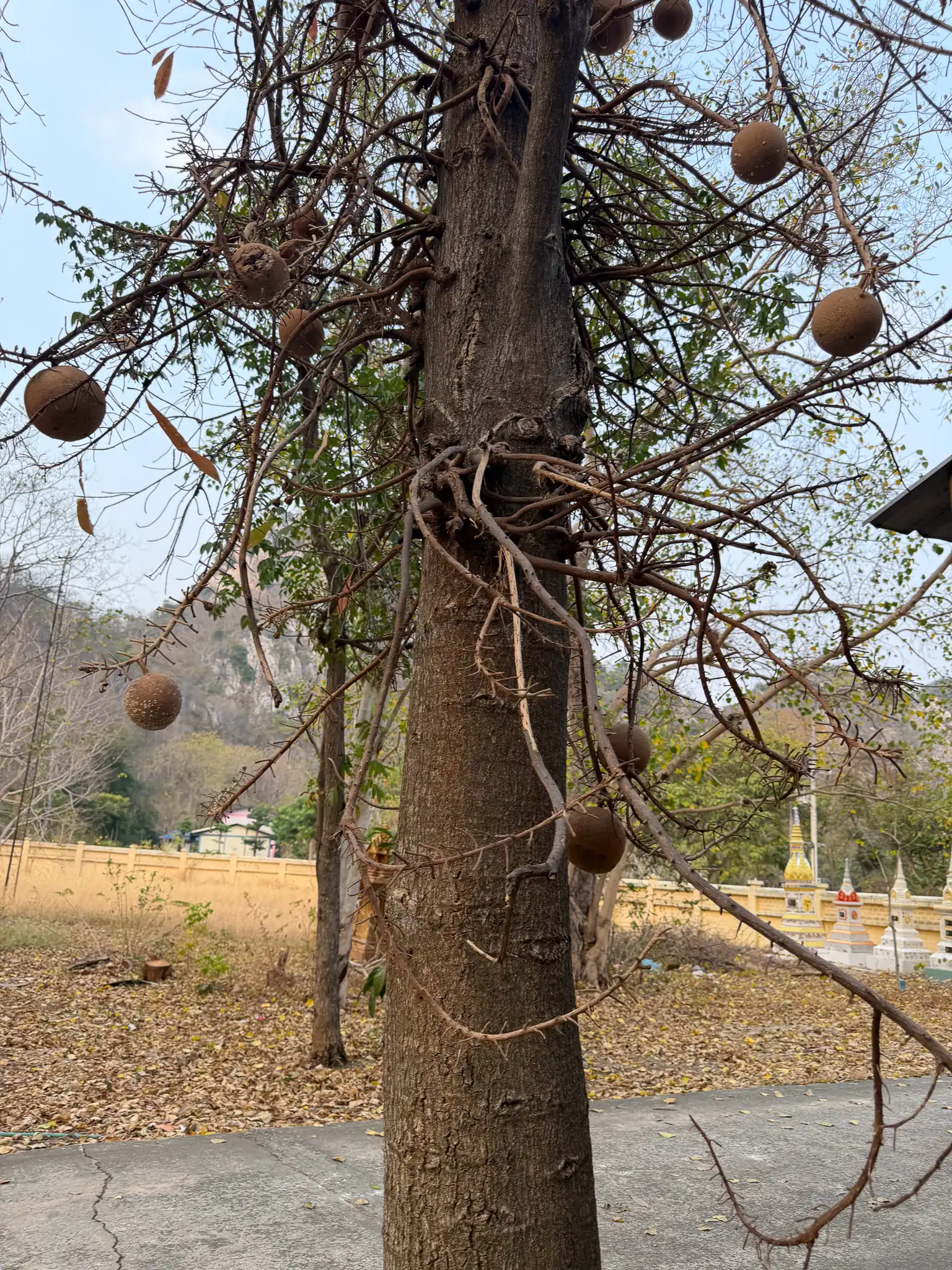
Couroupita guianensis is a soft-wooded deciduous tree from tropical Central and South American rainforest, reaching 50 to 75 feet tall with a straight trunk and elliptic 6- to 8-inch leaves clustered near the branch ends. It drops its leaves once, sometimes twice, a year in response to dry weather and refoliates from the branch tips.
Flowers and fruit are borne directly from the trunk and large limbs on tangled vine-like racemes 2 to 6 feet long, each 4- to 5-inch rose-pink flower opening for a single day with six petals and a cream hood of stamens. The round woody fruits grow 8 to 10 inches across, take more than a year to mature, then fall and split with a fetid pulp that is inedible and heavy enough to injure anyone beneath.
Uses & Benefits:
Essentials
At a Glance
Plant Type
Tree
Height
900"
Width
720"
Light
Full Sun, Partial Sun
Water
Medium
Humidity
High
Lifespan
Woody perennial tree
Native To
Tropical Central and South America
Toxicity
Fruit inedible, causes nausea if eaten; falling fruit hazard
Bloom period
Year round
In flower about 12 months of the year
Planting
How to Grow
- Plant in full sun to part shade in organically rich, well-drained loam with room for a 40- to 60-foot crown clear of paths.
- Water to keep soil evenly moist in warm weather; do not leave the root zone waterlogged.
- Spread a 2- to 3-inch mulch ring to hold moisture, kept back from the trunk.
- Leave trunk racemes intact; remove only broken limbs and fallen fruit promptly.
Pro Tip
Plant it well away from paths, patios and play areas; keeping foot traffic out from under the crown matters more than pruning or feeding.
Keep It Thriving
Care Guide
Do
- Do site the trunk where falling 8- to 10-inch fruit cannot strike people or cars.
- Do water through dry spells to hold foliage and support bloom.
- Do pick up fallen fruit promptly to contain odor and litter.
Don't
- Do not plant over a patio, sidewalk, parking stall or play area.
- Do not use overhead watering that keeps leaves and trunk wet.
- Do not eat the pulp; it smells fetid and causes nausea and vomiting.
Seasonal Care Calendar
| Task | Jan | Feb | Mar | Apr | May | Jun | Jul | Aug | Sep | Oct | Nov | Dec |
|---|---|---|---|---|---|---|---|---|---|---|---|---|
| Mulch | ||||||||||||
| Pest Check | ||||||||||||
| Plant | ||||||||||||
| Prune |
Watch Out For
Pests & Diseases
Common Pests
Common Diseases
In the Garden
Landscape Uses & Companions
Landscape Uses
Companion Plants
Multiply
Propagation Methods
Good to Know
Common Questions
Cannonball Tree questions
When does Cannonball Tree bloom?
Cannonball Tree typically blooms year-round. Exact timing shifts a week or two with your zone — Sow's bloom calendar maps it to your garden.
Does Cannonball Tree need full sun?
Cannonball Tree does best in full sun to part shade. In hot climates, afternoon shade keeps blooms fresher longer.
Keep exploring
Explore the genus
Grow Cannonball Tree with confidence
See it in a design of your actual yard, get zone-matched care reminders, and track it season by season in your garden journal.