The Story
Plant Bio
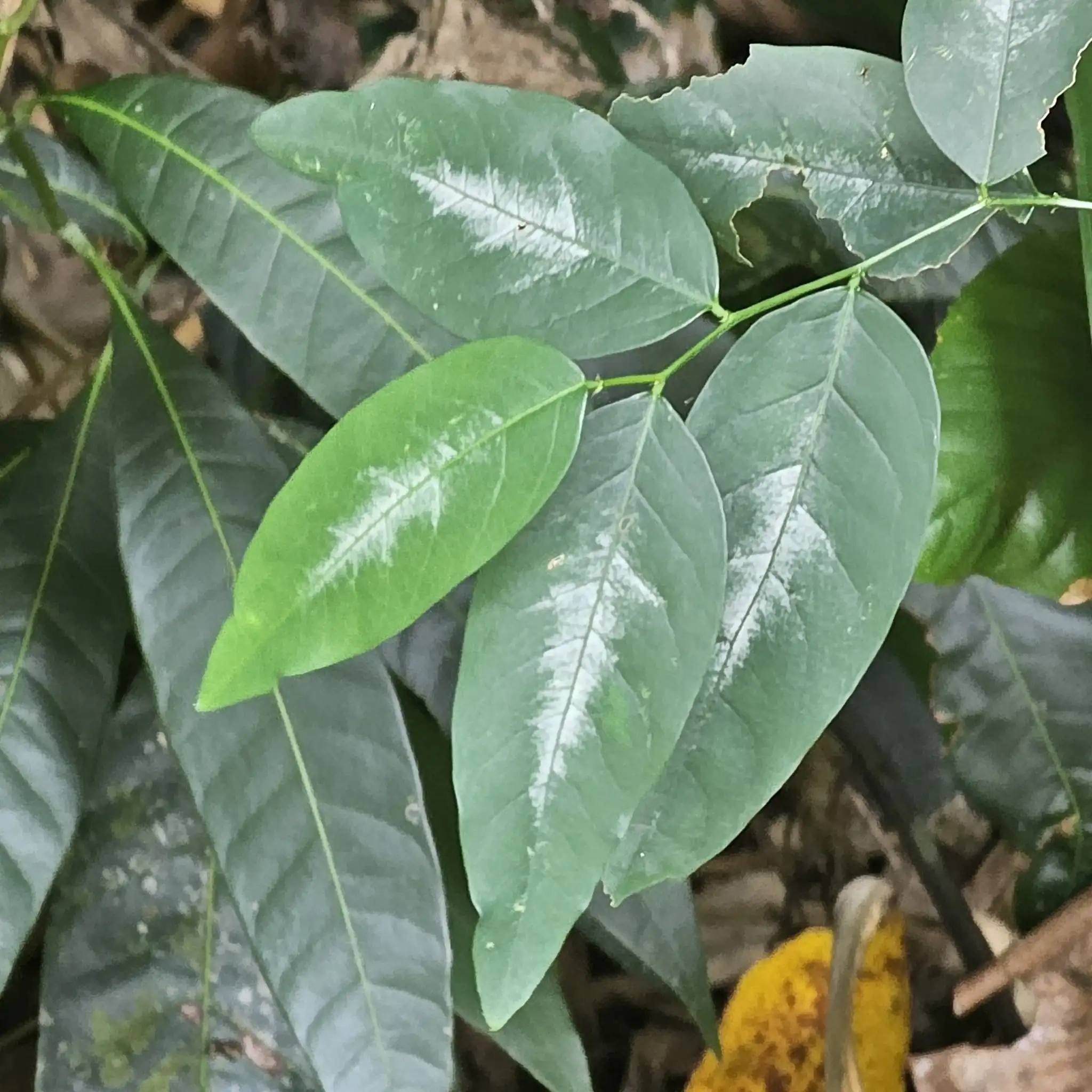
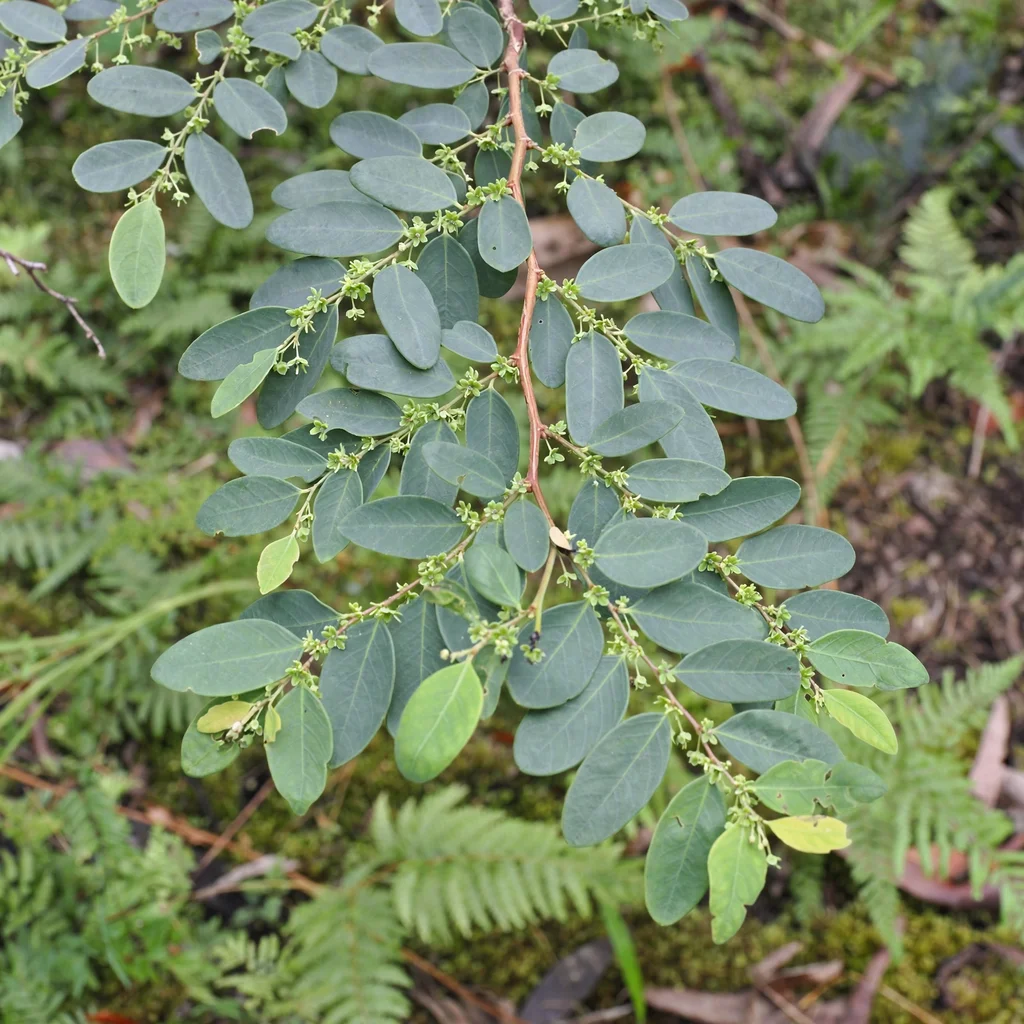
Breynia androgyna, sold as katuk, is a fast-growing evergreen shrub from Asian rainforest understory reaching five to ten feet, usually held at six to seven feet by picking, with multiple upright stems and dark green oval leaves two to three inches long. The flowers have no petals to speak of; tiny red and cream male and female blooms sit singly in the leaf axils on the same plant, followed by white-cream berries about half an inch across with red bracts.
It is still sold as Sauropus androgynus and grown as sweet leaf or tropical asparagus for its sweet shoots, which leaf out more heavily in semi-shade than in full sun and are harvested over two to three years. A white-silver variegated form is grown for foliage; fresh raw leaf eaten in quantity can cause irreversible lung injury, so leaves are only eaten cooked.
Uses & Benefits:
Essentials
At a Glance
Plant Type
Shrub
Height
84"
Width
48"
Light
Full Sun, Partial Sun
Zones
9, 10
Water
High
Humidity
High
Lifespan
Perennial
Native To
Tropical Asia to New Guinea
Toxicity
Toxic raw - cook before eating
Bloom period
Autumn – Winter
In flower about 6 months of the year
Planting
How to Grow
- Plant in full sun to partial shade with 4-6 hours of sun; afternoon shade gives the heaviest leaf crop.
- Set in rich, well-drained loam or clay-loam at pH 6.0-7.0, kept evenly moist in heat.
- Feed regularly through the growing season with a nitrogen-rich fertilizer to push new shoots.
- Harvest shoot tips every 1-2 weeks to keep plants dense at 6-7 feet and prevent legginess.
- In zones 9-11 mulch and water deeply in dry spells; elsewhere grow in a large pot and move indoors before frost.
Pro Tip
Pick shoot tips constantly and never let stems go leggy; shade-grown plants with steady nitrogen and water out-leaf sun-baked specimens, and always cook the leaves — never juice them raw.
Keep It Thriving
Care Guide
Do
- Grow in semi-shade for maximum tender leaves
- Water consistently, especially in full sun and heat
- Feed regularly with nitrogen-rich fertilizer
- Cook all leaves thoroughly before eating
Don't
- Do not plant in deep dry shade or cold exposed sites
- Do not let plants go unpruned and leggy
- Do not eat leaves raw or juice them fresh
- Do not overhead water when leaf spot is present
Seasonal Care Calendar
| Task | Jan | Feb | Mar | Apr | May | Jun | Jul | Aug | Sep | Oct | Nov | Dec |
|---|---|---|---|---|---|---|---|---|---|---|---|---|
| Fertilize | ||||||||||||
| Harvest | ||||||||||||
| Pest Check | ||||||||||||
| Prune | ||||||||||||
| Winter Prep |
Watch Out For
Pests & Diseases
Common Pests
Common Diseases
In the Garden
Landscape Uses & Companions
Landscape Uses
Multiply
Propagation Methods
Good to Know
Common Questions
Katuk questions
What zones can Katuk grow in?
Katuk is hardy in USDA Zones 9–10: in that range it survives winter in the ground. Colder than Zone 9, grow it in a container you can move to shelter for the winter.
When does Katuk bloom?
Katuk typically blooms from fall to winter. Exact timing shifts a week or two with your zone — Sow's bloom calendar maps it to your garden.
Does Katuk need full sun?
Katuk does best in full sun to part shade. In hot climates, afternoon shade keeps blooms fresher longer.
More Breynia to compare
Keep exploring
Explore the genus
Hardy in your zone?
Grow Katuk with confidence
See it in a design of your actual yard, get zone-matched care reminders, and track it season by season in your garden journal.