The Story
Plant Bio
Eriocephalus africanus is a bushy evergreen shrublet from the Western and Eastern Cape, reaching about 3 feet tall and wide in cultivation with arching densely branched stems. The foliage is tufted needle-like and coated in fine silvery hairs, releasing a sharp Vicks-like scent when crushed.
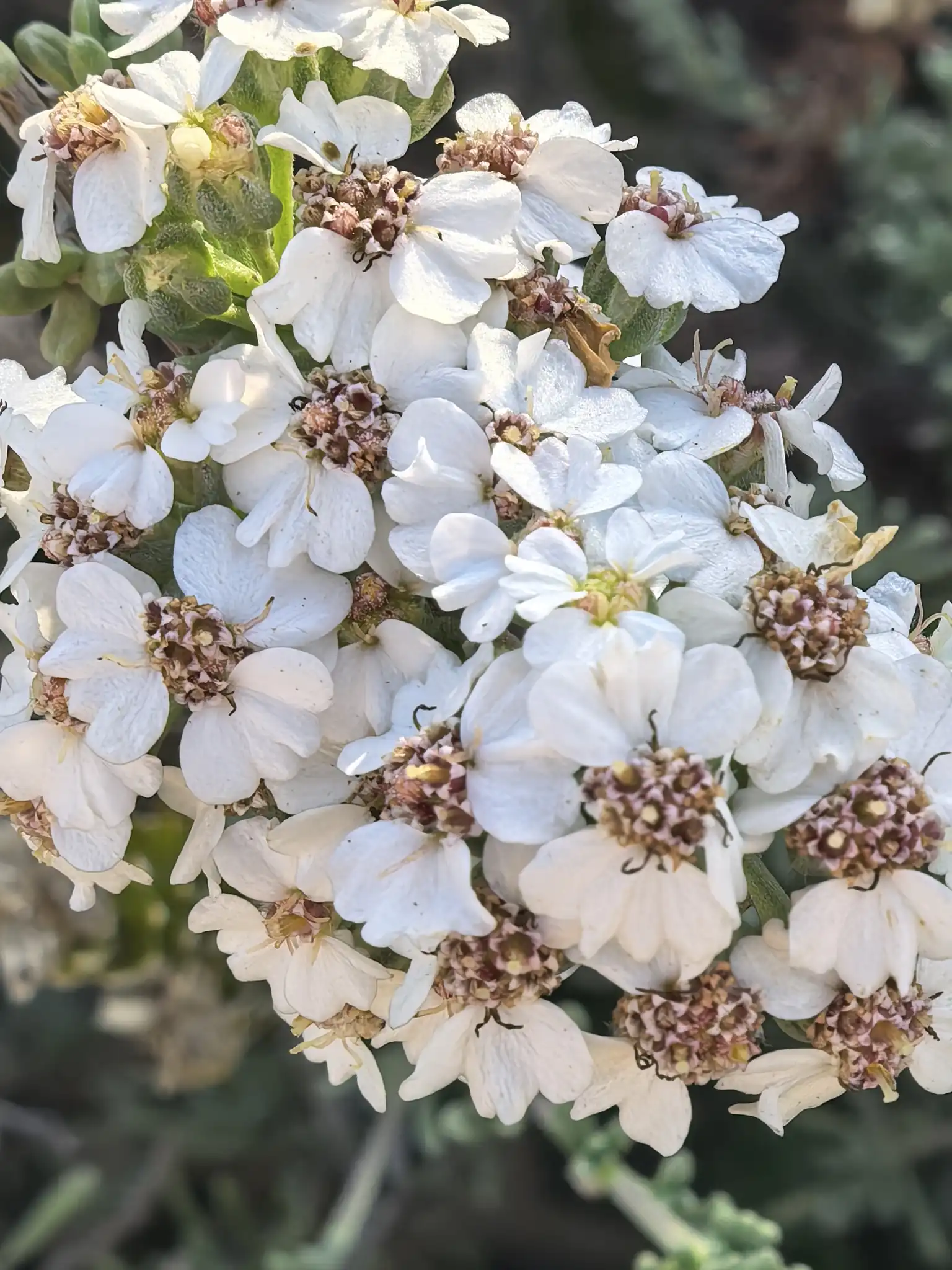
Flowers are small daisy heads with two to three white rays around a purple-maroon disc, carried in clusters at the branch tips in winter. After bloom each head ripens into a fluffy white woolly ball, covering the shrub in a snow-like display that persists for weeks.
Uses & Benefits:
Essentials
At a Glance
Plant Type
Shrub
Height
39"
Width
36"
Light
Full Sun
Zones
9, 10
Water
Low
Humidity
Low
Lifespan
Woody perennial
Native To
South Africa (Western Cape, Eastern Cape)
Toxicity
Unknown
Bloom period
Winter – Summer
In flower about 9 months of the year
Planting
How to Grow
- Plant in full sun in sharply drained poor to average soil, mounding up in clay.
- Space 3 feet apart for mass planting or coastal screening.
- Water deeply at planting, then infrequently once established; established plants use a deep taproot and dislike constant moisture.
- Shear lightly after winter bloom to shape; do not cut into old bare stems.
- Top with gravel mulch, not bark, to keep the crown dry.
Pro Tip
Give it full sun and sharp drainage and leave it dry between waterings; shear lightly after bloom and never cut back into old leafless wood.
Keep It Thriving
Care Guide
Do
- Give full sun all day.
- Provide sharp drainage, mound in clay.
- Water deeply but infrequently once established.
Don't
- Do not overwater or plant in soggy soil.
- Do not shear into old leafless wood.
- Do not grow as a culinary rosemary substitute.
Seasonal Care Calendar
| Task | Jan | Feb | Mar | Apr | May | Jun | Jul | Aug | Sep | Oct | Nov | Dec |
|---|---|---|---|---|---|---|---|---|---|---|---|---|
| Pest Check | ||||||||||||
| Plant | ||||||||||||
| Propagate | ||||||||||||
| Prune |
Watch Out For
Pests & Diseases
Common Pests
Common Diseases
In the Garden
Landscape Uses & Companions
Landscape Uses
Multiply
Propagation Methods
Good to Know
Common Questions
Wild Rosemary questions
What zones can Wild Rosemary grow in?
Wild Rosemary is hardy in USDA Zones 9–10: in that range it survives winter in the ground. Colder than Zone 9, grow it in a container you can move to shelter for the winter.
When does Wild Rosemary bloom?
Wild Rosemary typically blooms from winter to summer. Exact timing shifts a week or two with your zone — Sow's bloom calendar maps it to your garden.
Does Wild Rosemary need full sun?
Wild Rosemary does best in full sun (6+ hours).
Is Wild Rosemary drought tolerant?
Yes — once established (usually after the first full season), Wild Rosemary handles dry spells with minimal watering. Water deeply its first year to build the root system that makes that possible.
Keep exploring
Explore the genus
Hardy in your zone?
Grow Wild Rosemary with confidence
See it in a design of your actual yard, get zone-matched care reminders, and track it season by season in your garden journal.