The Story
Plant Bio
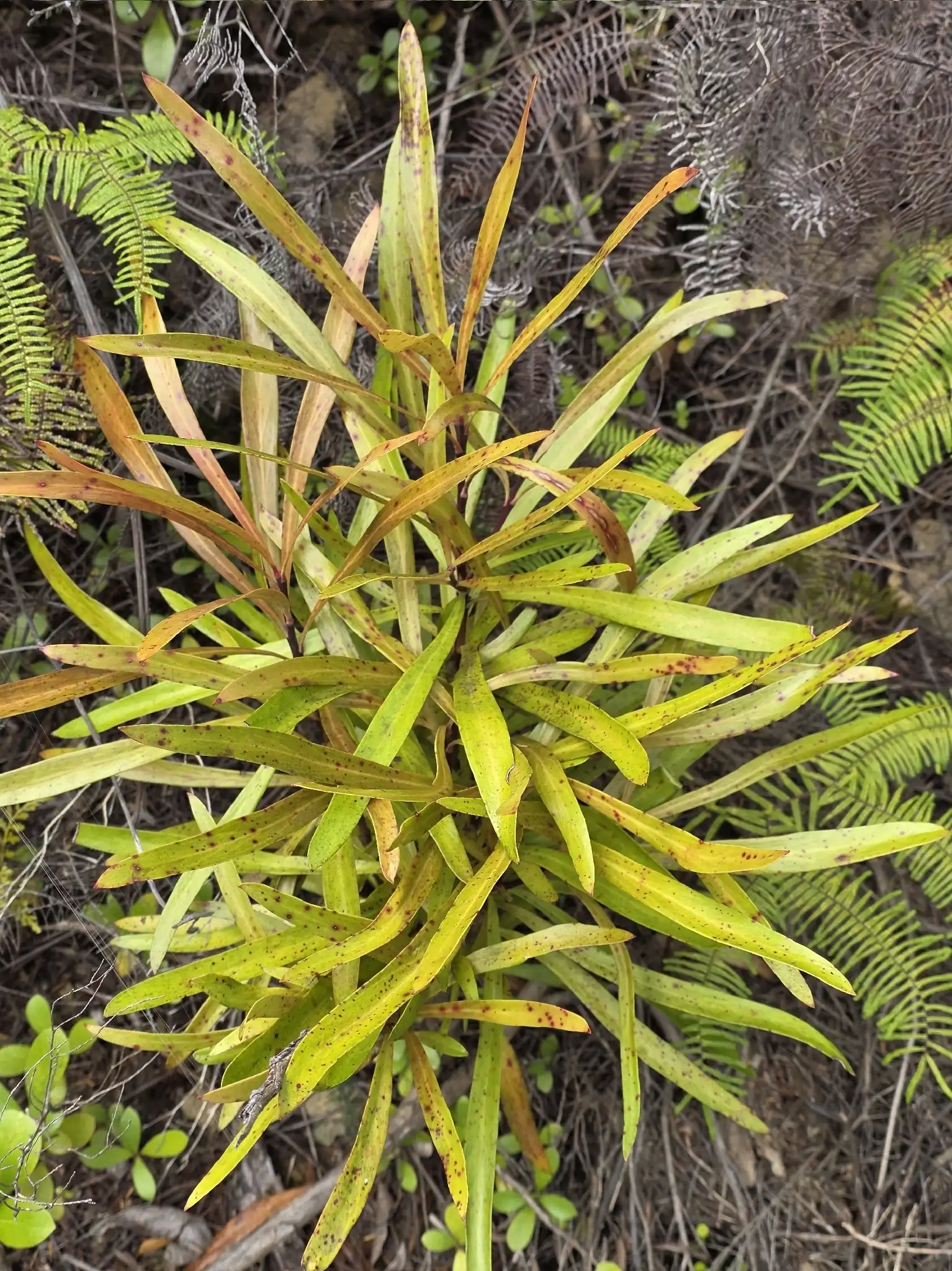
Toronia toru is an evergreen small tree native to New Zealand, growing in an upright, flame-like habit up to thirty feet tall. Its narrow, leathery dark green leaves often feature red-tinged tips, while small straw-yellow flowers emerge in slender racemes during spring.
As a monotypic genus in the Proteaceae family, it produces specialized cluster roots designed to extract nutrients from dry, highly infertile soils. The dense, vertical structure and smooth, pointed foliage create a strong architectural form in mild coastal climates.
Uses & Benefits:
Essentials
At a Glance
Plant Type
Tree
Height
354"
Width
138"
Light
Full Sun
Zones
9, 10
Water
Low to Medium
Humidity
Moderate to High
Lifespan
Perennial
Native To
New Zealand
Toxicity
Non-toxic
Bloom period
Spring – Summer
In flower about 6 months of the year
Planting
How to Grow
- Select a warm, sunny planting site with lean, sandy, or gravelly soil.
- Ensure excellent drainage by amending heavy soils or planting on elevated mounds.
- Plant at the same soil depth as the nursery container and water in lightly.
- Protect young saplings from freezing temperatures during winter months.
Pro Tip
Never apply phosphorus-bearing fertilizers, which quickly poison Proteaceae root systems; limit pruning strictly to young green tips, as cutting into old leafless wood prevents regeneration.
Keep It Thriving
Care Guide
Do
- Plant in infertile, dry, acid-to-neutral soils with fast drainage.
- Protect young plants from frost and hard freezes.
- Tip-prune only light green shoots to encourage branching.
Don't
- Never use fertilizers containing phosphorus or general-purpose plant foods.
- Do not cut back into old, bare leafless wood.
- Do not plant in heavy, waterlogged clay soils.
Seasonal Care Calendar
| Task | Jan | Feb | Mar | Apr | May | Jun | Jul | Aug | Sep | Oct | Nov | Dec |
|---|---|---|---|---|---|---|---|---|---|---|---|---|
| Fertilize | ||||||||||||
| Pest Check | ||||||||||||
| Prune | ||||||||||||
| Winter Prep |
Watch Out For
Pests & Diseases
Common Pests
Common Diseases
In the Garden
Landscape Uses & Companions
Landscape Uses
Multiply
Propagation Methods
Good to Know
Common Questions
Toru questions
What zones can Toru grow in?
Toru is hardy in USDA Zones 9–10: in that range it survives winter in the ground. Colder than Zone 9, winters are too cold for it to survive outdoors.
When does Toru bloom?
Toru typically blooms from spring to summer. Exact timing shifts a week or two with your zone — Sow's bloom calendar maps it to your garden.
Does Toru need full sun?
Toru does best in full sun (6+ hours).
Is Toru drought tolerant?
Yes — once established (usually after the first full season), Toru handles dry spells with minimal watering. Water deeply its first year to build the root system that makes that possible.
Keep exploring
Explore the genus
Hardy in your zone?
Grow Toru with confidence
See it in a design of your actual yard, get zone-matched care reminders, and track it season by season in your garden journal.