The Story
Plant Bio
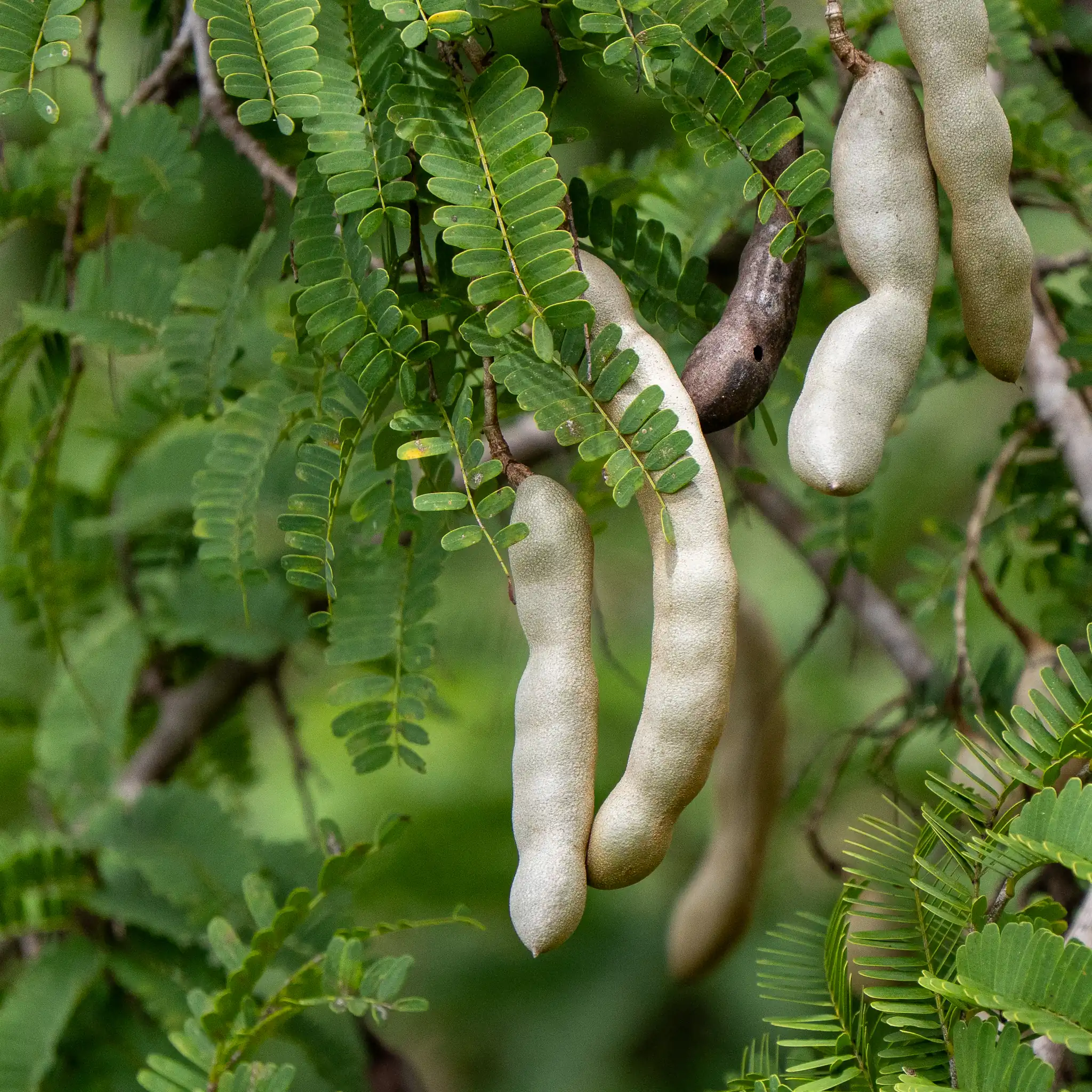
Tamarindus indica, the tamarind, is a slow-growing long-lived evergreen tree reaching 40 to 60 feet in cultivation, to 80 feet or more where frost-free, with a broad spreading crown of drooping branches. The crown carries feathery pinnate foliage that remains evergreen and casts a deep, wide shade.
What distinguishes it is the inch-wide yellow flower streaked orange-red, with five petals, two reduced to bristles, opening from pink buds in small lax racemes about an inch across with a mild fragrance. It blooms in summer into fall in frost-free Zone 10-11, where its 40-foot spread, 300-year lifespan and steady leaf and fruit litter set it apart from small garden shade trees.
Uses & Benefits:
Essentials
At a Glance
Plant Type
Tree
Height
720"
Width
472"
Light
Full Sun
Zones
10
Water
Moderate, moist well-drained, never soggy
Humidity
Tolerant of tropical humidity
Lifespan
Long-lived, to 300 years
Native To
Tropical Africa
Toxicity
Non-toxic to people and pets; seed dust can irritate airways and skin; trunk may bear thorns
Bloom period
Summer – Fall
In flower about 6 months of the year
Marketplace
Where to Buy
Shipping costs Year-round shipping Free shipping
Planting
How to Grow
- Plant potted stock in full sun in frost-free Zone 10-11 after any cold has passed.
- Set in acidic sandy loam that is moist but well drained, 33 to 65 feet from structures and 3 feet from paving.
- Water to establish, then avoid soggy soil that causes root rot.
- Prune to control density and ease harvest, removing dead or diseased branches promptly.
- Check foliage and stems regularly for scale, mealybug and aphids.
Pro Tip
Site for a 40-foot spread from the start, at least 33 feet from buildings and 3 feet clear of paving, and remove dead or diseased wood promptly to keep the crown open for harvest.
Keep It Thriving
Care Guide
Do
- Give full sun and room for a 40-foot spread
- Plant in moist well-drained acidic sand or loam
- Check stems and leaf undersides for scale and mealybug
Don't
- Do not plant where frost occurs or in soggy soil
- Do not plant within 33 feet of buildings or close to paving
- Do not expect hummingbirds or wildlife value from the small insect flowers
Seasonal Care Calendar
| Task | Jan | Feb | Mar | Apr | May | Jun | Jul | Aug | Sep | Oct | Nov | Dec |
|---|---|---|---|---|---|---|---|---|---|---|---|---|
| Mulch | ||||||||||||
| Pest Check | ||||||||||||
| Plant | ||||||||||||
| Prune | ||||||||||||
| Winter Prep |
Watch Out For
Pests & Diseases
Common Pests
Common Diseases
In the Garden
Landscape Uses & Companions
Landscape Uses
Companion Plants
Multiply
Propagation Methods
Good to Know
Common Questions
Tamarind questions
What zones can Tamarind grow in?
Tamarind is hardy in USDA Zone 10: in that range it survives winter in the ground. Colder than Zone 10, winters are too cold for it to survive outdoors.
When does Tamarind bloom?
Tamarind typically blooms from summer to fall. Exact timing shifts a week or two with your zone — Sow's bloom calendar maps it to your garden.
Does Tamarind need full sun?
Tamarind does best in full sun (6+ hours).
Keep exploring
Explore the genus
Hardy in your zone?
Grow Tamarind with confidence
See it in a design of your actual yard, get zone-matched care reminders, and track it season by season in your garden journal.