The Story
Plant Bio
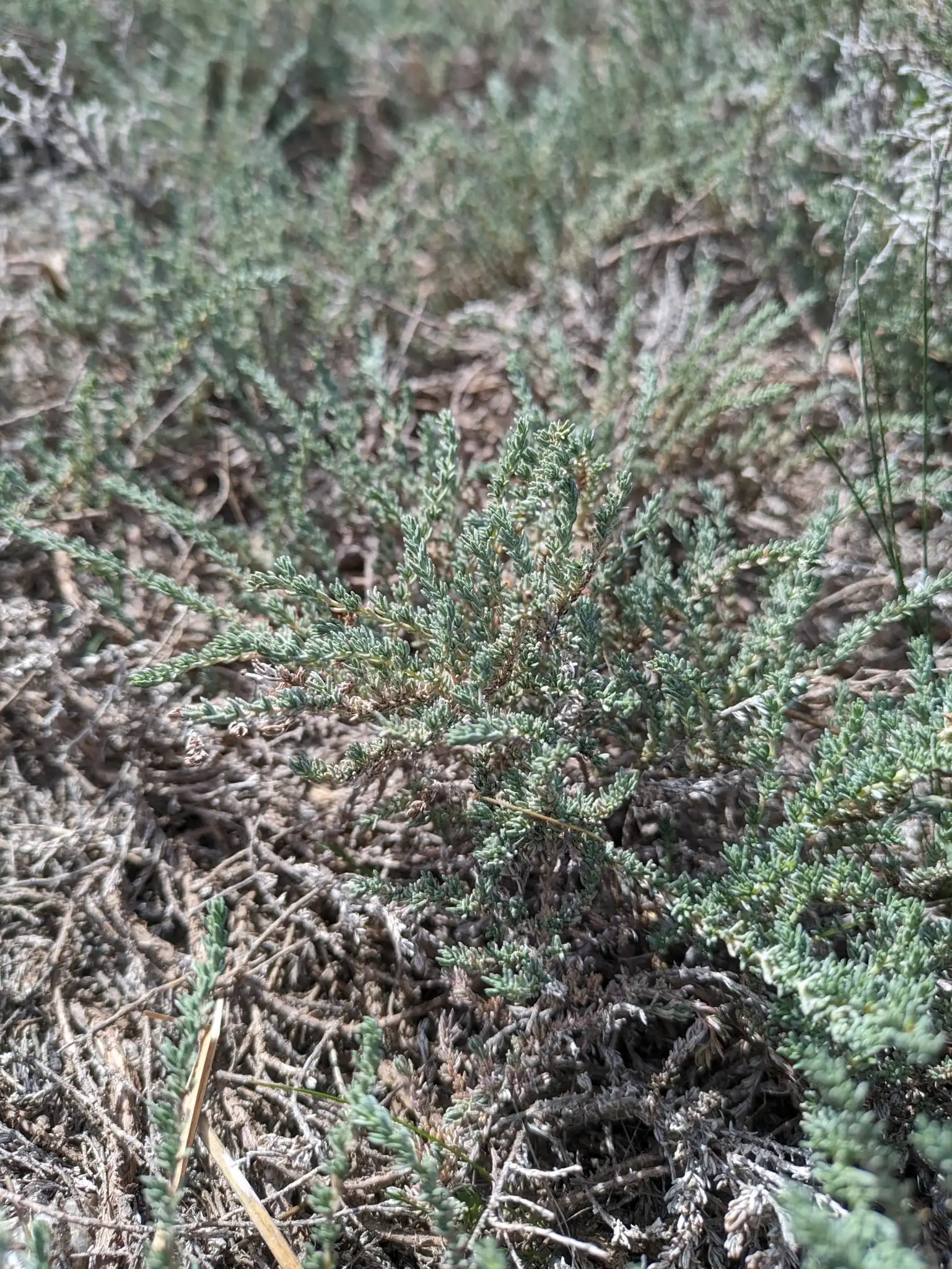
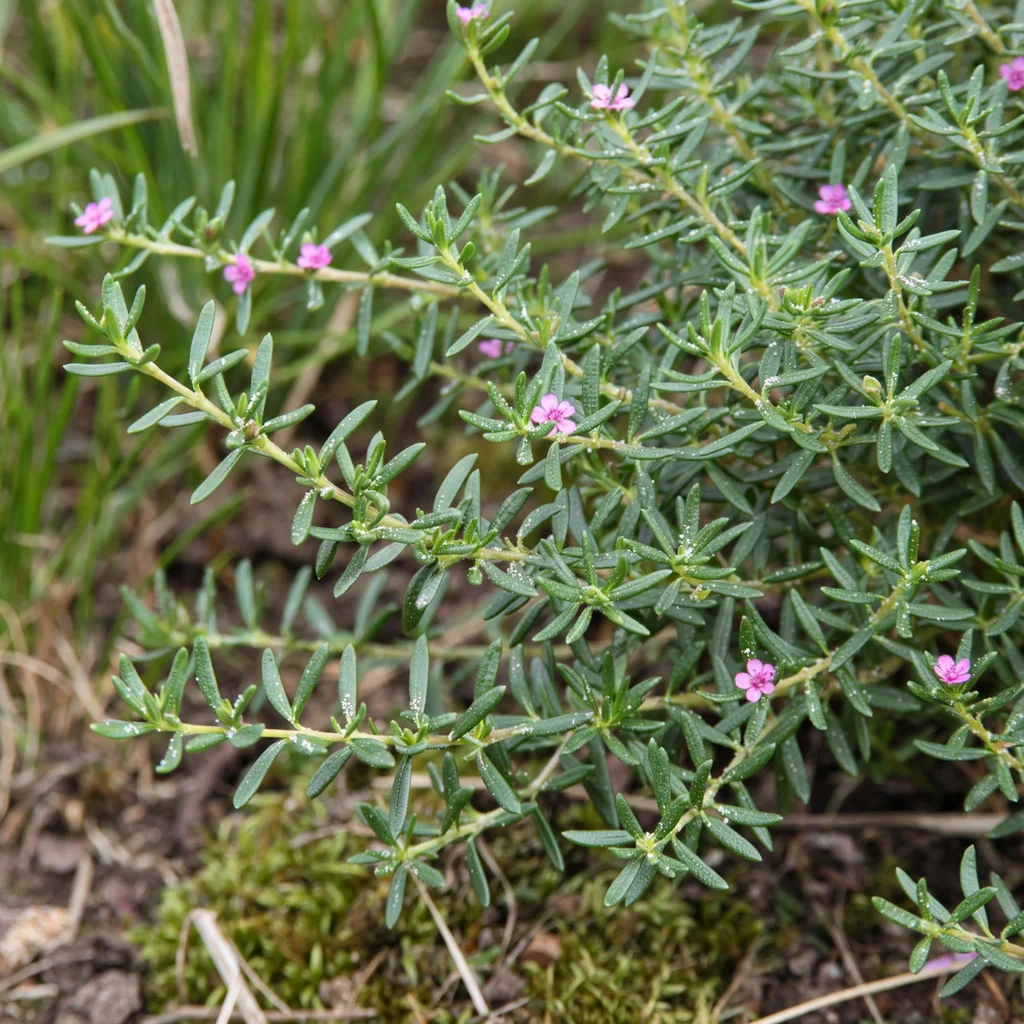
Frankenia thymifolia is a low evergreen subshrub that forms a tight mat 6 inches tall and 1 to 2 feet wide on wiry, creeping stems. Its tiny narrow gray-green leaves are semi-succulent with rolled margins and white hairs, and in summer the branch ends carry masses of very small stemless rose-pink flowers with five petals.
Unlike the common native sea-heath, this is a North African and southern Spanish halophyte built for saline steppes, salt crusts and gypsum soils. It holds in full sun with sharp drainage and very little water, tolerating salt and reclaimed water where thirstier groundcovers fail.
Uses & Benefits:
Essentials
At a Glance
Plant Type
Groundcover
Height
6"
Width
24"
Light
Full Sun
Zones
8, 9, 10
Water
Low
Humidity
Unknown
Lifespan
Perennial
Native To
Southern Spain and North Africa
Toxicity
Unknown
Bloom period
Summer
In flower about 3 months of the year
Planting
How to Grow
- Choose a full-sun spot with light, gritty, fast-draining soil.
- Plant high with the crown at soil level and firm gravel grit around the stems.
- Water in once, then water sparingly and allow soil to dry between waterings.
- Keep competing weeds and fallen leaves off the mat to maintain airflow.
Pro Tip
Plant high in gritty, fast-draining soil in full sun and keep it lean and dry; soggy soil and rich fertilizer kill it faster than cold.
Keep It Thriving
Care Guide
Do
- Grow in full sun with sharp drainage.
- Water very little once rooted.
- Use a gravel mulch to keep crowns dry.
Don't
- Do not overwater or fertilize heavily.
- Do not plant in heavy clay or wet low spots.
- Do not cut back into bare old wood.
Seasonal Care Calendar
| Task | Jan | Feb | Mar | Apr | May | Jun | Jul | Aug | Sep | Oct | Nov | Dec |
|---|---|---|---|---|---|---|---|---|---|---|---|---|
| Mulch | ||||||||||||
| Pest Check | ||||||||||||
| Plant | ||||||||||||
| Prune | ||||||||||||
| Winter Prep |
Watch Out For
Pests & Diseases
Common Pests
Common Diseases
In the Garden
Landscape Uses & Companions
Landscape Uses
Companion Plants
Multiply
Propagation Methods
Good to Know
Common Questions
Sea Heath questions
What zones can Sea Heath grow in?
Sea Heath is hardy in USDA Zones 8–10: in that range it survives winter in the ground. Colder than Zone 8, grow it in a container you can move to shelter for the winter, or as an annual.
When does Sea Heath bloom?
Sea Heath typically blooms in summer. Exact timing shifts a week or two with your zone — Sow's bloom calendar maps it to your garden.
Does Sea Heath need full sun?
Sea Heath does best in full sun (6+ hours).
Is Sea Heath drought tolerant?
Yes — once established (usually after the first full season), Sea Heath handles dry spells with minimal watering. Water deeply its first year to build the root system that makes that possible.
More Frankenia to compare
Keep exploring
Explore the genus
Hardy in your zone?
Grow Sea Heath with confidence
See it in a design of your actual yard, get zone-matched care reminders, and track it season by season in your garden journal.