The Story
Plant Bio
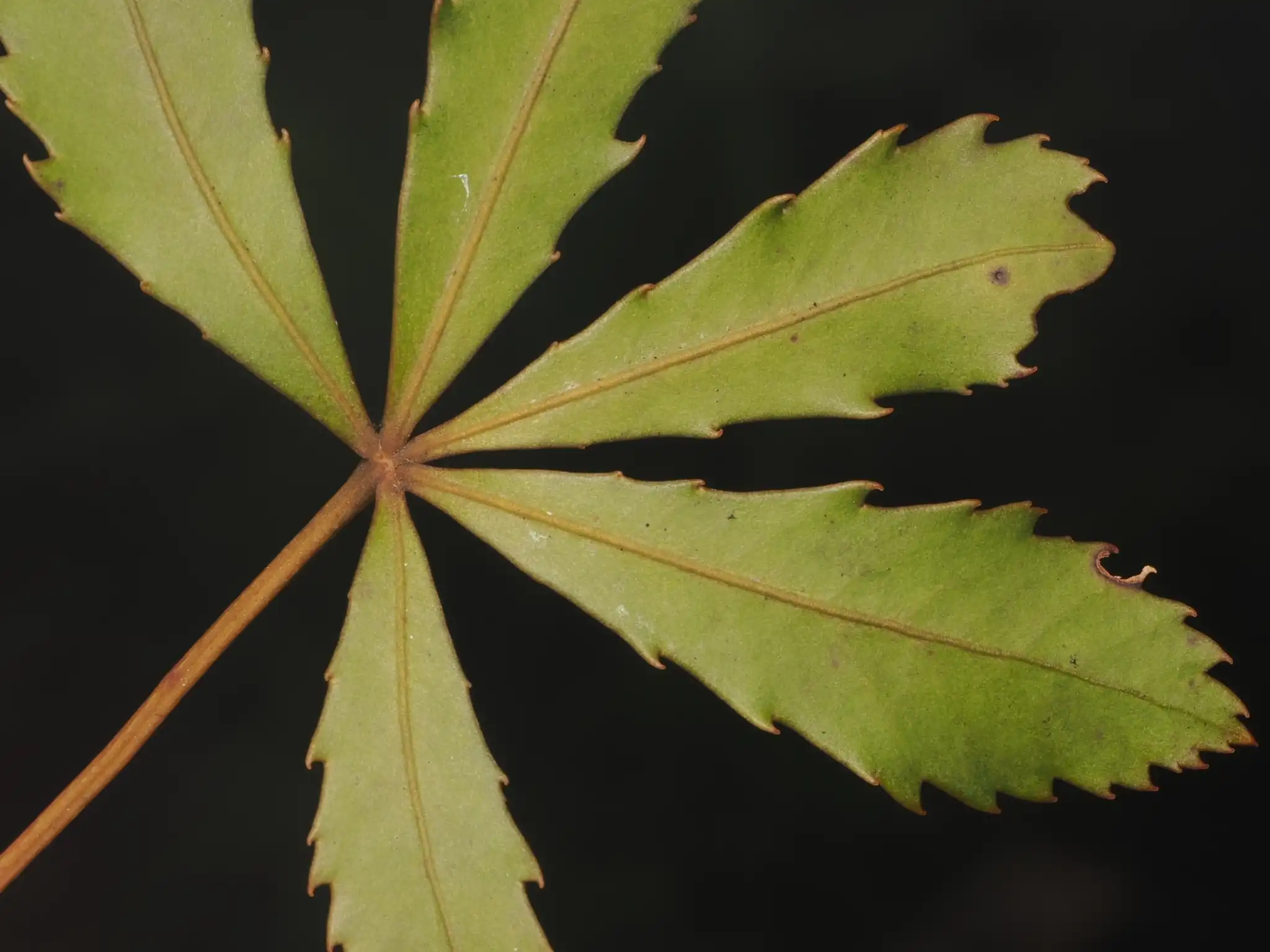
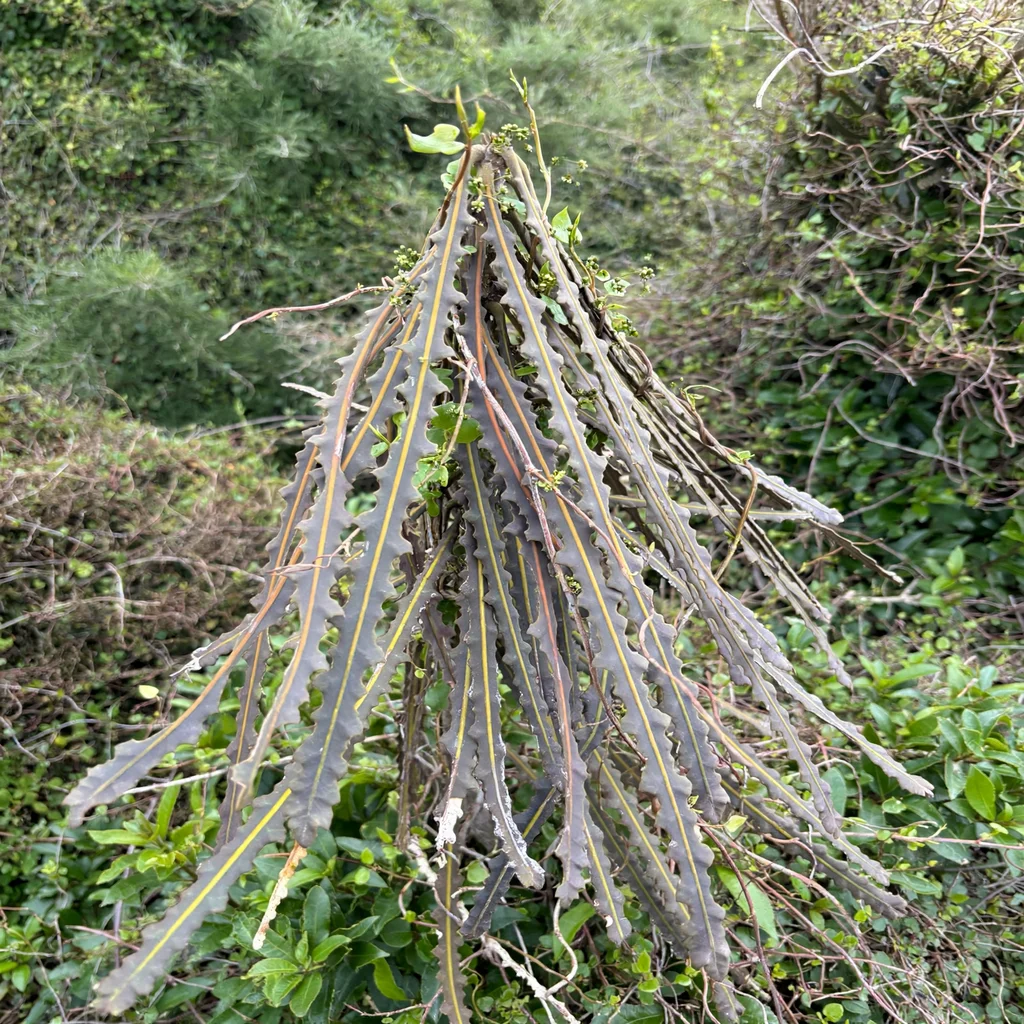
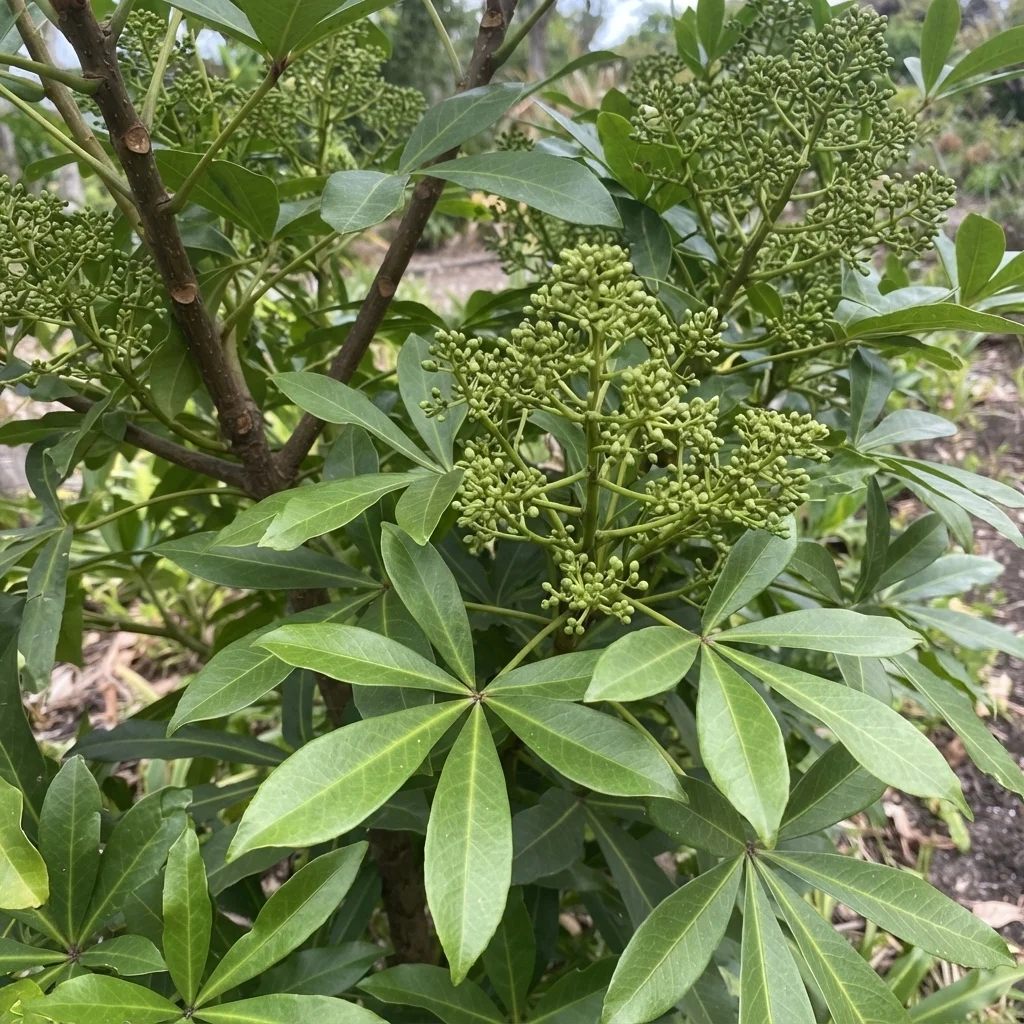
Pseudopanax discolor is an evergreen shrub native to New Zealand's North Island, growing up to fifteen feet tall with a multi-branched, canopy-like form. The palmate leaves feature three to five sharply serrated, leathery leaflets that emerge bronze to dark green on top with pale purplish underside surfaces.
This species is distinguished by its bicolored foliage, where bronze-green upper leaf surfaces sit directly above purplish-green undersides. Small greenish-white flowers assemble in loose terminal umbels through summer, followed by small fleshy fruits.
Uses & Benefits:
Essentials
At a Glance
Plant Type
Shrub
Height
197"
Width
118"
Light
Full Sun, Partial Sun
Zones
8, 9, 10
Water
Moderate
Humidity
Moderate to High
Lifespan
Perennial
Native To
New Zealand (North Island)
Toxicity
Non-toxic (sap may cause mild skin irritation)
Bloom period
Summer – Fall
In flower about 6 months of the year
Planting
How to Grow
- Select a planting site in full sun or dappled shade sheltered from harsh winter winds.
- Amend native soil with organic matter to ensure loose structure and rapid water drainage.
- Dig a hole twice as wide as the root ball and sit the plant level with the soil line.
- Backfill firmly and water deeply to settle roots without saturating the surrounding soil.
- Apply a layer of organic mulch across the root zone, keeping it clear of the main stem.
Pro Tip
Plant in light, highly organic soil with sharp drainage, and refrain from pruning back into bare, leafless wood as dormant buds fail to regenerate.
Keep It Thriving
Care Guide
Do
- Plant in rich, free-draining soil to prevent root rot pathogens.
- Protect young plants from severe winter frosts and browsing mammals.
- Mulch around the base annually while keeping the stem clear.
Don't
- Do not plant in heavy clay or waterlogged soils.
- Do not cut heavily into old bare stems with no active leaves.
- Do not allow mulch to pile up directly against the trunk.
Seasonal Care Calendar
| Task | Jan | Feb | Mar | Apr | May | Jun | Jul | Aug | Sep | Oct | Nov | Dec |
|---|---|---|---|---|---|---|---|---|---|---|---|---|
| Fertilize | ||||||||||||
| Mulch | ||||||||||||
| Pest Check | ||||||||||||
| Prune | ||||||||||||
| Winter Prep |
Watch Out For
Pests & Diseases
Common Pests
Common Diseases
In the Garden
Landscape Uses & Companions
Landscape Uses
Companion Plants
Multiply
Propagation Methods
Good to Know
Common Questions
Bronze Pseudopanax questions
What zones can Bronze Pseudopanax grow in?
Bronze Pseudopanax is hardy in USDA Zones 8–10: in that range it survives winter in the ground. Colder than Zone 8, grow it in a container you can move to shelter for the winter.
Is Bronze Pseudopanax deer resistant?
Not reliably. Deer may browse Bronze Pseudopanax, especially tender spring growth — plan on repellents or fencing where pressure is high.
When does Bronze Pseudopanax bloom?
Bronze Pseudopanax typically blooms from summer to fall. Exact timing shifts a week or two with your zone — Sow's bloom calendar maps it to your garden.
Does Bronze Pseudopanax need full sun?
Bronze Pseudopanax does best in full sun to part shade. In hot climates, afternoon shade keeps blooms fresher longer.
Is Bronze Pseudopanax drought tolerant?
Yes — once established (usually after the first full season), Bronze Pseudopanax handles dry spells with minimal watering. Water deeply its first year to build the root system that makes that possible.
More Pseudopanax to compare
Keep exploring
Explore the genus
Hardy in your zone?
Grow Bronze Pseudopanax with confidence
See it in a design of your actual yard, get zone-matched care reminders, and track it season by season in your garden journal.