The Story
Plant Bio
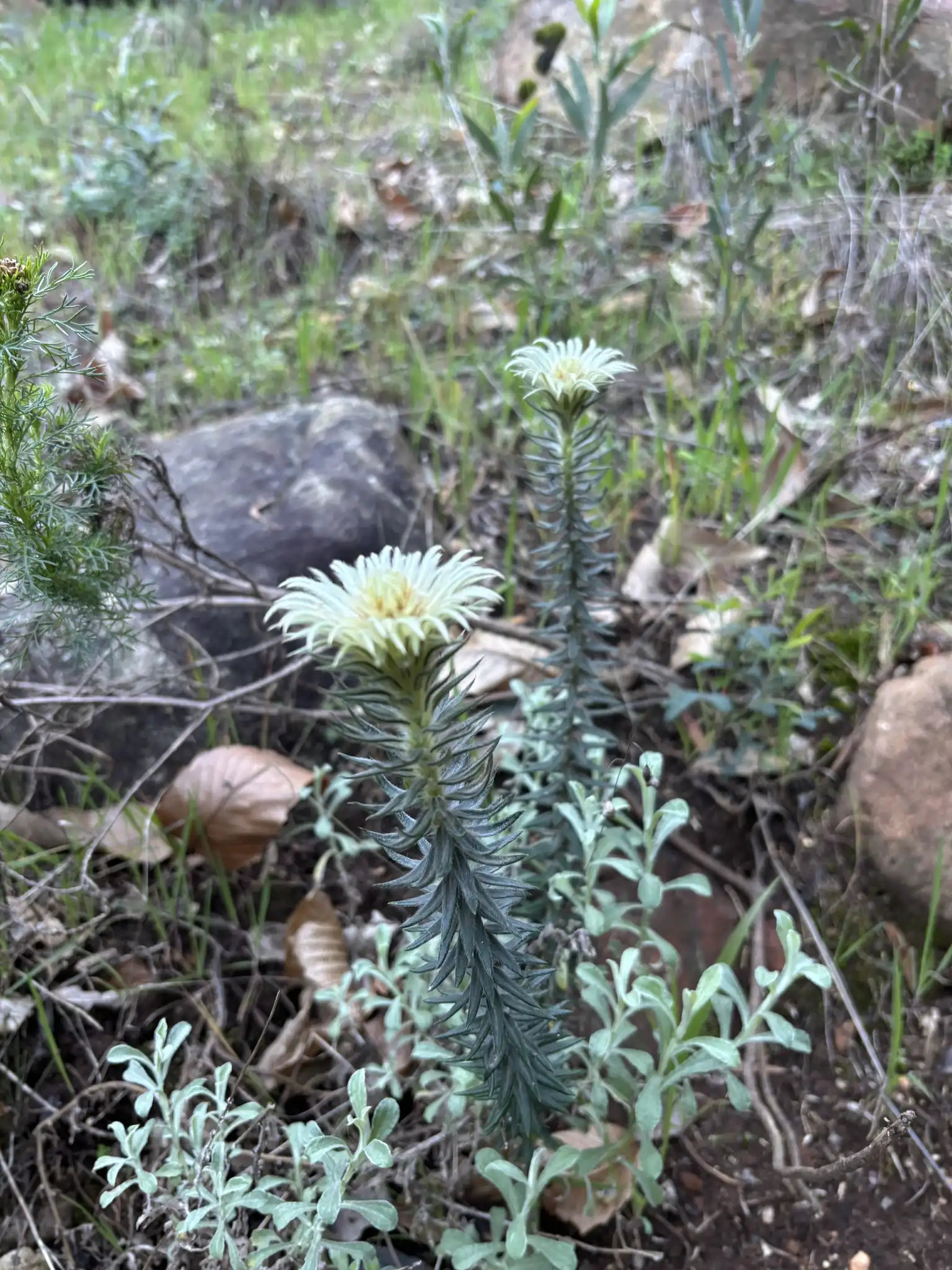
Phylica pubescens is an open evergreen shrub from the Cape fynbos reaching about five feet tall and slightly wider, with dense-tipped branches clothed in narrow leathery leaves. The leaves are golden-silvery with hairs and pale beneath, crowded toward the shoot tips, and the winter display comes from flattened terminal heads where tiny white flowers sit hidden among feathery cream to snowy-white bracts.
This is the larger featherhead of the California cut-flower trade, growing to four or five feet where the true Phylica plumosa stays at one to two feet. It holds its color through drought and salt air on acid sand with sharp drainage, and fails quickly where soil stays wet around the crown.
Uses & Benefits:
Essentials
At a Glance
Plant Type
Shrub
Height
60"
Width
70"
Light
Full Sun, Partial Sun
Zones
9, 10
Water
Low
Humidity
Unknown
Lifespan
Evergreen shrub
Native To
Western Cape, South Africa
Toxicity
Unknown
Bloom period
Fall – Late winter
In flower about 6 months of the year
Planting
How to Grow
- Plant in full sun in very sandy, acidic soil that drains instantly; mound up or use a slope if drainage is doubtful.
- Set the crown slightly high and water in once, then water sparingly once established.
- Feed rarely if at all with a low-phosphorus fertilizer for acid-loving natives.
- Harvest cut stems while bracts are fresh or leave heads to dry on the plant for fall to winter display.
Pro Tip
Plant high in full sun in acid sand with water running straight through, then leave it dry; bring a pot indoors for display while in bloom and return it outside after.
Keep It Thriving
Care Guide
Do
- Plant in full sun with sharp drainage
- Water sparingly once established
- Use only low-phosphorus fertilizer sparingly
Don't
- Do not overwater or plant in heavy clay or soggy soil
- Do not cut back into old bare wood
- Do not accept a tall plant labeled Phylica plumosa without checking mature height
Seasonal Care Calendar
| Task | Jan | Feb | Mar | Apr | May | Jun | Jul | Aug | Sep | Oct | Nov | Dec |
|---|---|---|---|---|---|---|---|---|---|---|---|---|
| Fertilize | ||||||||||||
| Pest Check | ||||||||||||
| Plant | ||||||||||||
| Propagate | ||||||||||||
| Prune |
Watch Out For
Pests & Diseases
Common Pests
Common Diseases
In the Garden
Landscape Uses & Companions
Landscape Uses
Companion Plants
Multiply
Propagation Methods
Good to Know
Common Questions
Featherhead questions
What zones can Featherhead grow in?
Featherhead is hardy in USDA Zones 9–10: in that range it survives winter in the ground. Colder than Zone 9, grow it in a container you can move to shelter for the winter.
When does Featherhead bloom?
Featherhead typically blooms from fall to winter. Exact timing shifts a week or two with your zone — Sow's bloom calendar maps it to your garden.
Does Featherhead need full sun?
Featherhead does best in full sun to part shade. In hot climates, afternoon shade keeps blooms fresher longer.
Is Featherhead drought tolerant?
Yes — once established (usually after the first full season), Featherhead handles dry spells with minimal watering. Water deeply its first year to build the root system that makes that possible.
Keep exploring
Explore the genus
Hardy in your zone?
Grow Featherhead with confidence
See it in a design of your actual yard, get zone-matched care reminders, and track it season by season in your garden journal.