The Story
Plant Bio
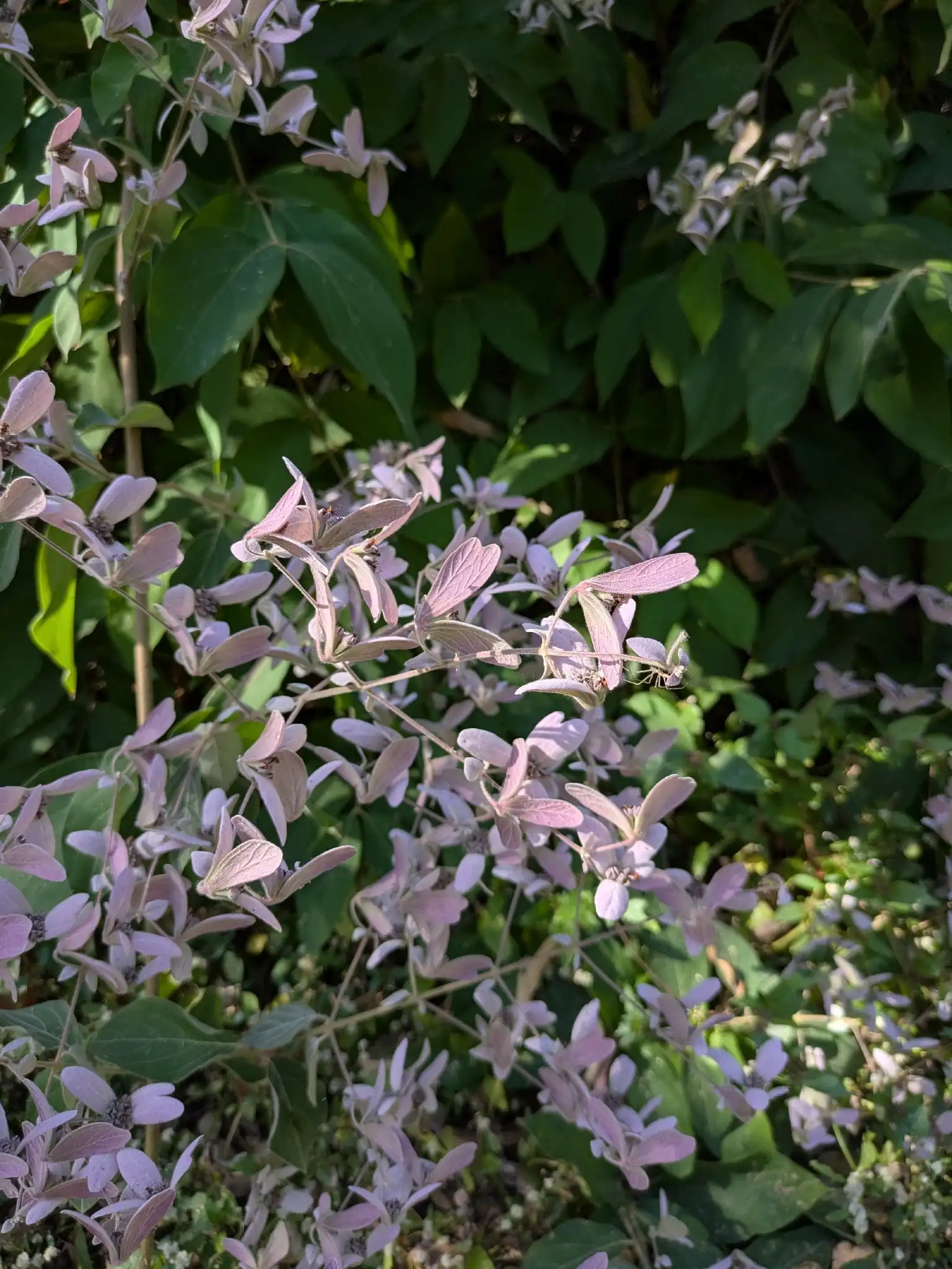
Congea tomentosa is an evergreen woody climber from monsoon Asia that reaches 10 to 16 feet in gardens on twining stems, with gray wrinkled bark on old wood. The leaves are elliptic-ovate to 7 inches long, entire and densely velvety-hairy, carried on green tomentose young stems.
The color comes from velvety pink to mauve-gray bracts that hold small white tubular flowers in 5- to 9-flowered cymes at the stem tips and upper leaf axils. It blooms in spring from the stem tips and climbs or trails by nature, but with support and pruning after bloom it can be held as a large shrub.
Uses & Benefits:
Essentials
At a Glance
Plant Type
Vine
Height
197"
Width
197"
Light
Full Sun, Partial Sun
Zones
9, 10
Water
Moderate - evenly moist
Humidity
High - loves warm humid air
Lifespan
Long-lived evergreen vine
Native To
Tropical Asia - India to Malaysia
Toxicity
Non-toxic
Bloom period
Spring
In flower about 3 months of the year
Planting
How to Grow
- Plant in full sun in fertile, humus-rich, well-drained soil that stays evenly moist.
- Provide a strong trellis, arbor, or wires and tie young stems until they twine and cover.
- Water deeply to keep the root zone consistently moist; do not let it stay dry for long.
- Grow outdoors year-round only in Zones 10-11; elsewhere overwinter in a bright, warm greenhouse above freezing.
- Prune lightly after spring bloom to shape and train; shade young roots and give max light with protection from harsh direct sun under glass.
Pro Tip
Prune only after flowering to train and contain; cutting hard into old leafless wood or pruning before spring removes the stem tips that carry the next bloom.
Keep It Thriving
Care Guide
Do
- Give full sun and a sturdy support to climb.
- Keep soil fertile, humus-rich and evenly moist with good drainage.
- Prune once after spring flowering to train and contain.
Don't
- Do not plant outdoors where frost occurs without greenhouse protection.
- Do not cut hard into old leafless wood or prune heavily before spring.
- Do not overwater or leave in poorly drained, soggy soil.
Seasonal Care Calendar
| Task | Jan | Feb | Mar | Apr | May | Jun | Jul | Aug | Sep | Oct | Nov | Dec |
|---|---|---|---|---|---|---|---|---|---|---|---|---|
| Fertilize | ||||||||||||
| Pest Check | ||||||||||||
| Plant | ||||||||||||
| Prune | ||||||||||||
| Winter Prep |
Watch Out For
Pests & Diseases
Common Pests
Common Diseases
In the Garden
Landscape Uses & Companions
Landscape Uses
Multiply
Propagation Methods
Good to Know
Common Questions
Woolly Congea questions
What zones can Woolly Congea grow in?
Woolly Congea is hardy in USDA Zones 9–10: in that range it survives winter in the ground. Colder than Zone 9, grow it in a container you can move to shelter for the winter, or as an annual.
When does Woolly Congea bloom?
Woolly Congea typically blooms in spring. Exact timing shifts a week or two with your zone — Sow's bloom calendar maps it to your garden.
Does Woolly Congea need full sun?
Woolly Congea does best in full sun to part shade. In hot climates, afternoon shade keeps blooms fresher longer.
Keep exploring
Explore the genus
Hardy in your zone?
Grow Woolly Congea with confidence
See it in a design of your actual yard, get zone-matched care reminders, and track it season by season in your garden journal.