The Story
Plant Bio
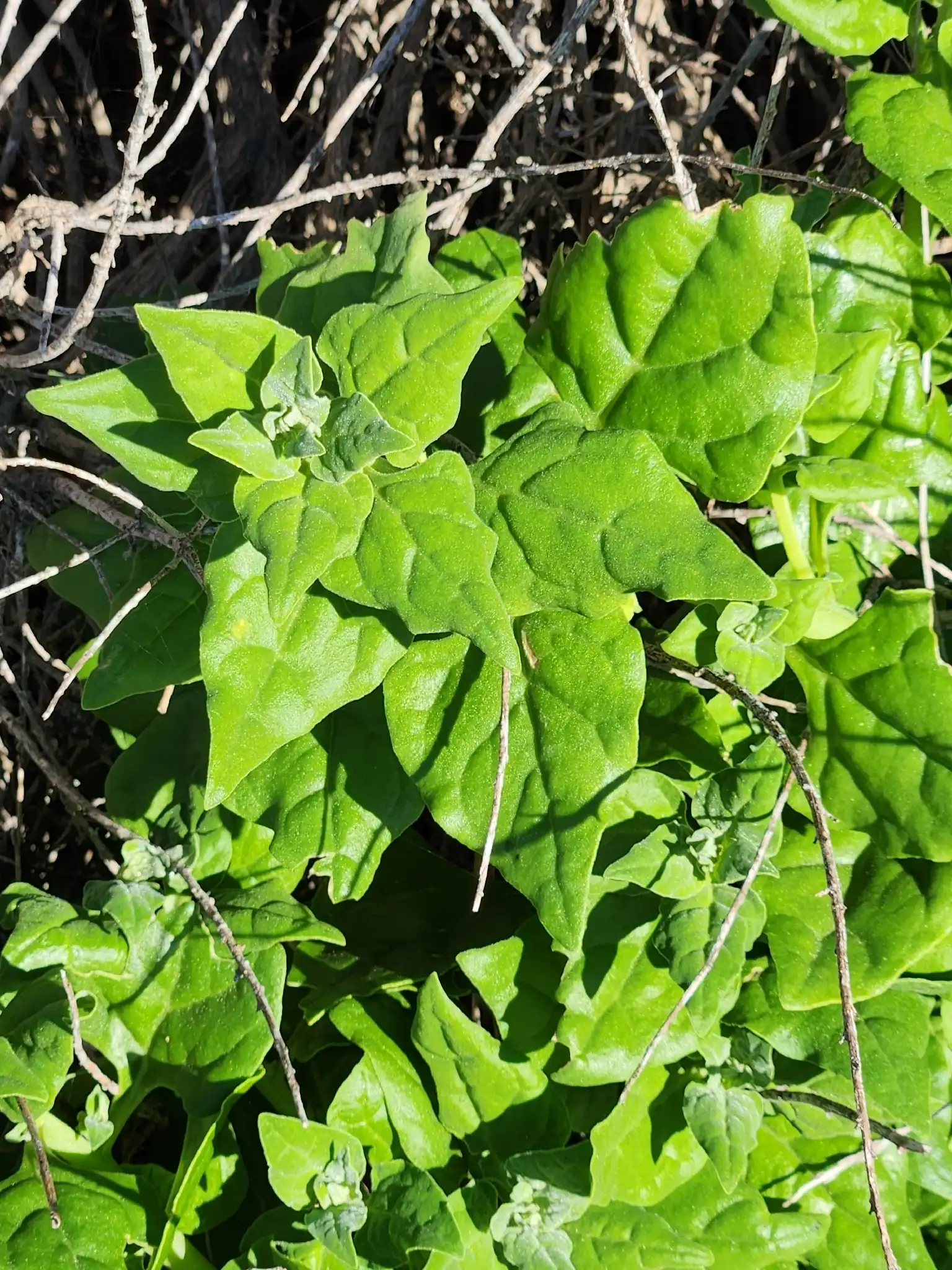
Tetragonia tetragonoides, commonly known as New Zealand spinach, is a prostrate trailing succulent groundcover that spreads up to four feet wide on thick, fleshy stems. The triangular dark green leaves are studded with translucent bladder-like papillae that sparkle in sunlight, producing inconspicuous yellow axillary flowers from midsummer into fall.
Unlike true spinach, this heat-tolerant species thrives in hot summer weather and high salinity without bolting or turning bitter. Its succulent foliage contains high levels of oxalic acid, which requires brief blanching in boiling water before consumption.
Uses & Benefits:
Essentials
At a Glance
Plant Type
Groundcover
Height
24"
Width
48"
Light
Full Sun, Partial Sun
Zones
9, 10
Water
Low to moderate
Humidity
Tolerates low to high
Lifespan
Tender perennial (grown as annual)
Native To
Australasia and East Asia
Toxicity
Contains oxalates; safe when blanched
Bloom period
Summer – Fall
In flower about 6 months of the year
Planting
How to Grow
- Soak seed pods in warm water for 12 to 24 hours to soften the hard outer seed coat.
- Sow seeds or plant nursery starts outdoors in light, well-draining soil after the last spring frost.
- Water moderately during establishment, letting the top inch of soil dry out between soakings.
- Harvest tender stem tips regularly, blanching the leaves in boiling water for one minute before eating.
Pro Tip
Pinch off the trailing branch tips every few weeks during summer to promote bushy growth and yield a steady harvest of tender young foliage.
Keep It Thriving
Care Guide
Do
- Blanch leaves in boiling water and discard the liquid before eating.
- Provide loose, sandy or loamy soil with high drainage capacity.
- Harvest shoot tips frequently to maintain a dense, compact habit.
Don't
- Do not plant in boggy or waterlogged soils prone to root rot.
- Do not consume raw foliage in large quantities due to high oxalate levels.
- Do not leave tender stems exposed to hard winter freezes.
Seasonal Care Calendar
| Task | Jan | Feb | Mar | Apr | May | Jun | Jul | Aug | Sep | Oct | Nov | Dec |
|---|---|---|---|---|---|---|---|---|---|---|---|---|
| Fertilize | ||||||||||||
| Harvest | ||||||||||||
| Pest Check | ||||||||||||
| Pinch | ||||||||||||
| Plant |
Watch Out For
Pests & Diseases
Common Pests
Common Diseases
In the Garden
Landscape Uses & Companions
Landscape Uses
Multiply
Propagation Methods
Good to Know
Common Questions
New Zealand Spinach questions
What zones can New Zealand Spinach grow in?
New Zealand Spinach is hardy in USDA Zones 9–10: in that range it survives winter in the ground. Colder than Zone 9, grow it in a container you can move to shelter for the winter, or as an annual.
When does New Zealand Spinach bloom?
New Zealand Spinach typically blooms from summer to fall. Exact timing shifts a week or two with your zone — Sow's bloom calendar maps it to your garden.
Does New Zealand Spinach need full sun?
New Zealand Spinach does best in full sun to part shade. In hot climates, afternoon shade keeps blooms fresher longer.
Is New Zealand Spinach drought tolerant?
Yes — once established (usually after the first full season), New Zealand Spinach handles dry spells with minimal watering. Water deeply its first year to build the root system that makes that possible.
Keep exploring
Explore the genus
Hardy in your zone?
Grow New Zealand Spinach with confidence
See it in a design of your actual yard, get zone-matched care reminders, and track it season by season in your garden journal.