The Story
Plant Bio
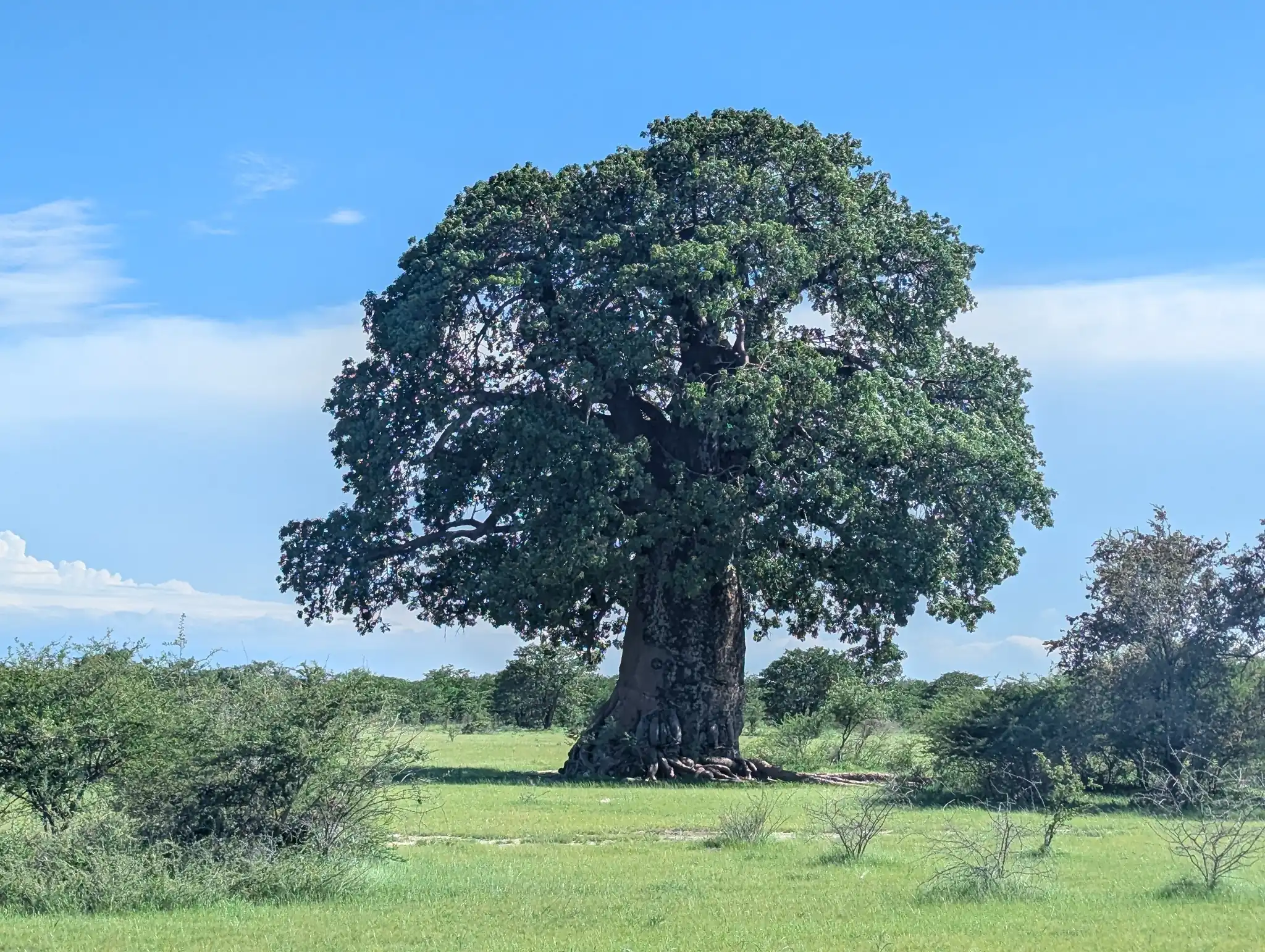
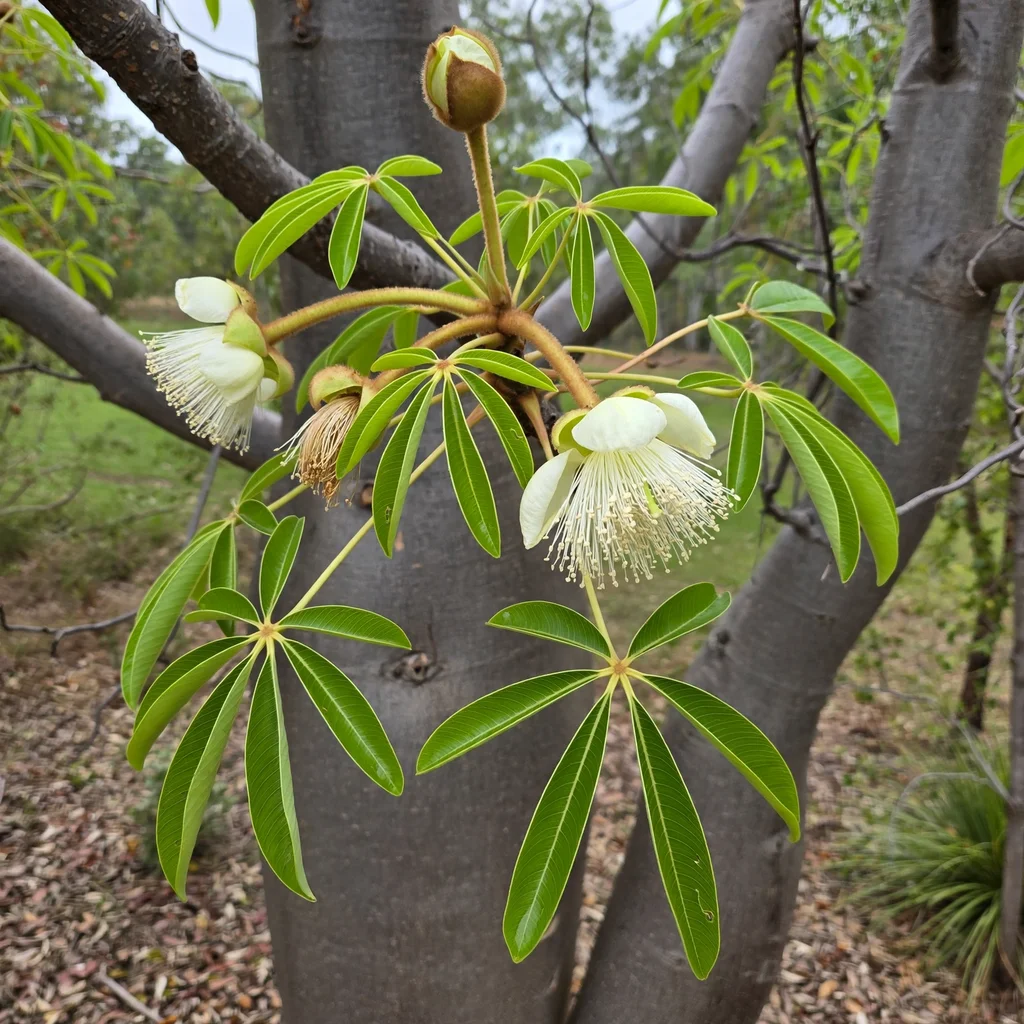
Adansonia digitata, the African baobab, is a deciduous succulent tree that stores water in a massive urn-shaped trunk to 45 feet wide, with stout upright branches forming a sparse open canopy to 80 feet tall. The leaves are palmate to 8 inches across with five to seven leaflets, shed entirely through the dry-season dormancy.
Flowers are large pendulous creamy-white bells to 10 inches across on stalks to 35 inches long, opening for a single night in summer to fall after the first rains. It is the African continental species, distinct from the Australian boab, and survives outdoors only in frost-free Zone 10b to 12 where winter stays dry.
Uses & Benefits:
Essentials
At a Glance
Plant Type
Tree
Height
960"
Width
540"
Light
Full Sun
Zones
10
Water
Low, dry in winter
Humidity
Low
Lifespan
Long-lived tree
Native To
Tropical Africa to South Africa, S Arabia
Toxicity
Non-toxic
Bloom period
Summer – Fall
In flower about 6 months of the year
Planting
How to Grow
- Plant in full sun in sharply draining sandy loam; use a deep pot or mound where drainage is slow.
- Water deeply through summer while in leaf, then withhold water entirely once leaves yellow and drop.
- Feed lightly with general fertilizer once or twice in summer only if growth is pale; give no winter feed.
- Keep frost-free above 35F; move pots under glass where winters are wet or cold.
Pro Tip
Keep it completely dry once the leaves drop; winter water rots the swollen trunk faster than any cold or pest.
Keep It Thriving
Care Guide
Do
- Water regularly only while in leaf in summer
- Grow in full sun with air movement and fast drainage
- Allow a cool dry winter rest with no irrigation
Don't
- Do not water during leafless winter dormancy
- Do not plant in heavy clay or waterlogged soil
- Do not cut back into old leafless wood except to remove dead limbs
Seasonal Care Calendar
| Task | Jan | Feb | Mar | Apr | May | Jun | Jul | Aug | Sep | Oct | Nov | Dec |
|---|---|---|---|---|---|---|---|---|---|---|---|---|
| Fertilize | ||||||||||||
| Pest Check | ||||||||||||
| Plant | ||||||||||||
| Prune | ||||||||||||
| Winter Prep |
Watch Out For
Pests & Diseases
Common Pests
Common Diseases
In the Garden
Landscape Uses & Companions
Landscape Uses
Multiply
Propagation Methods
Good to Know
Common Questions
African Baobab questions
What zones can African Baobab grow in?
African Baobab is hardy in USDA Zone 10: in that range it survives winter in the ground. Colder than Zone 10, winters are too cold for it to survive outdoors.
When does African Baobab bloom?
African Baobab typically blooms from summer to fall. Exact timing shifts a week or two with your zone — Sow's bloom calendar maps it to your garden.
Does African Baobab need full sun?
African Baobab does best in full sun (6+ hours).
Is African Baobab drought tolerant?
Yes — once established (usually after the first full season), African Baobab handles dry spells with minimal watering. Water deeply its first year to build the root system that makes that possible.
More Adansonia to compare
Keep exploring
Explore the genus
Hardy in your zone?
Grow African Baobab with confidence
See it in a design of your actual yard, get zone-matched care reminders, and track it season by season in your garden journal.