The Story
Plant Bio
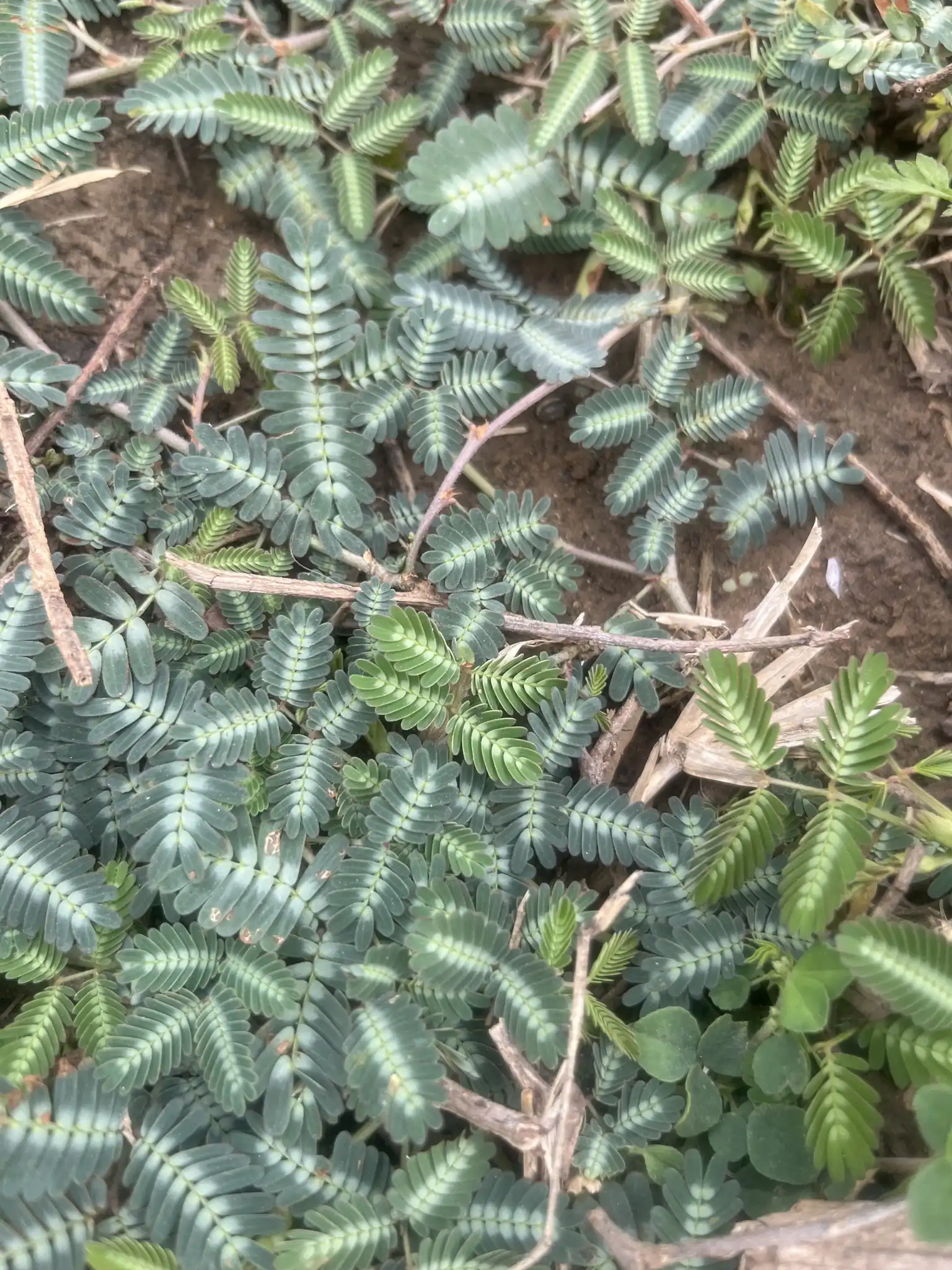
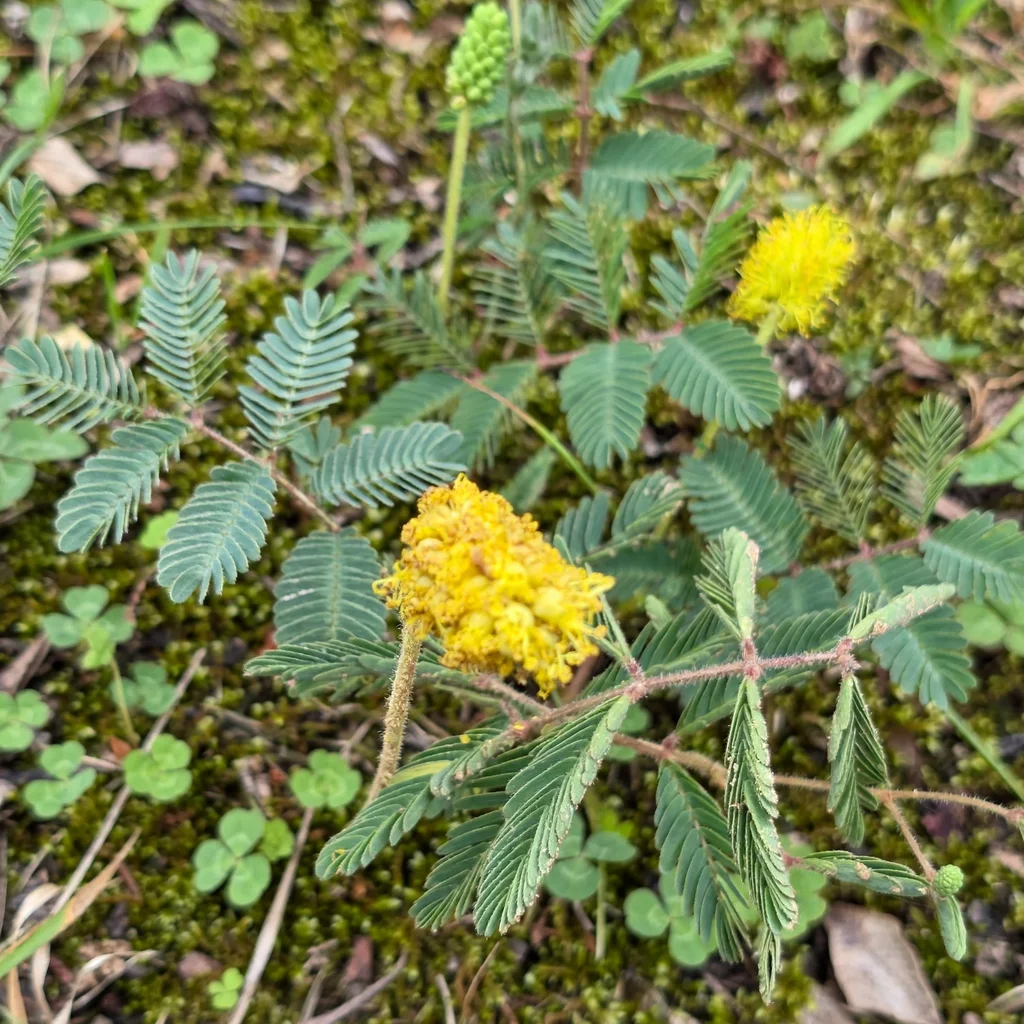
Neptunia pubescens is a low prostrate perennial legume whose trailing stems radiate outward to form an ankle-high mat about 6 inches tall. The alternate twice-compound leaves fold closed when touched, and the spring-to-fall flower heads are dense yellow puff-balls of 20 to 30 tiny florets.
Unlike climbing mimosas, it never vines or mounds but stays sprawling with leaves to 8 cm bearing 14 to 43 pairs of tiny leaflets. Each puff sits on a stipe only 0 to 4 mm long, a very short stalk that helps separate it from close relatives.
Uses & Benefits:
Essentials
At a Glance
Plant Type
Groundcover
Height
6"
Width
36"
Light
Full Sun
Zones
8, 9, 10
Water
Low
Humidity
Unknown
Lifespan
Short-lived perennial
Native To
Southeastern USA to South America
Toxicity
Unknown
Bloom period
Spring – Fall
In flower about 9 months of the year
Planting
How to Grow
- Plant in full sun in very dry sandy or lime-rock soil with high pH.
- Provide sharp drainage with no standing water and no heavy clay.
- Space to allow trailing stems to spread several feet into a low mat.
- Water sparingly to establish, then keep dry; it tolerates very dry soils.
Pro Tip
Give it full sun and very sharp drainage in dry sand or lime rock, and allow the stems to trail; it stays ankle-high and will not climb.
Keep It Thriving
Care Guide
Do
- Grow in full sun.
- Use very dry sandy or calcareous lime-rock soil with sharp drainage.
- Allow room for prostrate trailing stems to spread.
Don't
- Do not plant in wet, poorly drained, or heavy clay soil.
- Do not expect it to climb, mound, or grow tall.
- Do not count on it to attract hummingbirds; it is bee and butterfly pollinated.
Seasonal Care Calendar
| Task | Jan | Feb | Mar | Apr | May | Jun | Jul | Aug | Sep | Oct | Nov | Dec |
|---|---|---|---|---|---|---|---|---|---|---|---|---|
| Mulch | ||||||||||||
| Plant | ||||||||||||
| Propagate | ||||||||||||
| Spring Cleanup |
Watch Out For
Pests & Diseases
Common Pests
Common Diseases
In the Garden
Landscape Uses & Companions
Landscape Uses
Multiply
Propagation Methods
Good to Know
Common Questions
Tropical Puff questions
What zones can Tropical Puff grow in?
Tropical Puff is hardy in USDA Zones 8–10: in that range it survives winter in the ground. Colder than Zone 8, grow it in a container you can move to shelter for the winter, or as an annual.
Is Tropical Puff deer resistant?
Not reliably. Deer may browse Tropical Puff, especially tender spring growth — plan on repellents or fencing where pressure is high.
When does Tropical Puff bloom?
Tropical Puff typically blooms from spring to fall. Exact timing shifts a week or two with your zone — Sow's bloom calendar maps it to your garden.
Does Tropical Puff need full sun?
Tropical Puff does best in full sun (6+ hours).
Is Tropical Puff drought tolerant?
Yes — once established (usually after the first full season), Tropical Puff handles dry spells with minimal watering. Water deeply its first year to build the root system that makes that possible.
More Neptunia to compare
Keep exploring
Explore the genus
Hardy in your zone?
Grow Tropical Puff with confidence
See it in a design of your actual yard, get zone-matched care reminders, and track it season by season in your garden journal.