The Story
Plant Bio
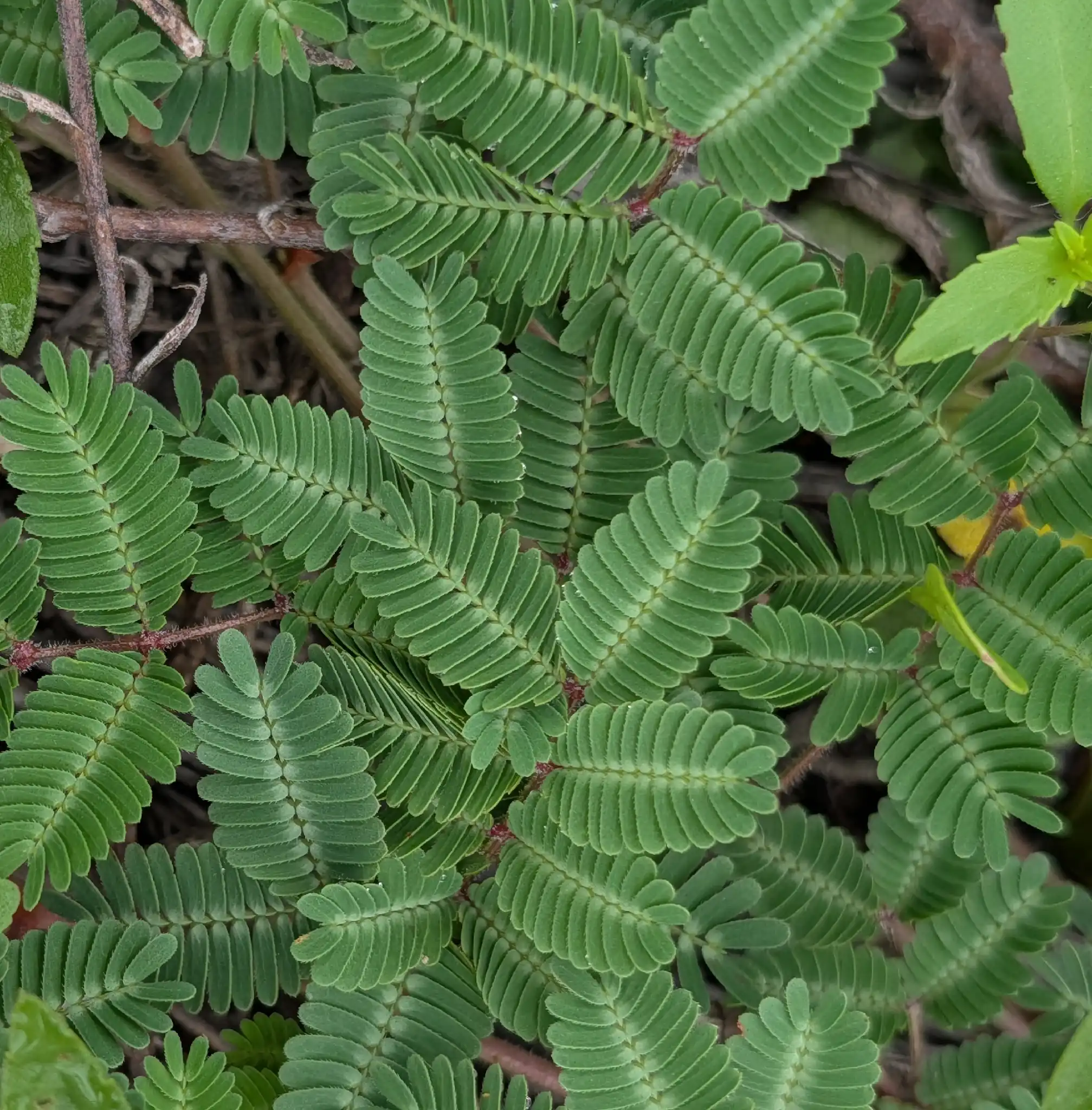
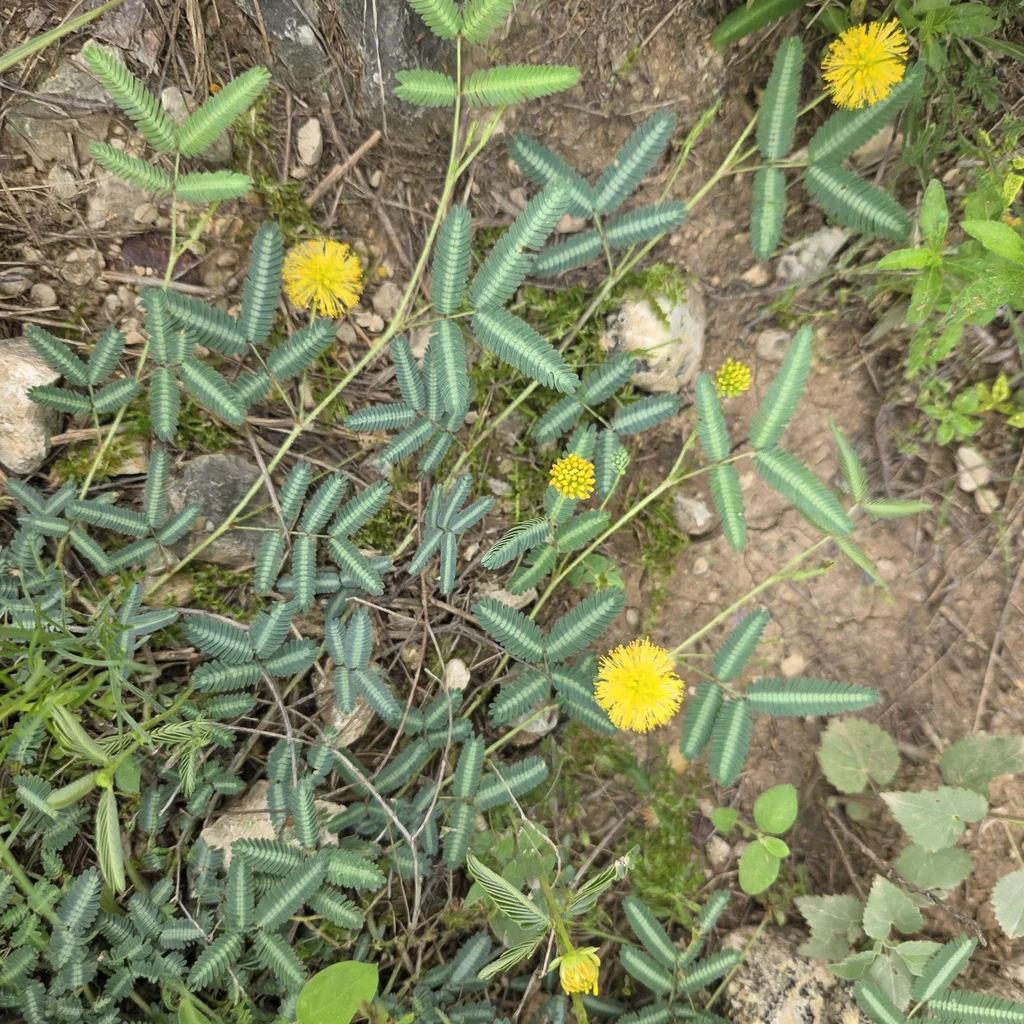
Neptunia lutea is a prostrate perennial from the south-central prairies, rooting along trailing stems 2 to 6 feet long to form a low mat only about 6 inches tall. Its twice-compound leaves carry many small leaflets that fold shut when touched, and its flowers are packed into dense round heads about half an inch across.
Unlike its prickly sensitive-briar relatives, this species carries no prickles on stems or leaves. Despite a genus name that suggests water, it is a dry-country plant of sandy and calcareous prairie, bearing clear yellow puff heads from spring to fall.
Uses & Benefits:
Essentials
At a Glance
Plant Type
Perennial
Height
6"
Width
54"
Light
Full Sun, Partial Sun
Zones
8, 9, 10
Water
Low
Humidity
Unknown
Lifespan
Perennial
Native To
South-central USA
Toxicity
Unknown
Bloom period
Spring – Fall
In flower about 9 months of the year
Planting
How to Grow
- Choose a sunny spot with well-drained sandy or calcareous loam near neutral pH.
- Sow seed or set plugs in spring after last frost, leaving 4 to 5 feet for stems to trail.
- Water to establish, then cut back; established plants favor hot, dry conditions.
- Avoid rich soil and steady irrigation, which keep growth soft and wet.
Pro Tip
Give it full sun and sharp drainage in sandy or calcareous soil; it favors hot, dry conditions and sulks in wet, rich ground.
Keep It Thriving
Care Guide
Do
- Plant in full sun in well-drained sandy or calcareous soil.
- Leave room for trailing stems to spread into a low mat.
- Let children touch the leaflets to watch them fold and reopen.
Don't
- Don't plant in wet clay or heavily irrigated beds.
- Don't grow it as a pond or aquatic plant despite the Neptune name.
- Don't confuse it with prickly sensitive-briars; this species has no thorns.
Seasonal Care Calendar
| Task | Jan | Feb | Mar | Apr | May | Jun | Jul | Aug | Sep | Oct | Nov | Dec |
|---|---|---|---|---|---|---|---|---|---|---|---|---|
| Deadhead | ||||||||||||
| Plant | ||||||||||||
| Propagate | ||||||||||||
| Spring Cleanup |
Watch Out For
Pests & Diseases
Common Pests
Common Diseases
In the Garden
Landscape Uses & Companions
Landscape Uses
Multiply
Propagation Methods
Good to Know
Common Questions
Yellow Puff questions
What zones can Yellow Puff grow in?
Yellow Puff is hardy in USDA Zones 8–10: in that range it survives winter in the ground. Colder than Zone 8, grow it in a container you can move to shelter for the winter, or as an annual.
When does Yellow Puff bloom?
Yellow Puff typically blooms from spring to fall. Exact timing shifts a week or two with your zone — Sow's bloom calendar maps it to your garden.
Does Yellow Puff need full sun?
Yellow Puff does best in full sun to part shade. In hot climates, afternoon shade keeps blooms fresher longer.
Is Yellow Puff drought tolerant?
Yes — once established (usually after the first full season), Yellow Puff handles dry spells with minimal watering. Water deeply its first year to build the root system that makes that possible.
More Neptunia to compare
Keep exploring
Explore the genus
Hardy in your zone?
Grow Yellow Puff with confidence
See it in a design of your actual yard, get zone-matched care reminders, and track it season by season in your garden journal.