The Story
Plant Bio
Canavalia rosea is a pantropical coastal pea forming low mats 6 to 12 inches high from trailing stems that root as they run for 20 feet or more. The leaves are alternate and trifoliate with rounded bright green evergreen leaflets that fold upward in midday heat to limit water loss.
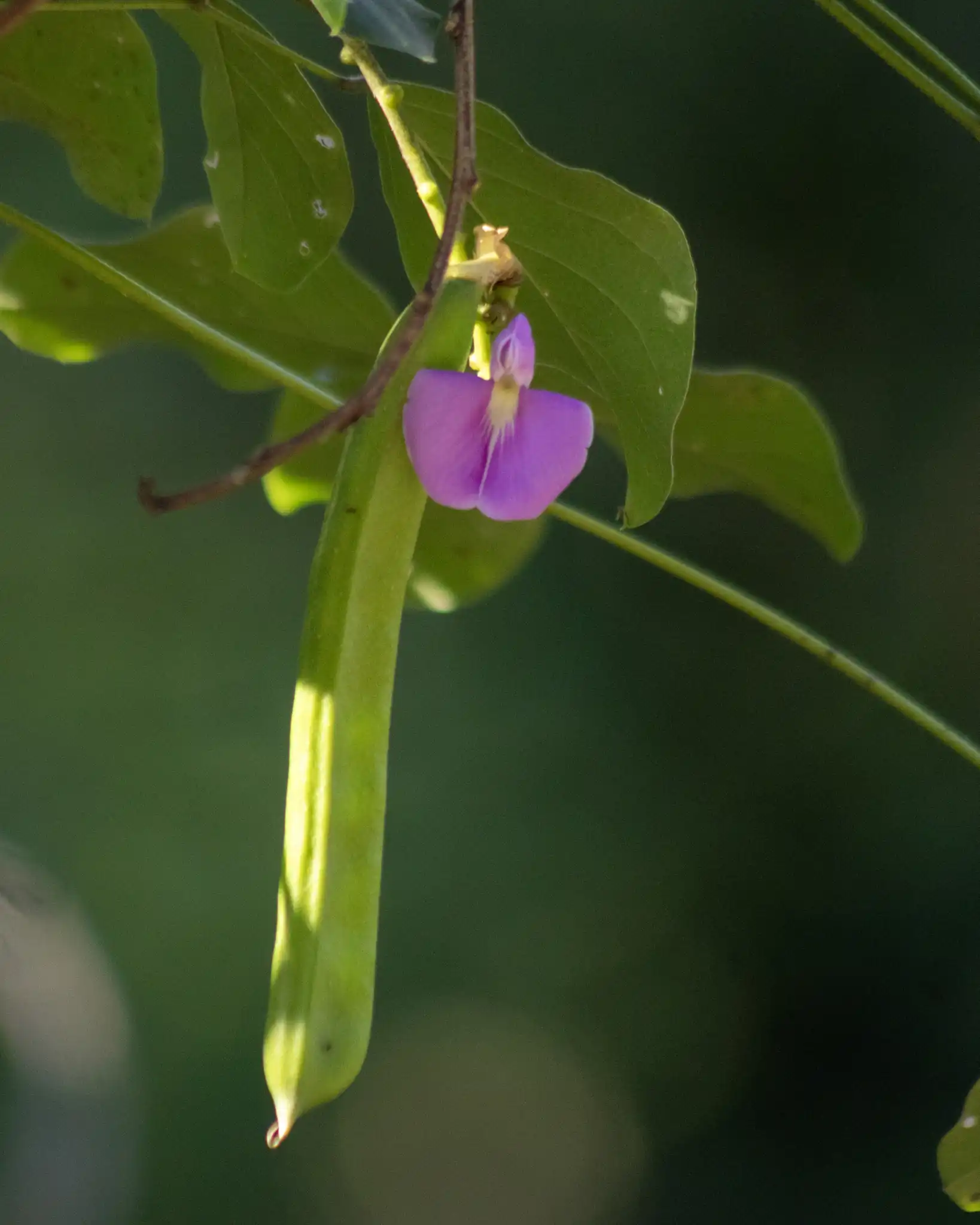
Unlike inland jackbeans, it grows in pure nutrient-poor sand within salt spray and stabilizes foredunes with deep roots and nitrogen-fixing nodules. The pea flowers are pink to rose-purple with a white mark in short racemes, followed by buoyant pods whose seeds survive long immersion in seawater.
Uses & Benefits:
Essentials
At a Glance
Plant Type
Groundcover
Height
12"
Width
236"
Light
Full Sun
Zones
9, 10
Water
Low
Humidity
High
Lifespan
Perennial
Native To
Southeastern U.S. coast
Toxicity
Toxic if ingested
Bloom period
Summer – Autumn
In flower about 6 months of the year
Planting
How to Grow
- Plant after soil has warmed in spring in full sun in deep sand or sandy loam with sharp drainage.
- Space plants 24 to 36 inches apart and water in once; allow runners room to root outward.
- Withhold fertilizer and supplemental water once established; it fixes its own nitrogen.
- Direct runners away from paths and cut back to a leaf node as needed to keep in bounds.
- Protect from frost; growth is killed back below freezing and re-sprouts from the crown in warm weather.
Pro Tip
Cut runners back to a leaf joint to hold the boundary; it resprouts readily from trailing stems and overwhelms small beds if left untrimmed.
Keep It Thriving
Care Guide
Do
- Do plant in full sun in poor, fast-draining sand.
- Do allow wide room for trailing stems to root and hold sand.
- Do trim runners to keep it out of adjacent plantings.
Don't
- Do not plant in rich soil, clay, or irrigated beds where crowns stay wet.
- Do not eat raw seeds or pods; they contain canavanine and lectins and cause vomiting.
- Do not use it as a small-bed edging; it is a dune stabilizer, not a compact groundcover.
Seasonal Care Calendar
| Task | Jan | Feb | Mar | Apr | May | Jun | Jul | Aug | Sep | Oct | Nov | Dec |
|---|---|---|---|---|---|---|---|---|---|---|---|---|
| Mulch | ||||||||||||
| Pest Check | ||||||||||||
| Plant | ||||||||||||
| Prune |
Watch Out For
Pests & Diseases
Common Pests
Common Diseases
In the Garden
Landscape Uses & Companions
Landscape Uses
Multiply
Propagation Methods
Good to Know
Common Questions
Beach Bean questions
What zones can Beach Bean grow in?
Beach Bean is hardy in USDA Zones 9–10: in that range it survives winter in the ground. Colder than Zone 9, grow it in a container you can move to shelter for the winter, or as an annual.
When does Beach Bean bloom?
Beach Bean typically blooms from summer to fall. Exact timing shifts a week or two with your zone — Sow's bloom calendar maps it to your garden.
Does Beach Bean need full sun?
Beach Bean does best in full sun (6+ hours).
Is Beach Bean drought tolerant?
Yes — once established (usually after the first full season), Beach Bean handles dry spells with minimal watering. Water deeply its first year to build the root system that makes that possible.
Keep exploring
Explore the genus
Hardy in your zone?
Grow Beach Bean with confidence
See it in a design of your actual yard, get zone-matched care reminders, and track it season by season in your garden journal.