The Story
Plant Bio
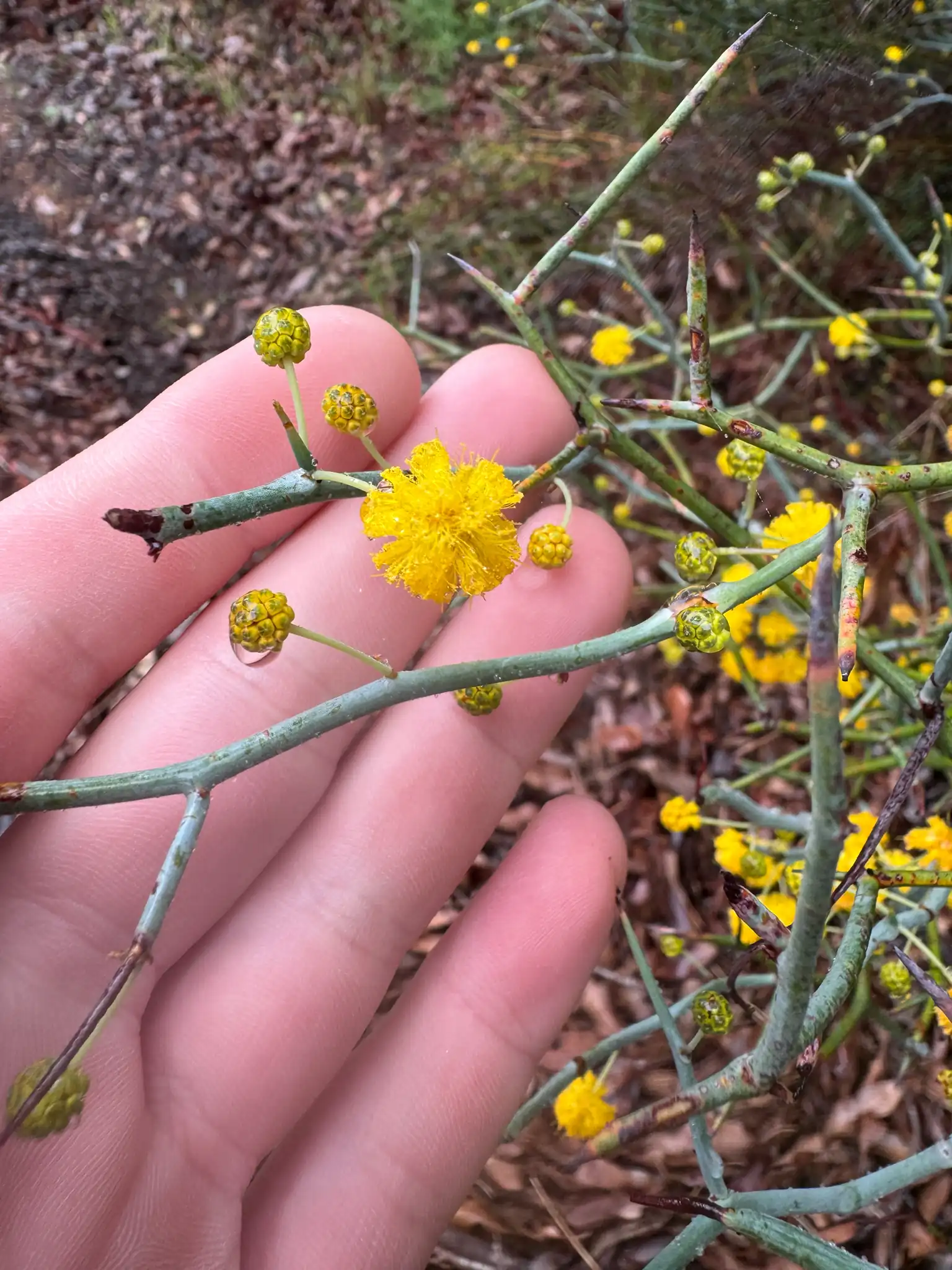
Acacia aphylla is an architectural, leafless Australian shrub that forms a complex, tangled mass of smooth, blue-green stems up to nine feet tall. Photosynthesis occurs entirely through its waxy, cylindrical, sharp-pointed branchlets rather than true foliage.
Unlike most wattles, this species is completely devoid of leaves or flattened phyllodes, relying on glaucous, spine-tipped stems that retain their vibrant blue tone year-round. In late winter, small golden-yellow spherical pom-pom blooms open directly along the rigid branchlets.
Uses & Benefits:
Essentials
At a Glance
Plant Type
Shrub
Height
108"
Width
79"
Light
Full Sun, Partial Sun
Zones
9, 10
Water
Low
Humidity
Low to moderate
Lifespan
Perennial
Native To
Western Australia
Toxicity
Non-toxic
Bloom period
Late winter – Mid-spring
In flower about 3 months of the year
Planting
How to Grow
- Select a location receiving full sun with gritty, highly permeable soil.
- Dig a hole twice as wide as the root ball and equal in depth, ensuring the root crown sits slightly elevated.
- Water deeply upon initial planting, then allow soil to dry out completely between waterings.
- Prune lightly right after flowering to promote tight branching, taking care not to cut into old, bare stem tissue.
Pro Tip
Prune lightly into recent growth immediately after flowering finishes; cutting back into old bare wood without dormant buds prevents green shoots from regenerating.
Keep It Thriving
Care Guide
Do
- Provide sharp, gritty soil drainage.
- Plant in full sun to maintain intense blue-green stem color.
- Prune lightly right after flowering ends.
Don't
- Do not overwater during warm summer months.
- Do not prune back into old bare wood lacking dormant buds.
- Do not apply heavy phosphorus fertilizers.
Seasonal Care Calendar
| Task | Jan | Feb | Mar | Apr | May | Jun | Jul | Aug | Sep | Oct | Nov | Dec |
|---|---|---|---|---|---|---|---|---|---|---|---|---|
| Fertilize | ||||||||||||
| Pest Check | ||||||||||||
| Prune | ||||||||||||
| Winter Prep |
Watch Out For
Pests & Diseases
Common Pests
Common Diseases
In the Garden
Landscape Uses & Companions
Landscape Uses
Multiply
Propagation Methods
Good to Know
Common Questions
Leafless Rock Wattle questions
What zones can Leafless Rock Wattle grow in?
Leafless Rock Wattle is hardy in USDA Zones 9–10: in that range it survives winter in the ground. Colder than Zone 9, grow it in a container you can move to shelter for the winter.
Is Leafless Rock Wattle deer resistant?
Yes — Leafless Rock Wattle is rated deer-resistant. Deer typically pass it over, though extreme hunger can override any plant's defenses.
When does Leafless Rock Wattle bloom?
Leafless Rock Wattle typically blooms from late winter to mid-spring. Exact timing shifts a week or two with your zone — Sow's bloom calendar maps it to your garden.
Does Leafless Rock Wattle need full sun?
Leafless Rock Wattle does best in full sun to part shade. In hot climates, afternoon shade keeps blooms fresher longer.
Is Leafless Rock Wattle drought tolerant?
Yes — once established (usually after the first full season), Leafless Rock Wattle handles dry spells with minimal watering. Water deeply its first year to build the root system that makes that possible.
More Acacia to compare
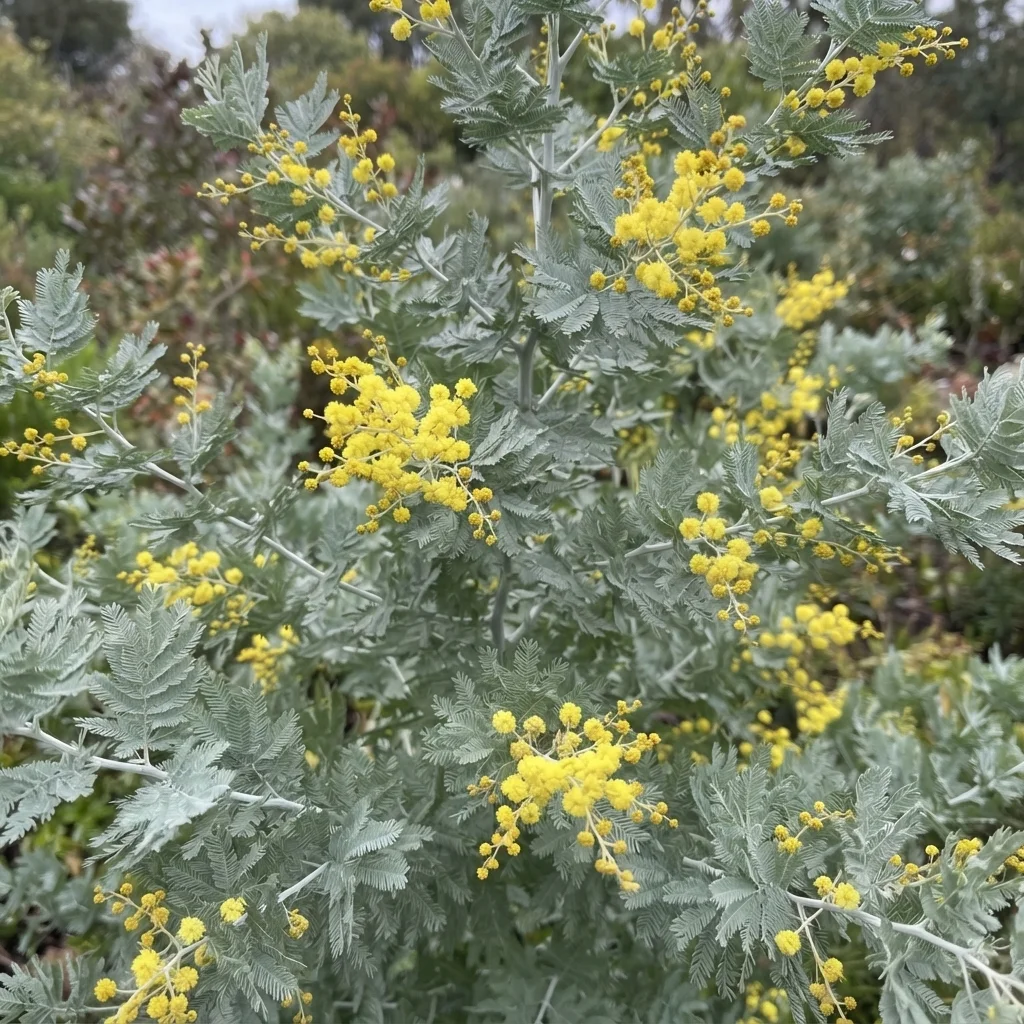
Silver wattle
Acacia dealbata
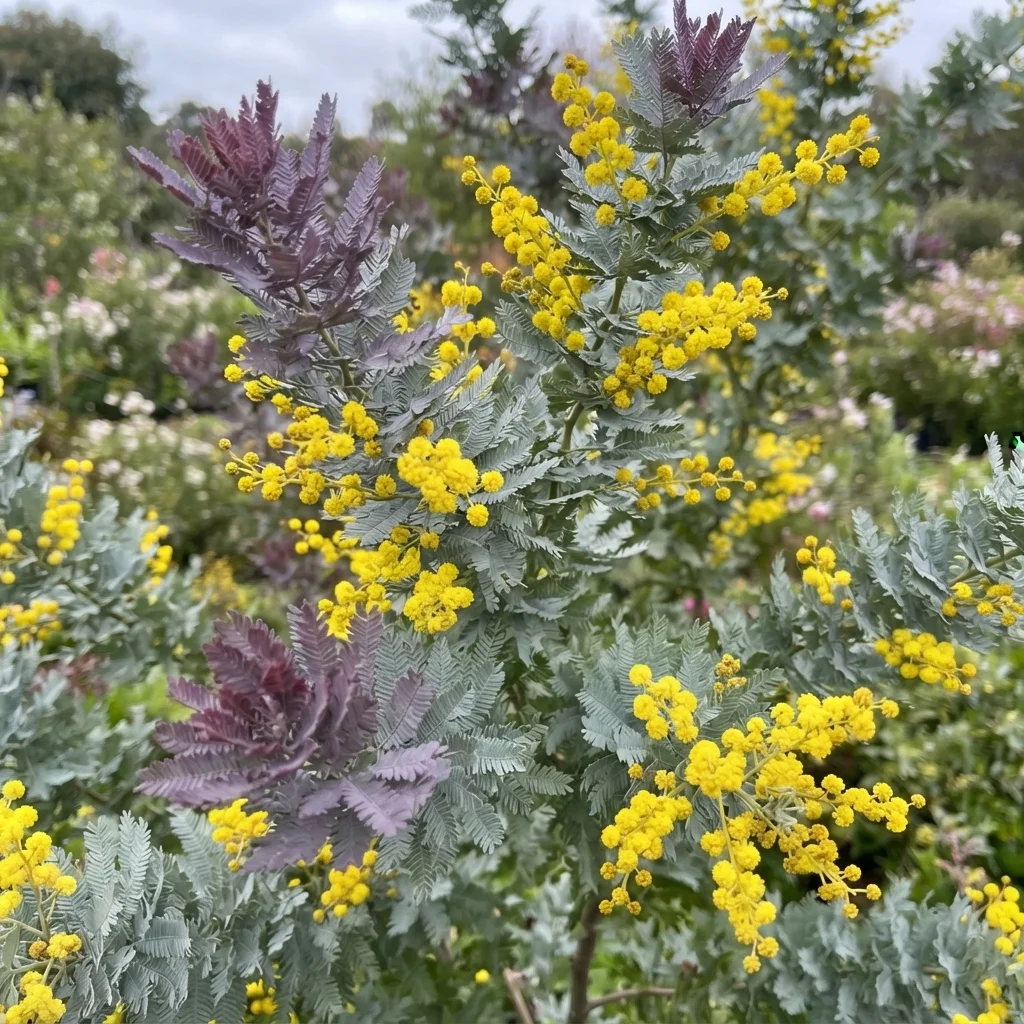
Cootamundra Wattle 'Purpurea'
Acacia baileyana 'Purpurea'
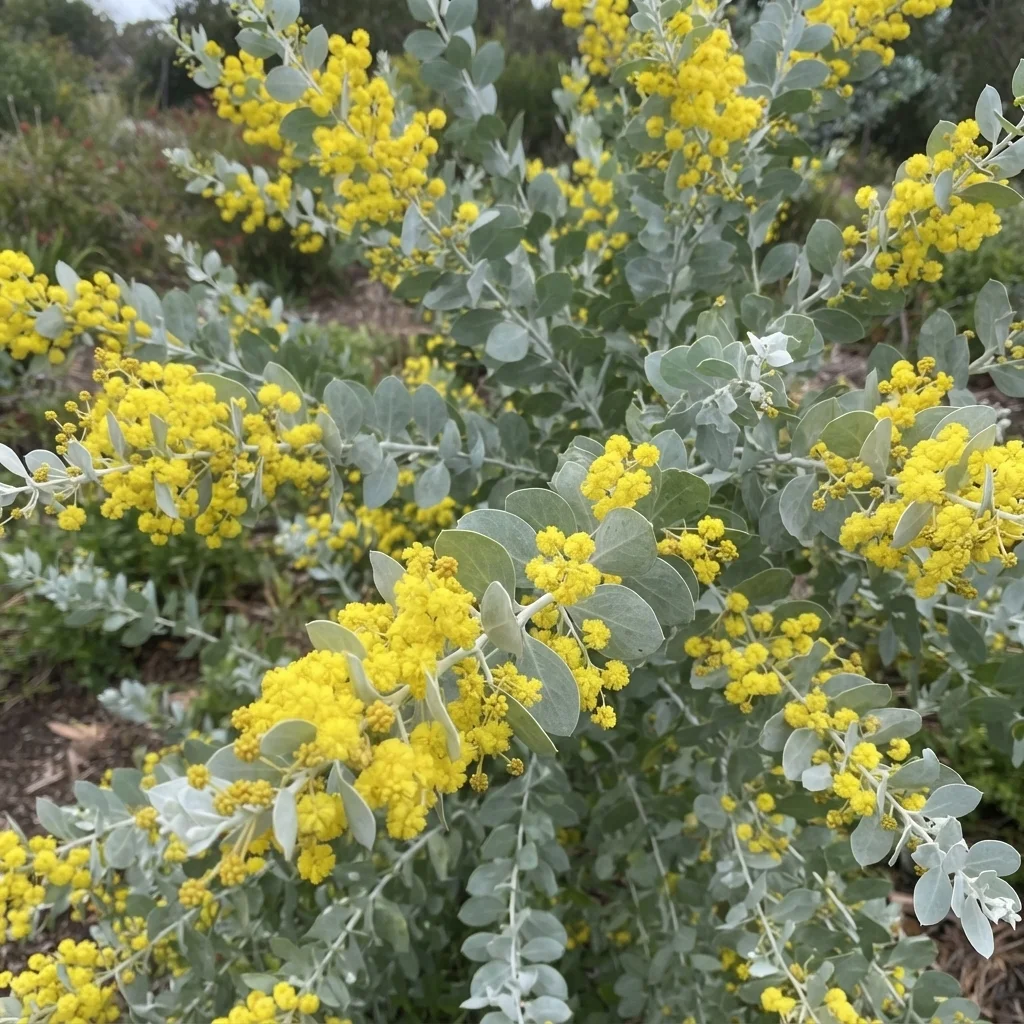
Pearl Acacia
Acacia podalyriifolia
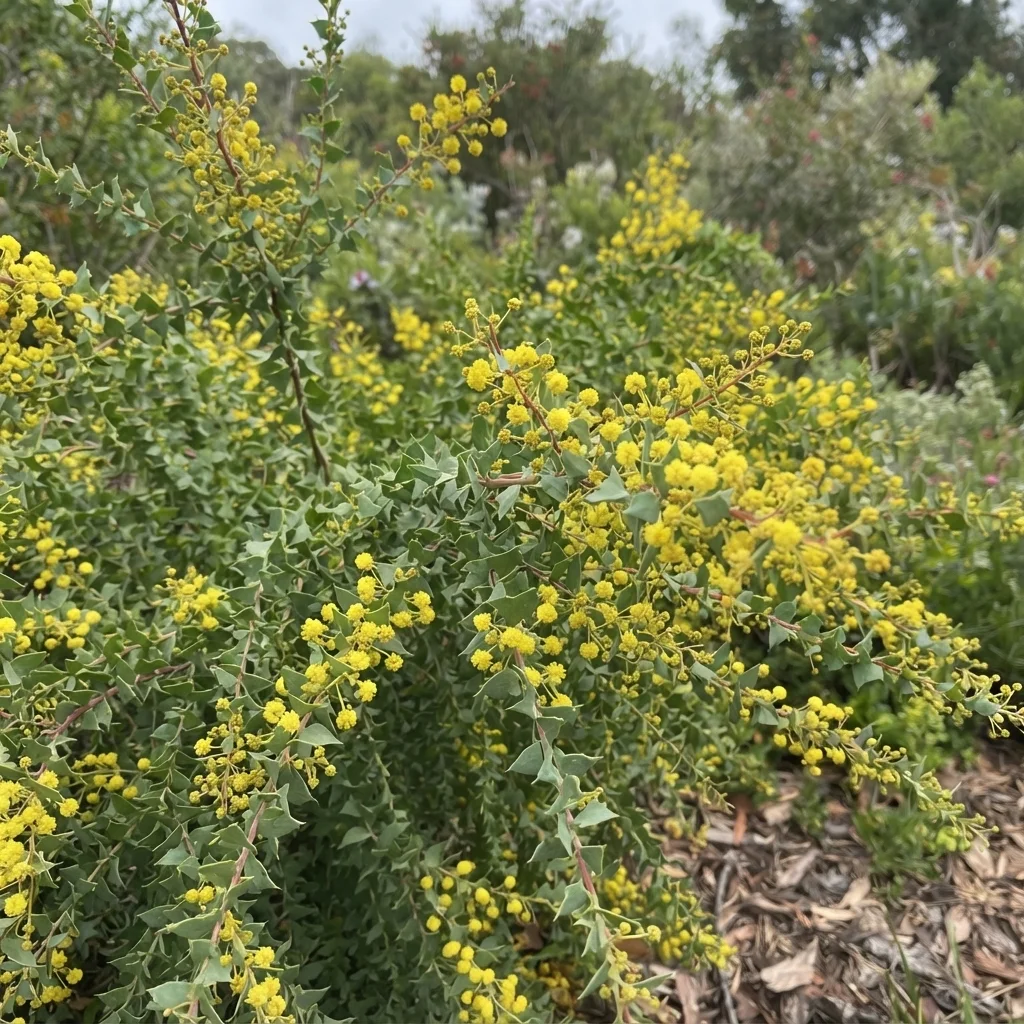
Ovens Wattle
Acacia pravissima
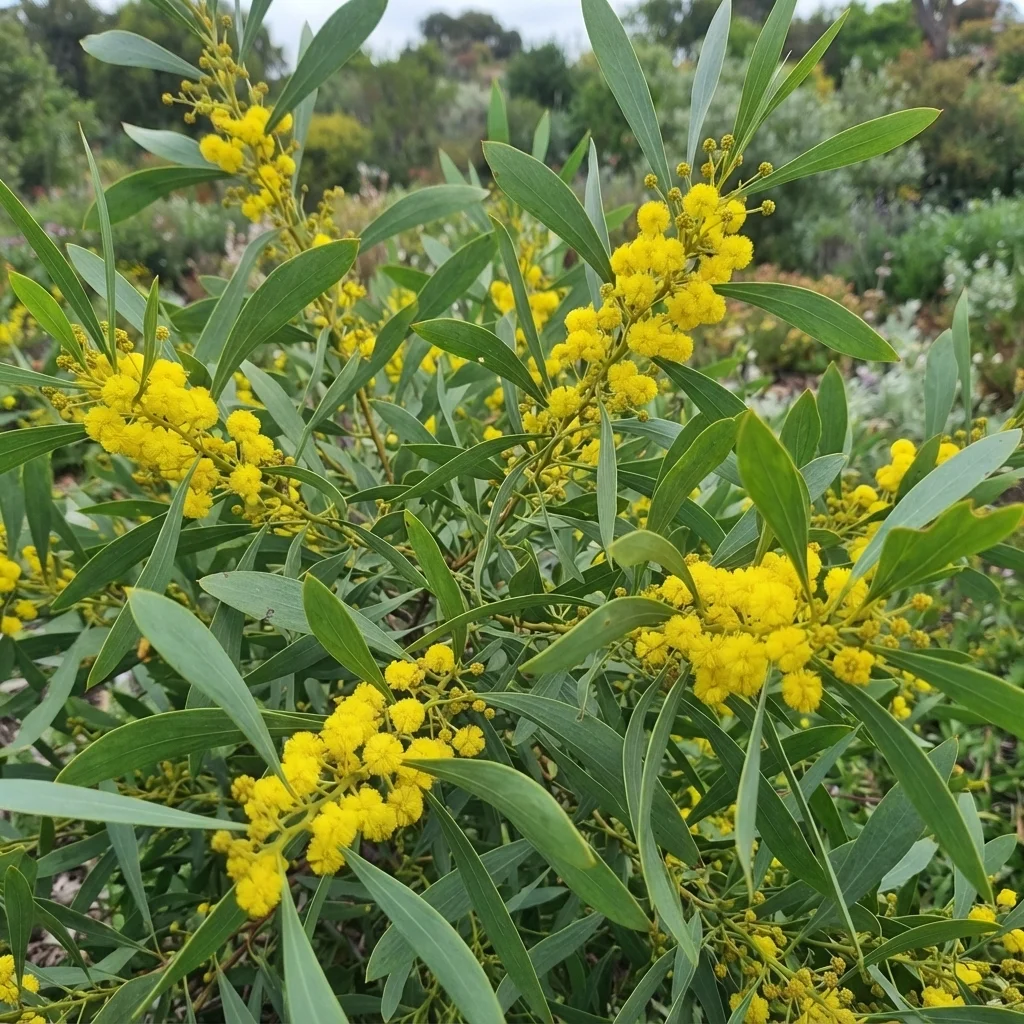
Golden Wreath Wattle
Acacia saligna
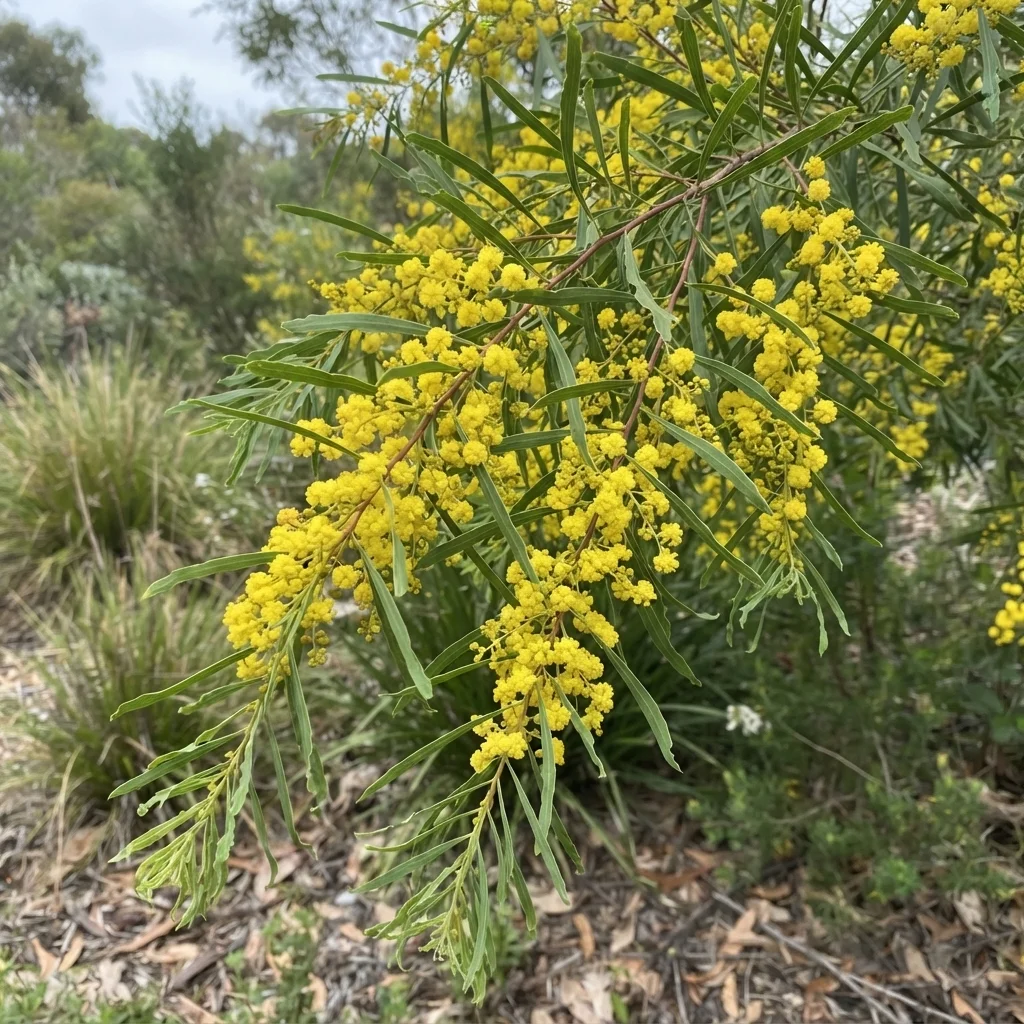
Fringed Wattle
Acacia fimbriata
Keep exploring
Explore the genus
Hardy in your zone?
Grow Leafless Rock Wattle with confidence
See it in a design of your actual yard, get zone-matched care reminders, and track it season by season in your garden journal.