The Story
Plant Bio
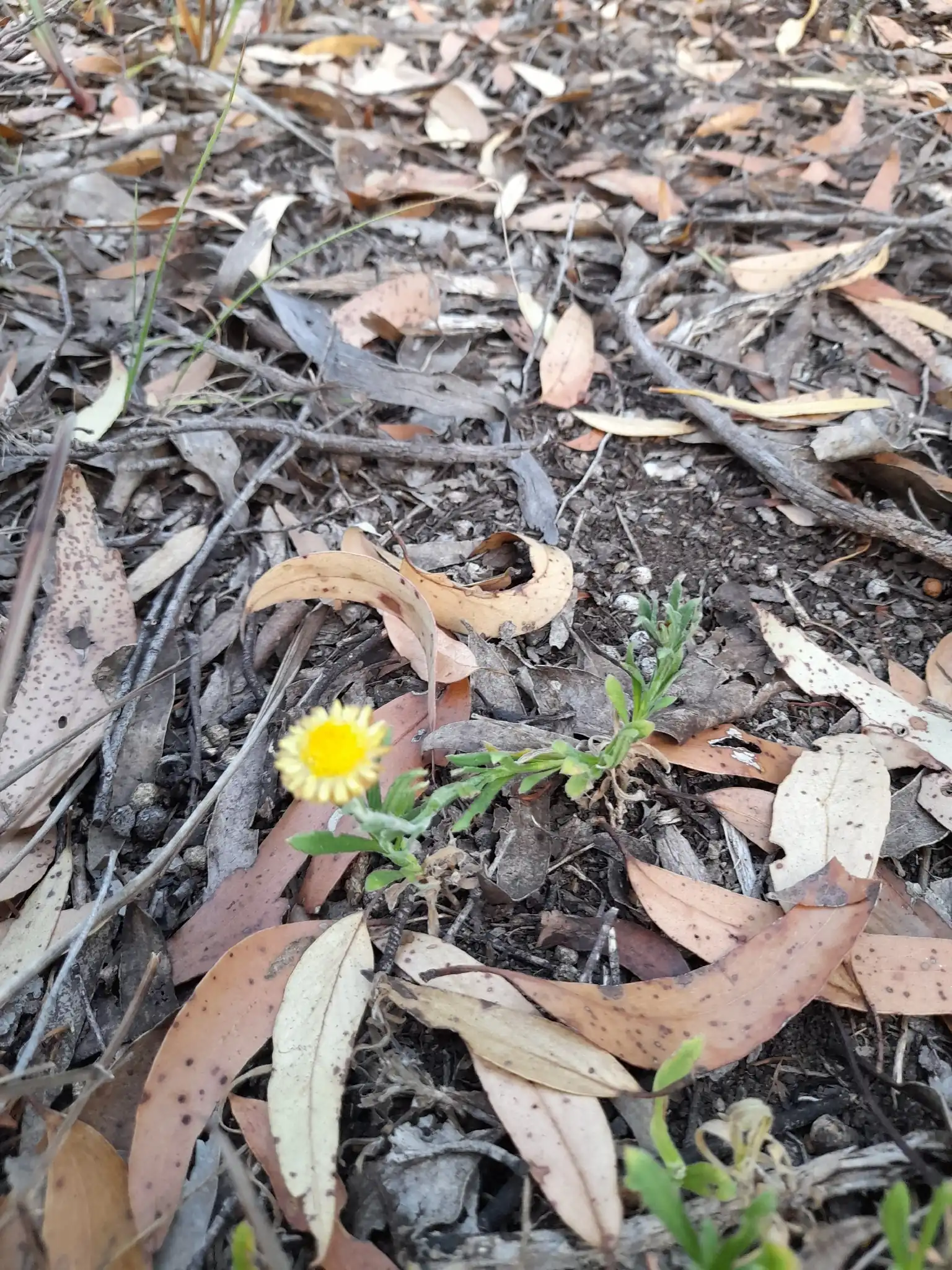
Coronidium scorpioides is an Australian herbaceous perennial that spreads via underground rhizomes to form low mats of rough, grey-green foliage. Solitary yellow flower heads surrounded by papery involucral bracts are held above the basal rosettes from spring into fall.
The leaf undersides feature a dense layer of white cottony hairs and tiny glands, while the outer bract tips are sharp and rigid. Unlike many trailing everlastings, it regenerates readily from its underground rhizomes after frost or extended dry spells.
Uses & Benefits:
Essentials
At a Glance
Plant Type
Perennial
Height
22"
Width
39"
Light
Full Sun, Partial Sun
Zones
8, 9, 10
Water
Low to Moderate
Humidity
Low to Moderate
Lifespan
Perennial
Native To
Eastern Australia
Toxicity
Non-toxic
Bloom period
Spring – Autumn
In flower about 9 months of the year
Planting
How to Grow
- Select a site in full sun to light shade with coarse, sandy, or gravelly soil.
- Space plants 20 to 30 inches apart to allow the underground rhizomes room to spread.
- Water lightly at planting and maintain minimal moisture until the root system establishes.
- Trim back spent flower stems in early spring before new growth begins.
Pro Tip
Plant in sharp mineral soil with excellent drainage and avoid summer overwatering, which rapidly induces fatal root rot.
Keep It Thriving
Care Guide
Do
- Ensure soil drains freely after heavy rainfall.
- Prune lightly after main flowering flushes to maintain a dense habit.
- Provide full sunlight or light dappled shade.
Don't
- Do not plant in heavy, wet clay soils.
- Do not over-fertilize with high-phosphorus fertilizers.
- Do not cut heavily into old, leafless woody bases.
Seasonal Care Calendar
| Task | Jan | Feb | Mar | Apr | May | Jun | Jul | Aug | Sep | Oct | Nov | Dec |
|---|---|---|---|---|---|---|---|---|---|---|---|---|
| Divide | ||||||||||||
| Fertilize | ||||||||||||
| Pest Check | ||||||||||||
| Prune | ||||||||||||
| Spring Cleanup |
Watch Out For
Pests & Diseases
Common Pests
Common Diseases
In the Garden
Landscape Uses & Companions
Landscape Uses
Multiply
Propagation Methods
Good to Know
Common Questions
Button Everlasting questions
What zones can Button Everlasting grow in?
Button Everlasting is hardy in USDA Zones 8–10: in that range it survives winter in the ground. Colder than Zone 8, grow it in a container you can move to shelter for the winter, or as an annual.
When does Button Everlasting bloom?
Button Everlasting typically blooms from spring to fall. Exact timing shifts a week or two with your zone — Sow's bloom calendar maps it to your garden.
Does Button Everlasting need full sun?
Button Everlasting does best in full sun to part shade. In hot climates, afternoon shade keeps blooms fresher longer.
Is Button Everlasting drought tolerant?
Yes — once established (usually after the first full season), Button Everlasting handles dry spells with minimal watering. Water deeply its first year to build the root system that makes that possible.
Keep exploring
Explore the genus
Hardy in your zone?
Grow Button Everlasting with confidence
See it in a design of your actual yard, get zone-matched care reminders, and track it season by season in your garden journal.