The Story
Plant Bio
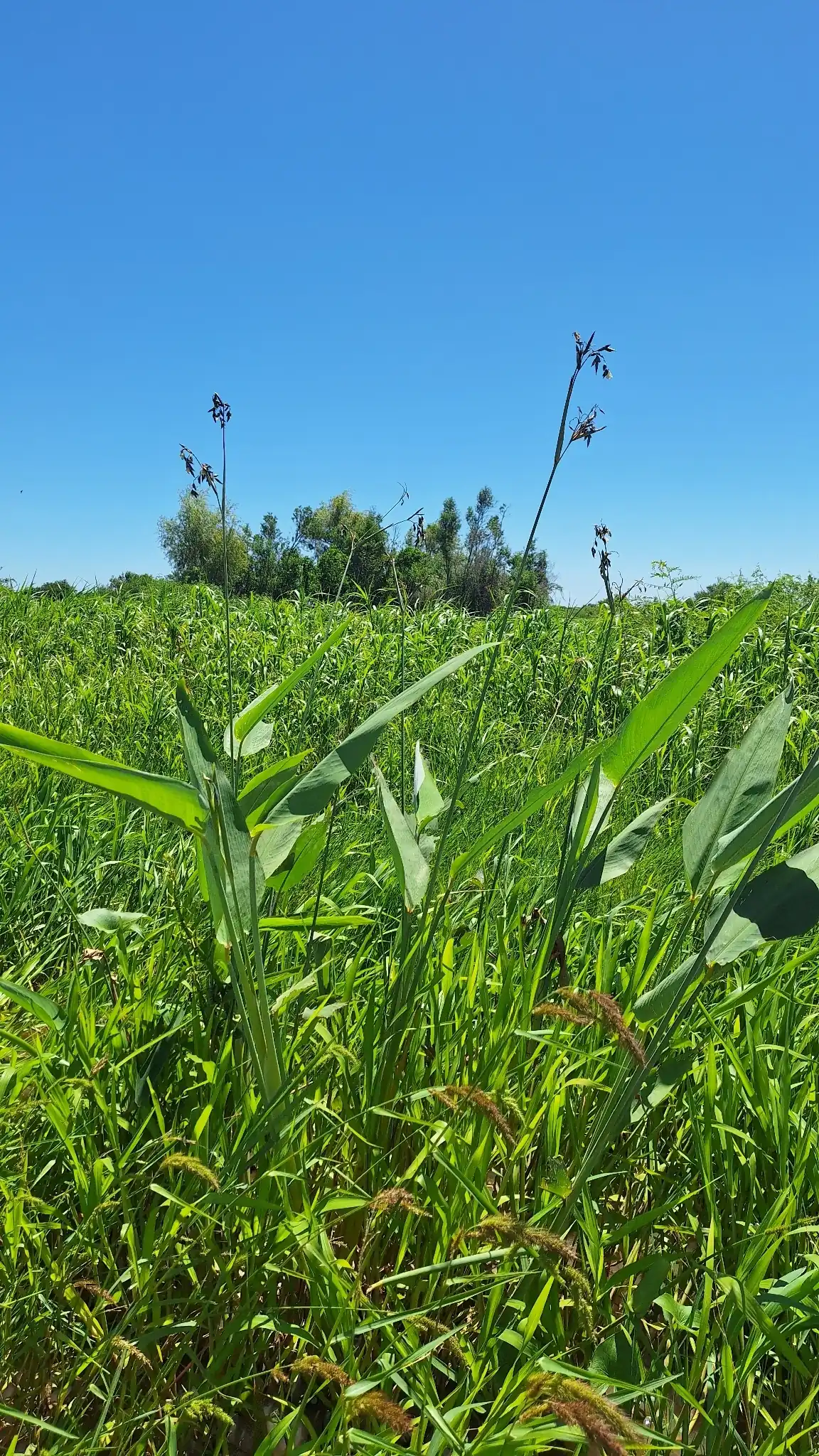
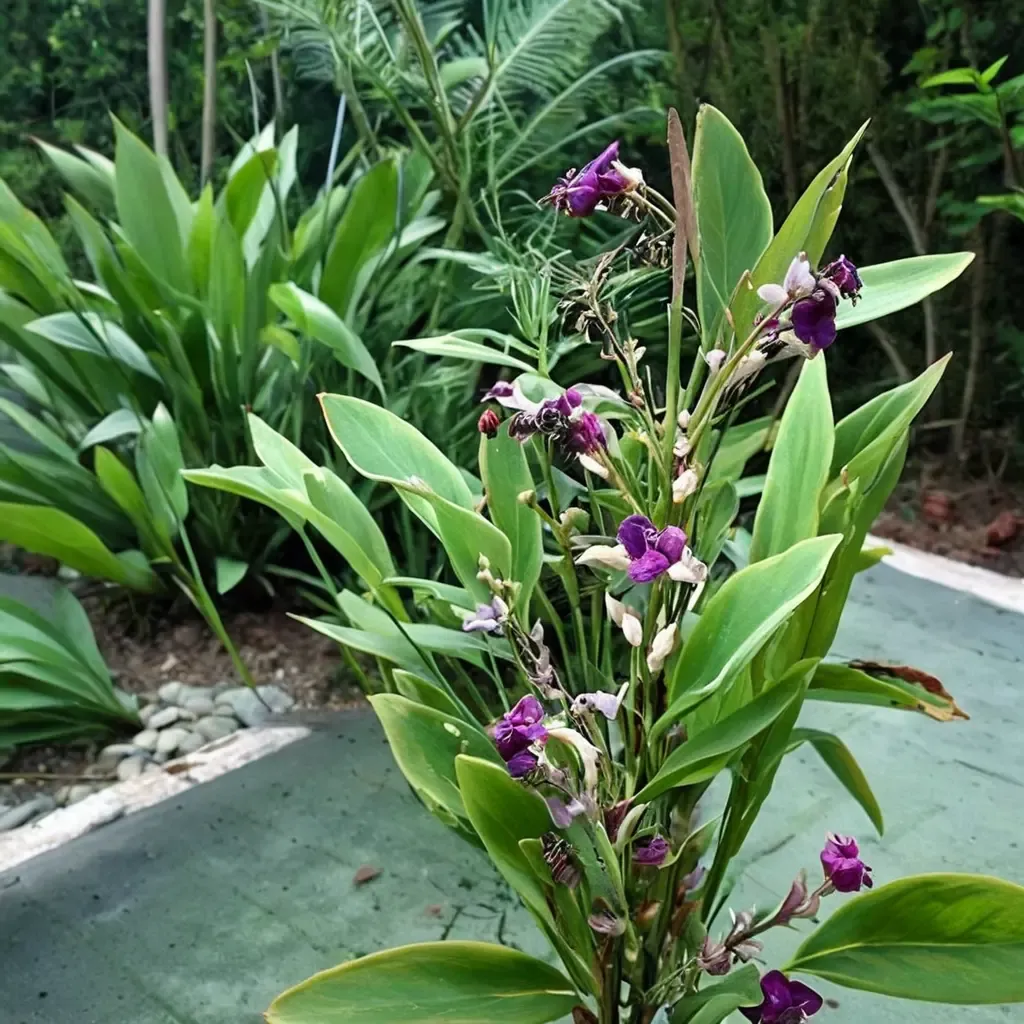
Thalia geniculata is a rhizomatous emergent perennial in the arrowroot family, forming upright clumps 6 to 10 feet tall from thick underground rhizomes. Leaves are lance-shaped light to gray-green blades 12 to 24 inches long on petioles to 3 feet, and the show comes from open branching panicles to 3 feet bearing small blue to purple flowers.
Unlike Thalia dealbata with its powdery blue-white leaves, this species has plain green leaves and lax open panicles rather than dense spikes. It is an obligate wetland plant that grows with crowns in 0 to 2 inches of water or saturated mud and collapses quickly if the root zone dries.
Uses & Benefits:
Essentials
At a Glance
Plant Type
Aquatic
Height
120"
Width
72"
Light
Full Sun, Partial Sun
Zones
8, 9, 10
Water
High - keep wet
Humidity
High
Lifespan
Perennial
Native To
Southeastern USA to Tropical America and Tropical Africa
Toxicity
Toxic if ingested
Bloom period
Late spring – Summer
In flower about 4 months of the year
Planting
How to Grow
- Plant rhizomes in spring after frost in baskets or mud with the crown 0 to 2 inches below water.
- Give full sun to part shade in rich saturated soil that stays wet at all times.
- Fertilize lightly through summer growth and flush containers to prevent buildup.
- Cut spent flower stalks and dead foliage in fall; protect crowns in zone 8 by lowering baskets deeper.
Pro Tip
Set the pot so the crown sits in 0 to 2 inches of water and never let the mix dry; over-drainage kills it faster than cold.
Keep It Thriving
Care Guide
Do
- Keep crowns constantly wet in shallow water or bog mud.
- Grow in sturdy pond baskets to contain fast rhizome spread.
- Inspect leaf undersides regularly for aphids and mites.
Don't
- Do not let the root zone dry out - over-drainage kills it.
- Do not plant in dry perennial beds.
- Do not cut into dormant rhizomes in winter.
Seasonal Care Calendar
| Task | Jan | Feb | Mar | Apr | May | Jun | Jul | Aug | Sep | Oct | Nov | Dec |
|---|---|---|---|---|---|---|---|---|---|---|---|---|
| Fertilize | ||||||||||||
| Pest Check | ||||||||||||
| Plant | ||||||||||||
| Prune | ||||||||||||
| Winter Prep |
Watch Out For
Pests & Diseases
Common Pests
Common Diseases
In the Garden
Landscape Uses & Companions
Landscape Uses
Multiply
Propagation Methods
Good to Know
Common Questions
Bent Alligator-Flag questions
What zones can Bent Alligator-Flag grow in?
Bent Alligator-Flag is hardy in USDA Zones 8–10: in that range it survives winter in the ground. Colder than Zone 8, grow it in a container you can move to shelter for the winter, or as an annual.
When does Bent Alligator-Flag bloom?
Bent Alligator-Flag typically blooms from late spring to late summer. Exact timing shifts a week or two with your zone — Sow's bloom calendar maps it to your garden.
Does Bent Alligator-Flag need full sun?
Bent Alligator-Flag does best in full sun to part shade. In hot climates, afternoon shade keeps blooms fresher longer.
More Thalia to compare
Keep exploring
Explore the genus
Hardy in your zone?
Grow Bent Alligator-Flag with confidence
See it in a design of your actual yard, get zone-matched care reminders, and track it season by season in your garden journal.