1 named cultivar
The Story
Plant Bio
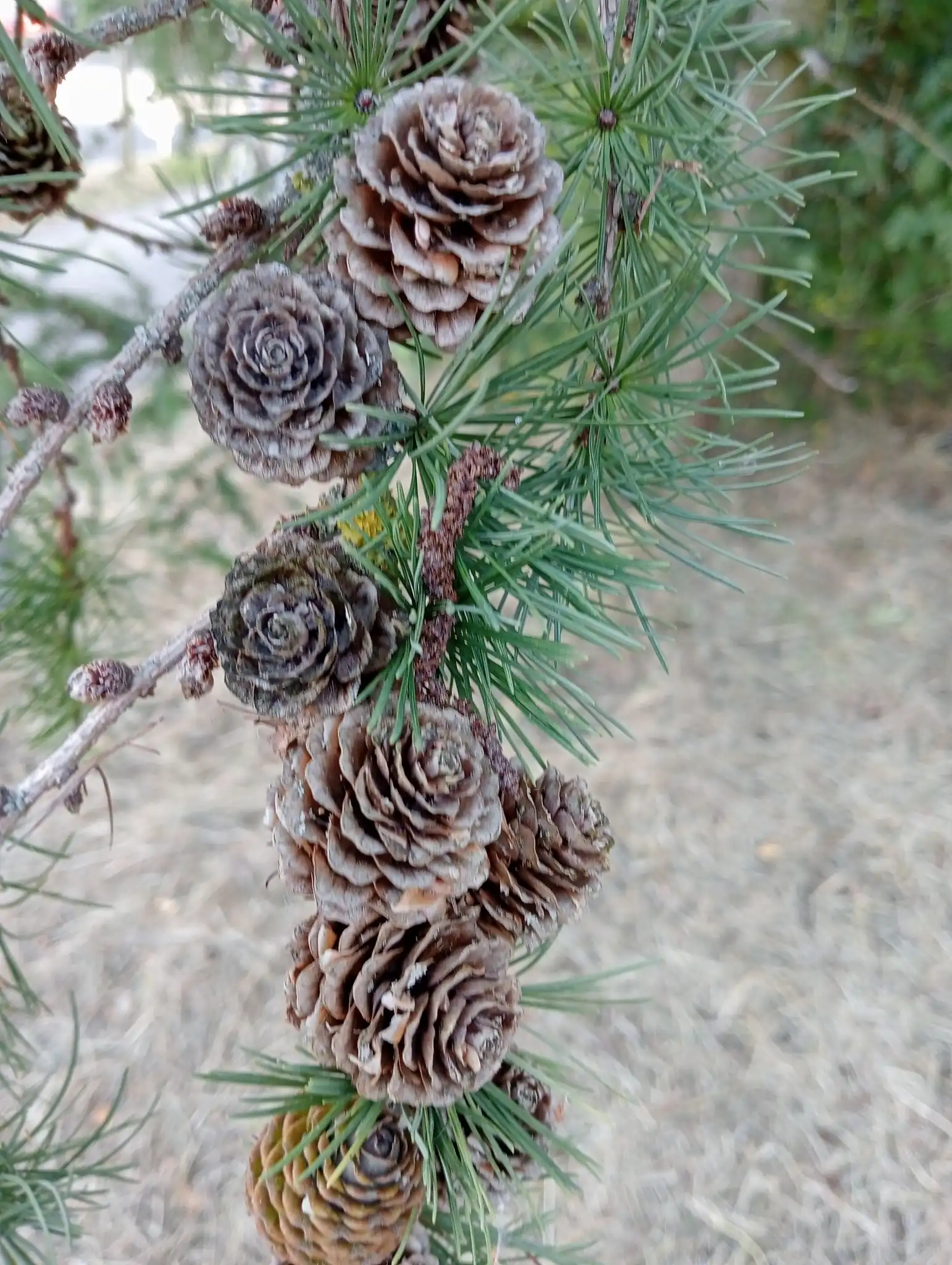
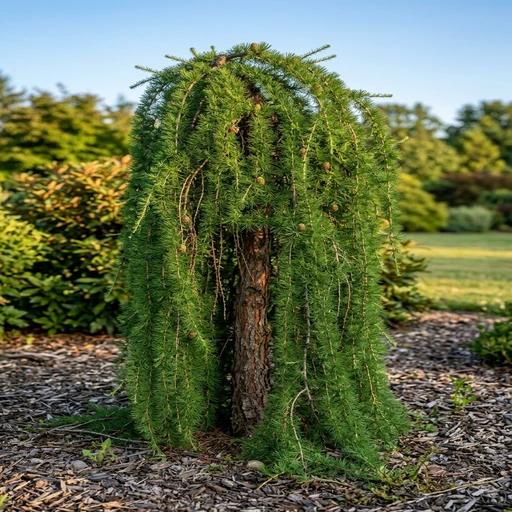
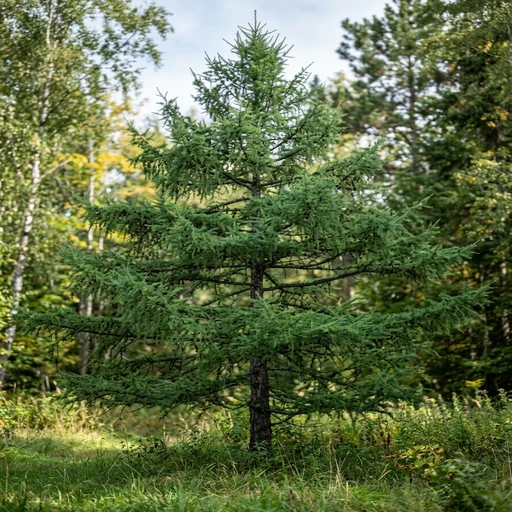
Larix decidua, European larch, is a large fast-growing conifer from the mountains of central and southern Europe, reaching sixty to a hundred feet with a straight central trunk and open tiered branches. Soft inch-long bright green needles are carried in rosettes, and small reddish cones sit upright along the twigs.
It is a deciduous conifer, which surprises people every autumn — the needles turn clear yellow-amber and fall, leaving a bare tree all winter before flushing vivid green in spring. That is normal and not a sign the tree is dying. It needs cool conditions and full sun, and does badly in hot humid summers or crowded plantings.
Uses & Benefits:
Essentials
At a Glance
Plant Type
Tree
Height
960"
Width
300"
Light
Full Sun
Zones
4, 5, 6, 7
Water
Moderate
Humidity
Low to moderate
Lifespan
Perennial
Native To
Central and southern Europe
Toxicity
Non-toxic
Planting
How to Grow
- Allow twenty to thirty feet of spread and real height.
- Plant in full sun; it will not tolerate shade.
- Give it moist, freely drained, ideally acid soil.
- Avoid hot, humid or polluted sites.
- Water through the first few summers.
- Do not be alarmed when the needles drop in autumn.
Pro Tip
It is a conifer that drops all its needles in autumn — a bare larch in January is healthy, not dead.
Keep It Thriving
Care Guide
Do
- Give it full sun and cool conditions ☀️
- Allow it a hundred feet of height 📏
- Enjoy the amber autumn needles 🍂
- Water it while establishing 💧
Don't
- Plant it in shade ❌
- Panic when the needles fall ❌
- Site it in a hot humid climate ❌
Seasonal Care Calendar
| Task | Jan | Feb | Mar | Apr | May | Jun | Jul | Aug | Sep | Oct | Nov | Dec |
|---|---|---|---|---|---|---|---|---|---|---|---|---|
| Enjoy | ||||||||||||
| Plant |
Watch Out For
Pests & Diseases
Common Pests
Common Diseases
In the Garden
Landscape Uses & Companions
Landscape Uses
Companion Plants
Multiply
Propagation Methods
Good to Know
Common Questions
Weeping European Larch questions
What zones can Weeping European Larch grow in?
Weeping European Larch is hardy in USDA Zones 4–7. Inside that range it survives winter in the ground; outside it, grow it as an annual or a container plant you protect.
Is Weeping European Larch deer resistant?
Yes — Weeping European Larch is rated deer-resistant. Deer typically pass it over, though extreme hunger can override any plant's defenses.
When does Weeping European Larch bloom?
Weeping European Larch typically blooms in does not flower. Exact timing shifts a week or two with your zone — Sow's bloom calendar maps it to your garden.
Does Weeping European Larch need full sun?
Weeping European Larch does best in full sun (6+ hours).
More Larix to compare
Keep exploring
Explore the genus
Hardy in your zone?
Grow Weeping European Larch with confidence
See it in a design of your actual yard, get zone-matched care reminders, and track it season by season in your garden journal.