The Story
Plant Bio
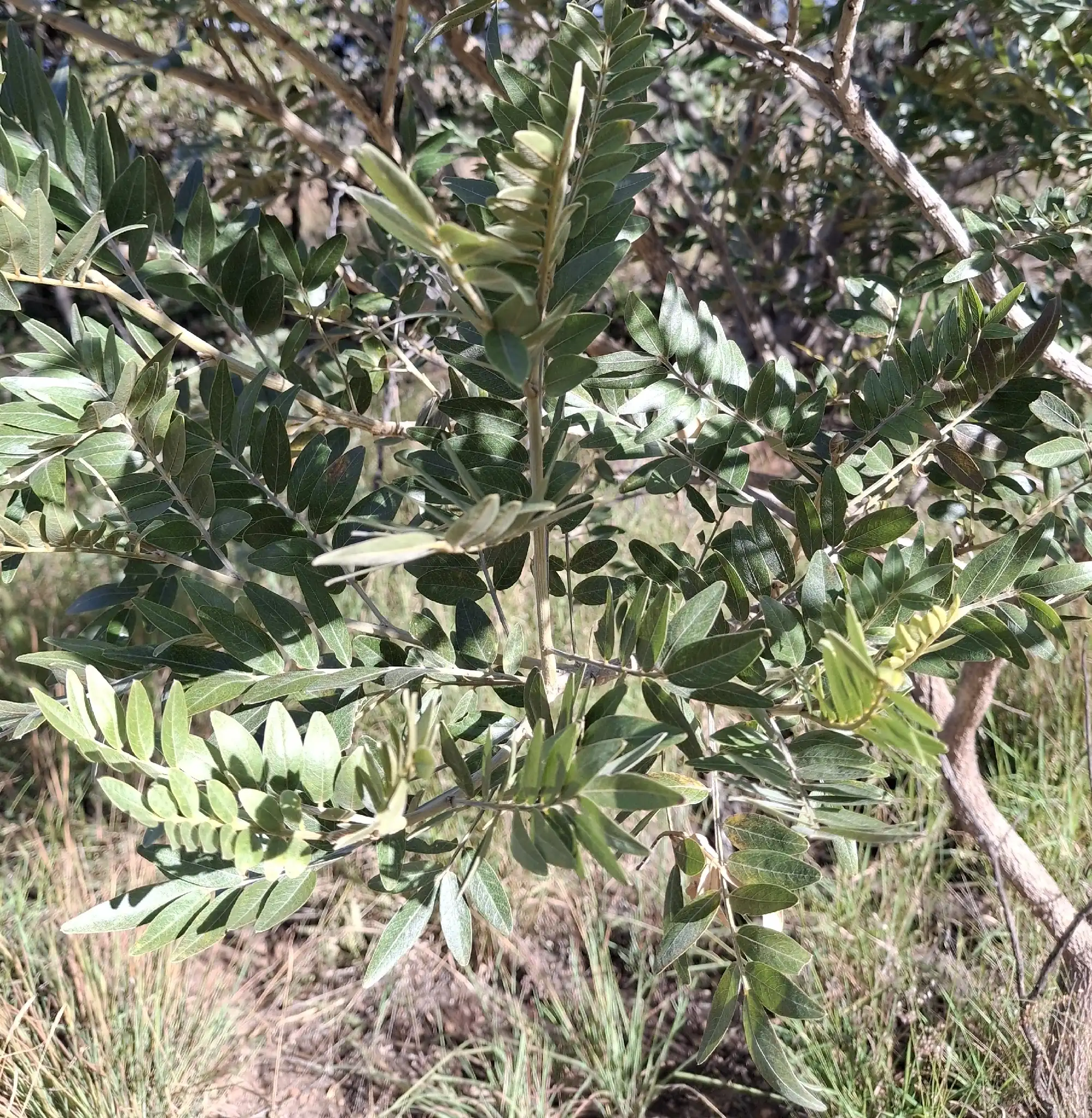
Mundulea sericea is a much-branched, semi-deciduous shrub to small single-stemmed tree with corky bark, reaching 7 to 10 feet in gardens. Its imparipinnate leaves carry three to five pairs of oval, leathery blue-grey-green leaflets coated in silky silvery hairs, with new growth bright silvery.
It blooms in dense terminal pseudoracemes 2 to 5 inches long, with paired mauve-purple pea flowers that give way to flat silky pods. Leaves, bark, seeds and roots contain rotenone, historically used as a fish and insect poison, so all parts are toxic if eaten.
Uses & Benefits:
Essentials
At a Glance
Plant Type
Shrub
Height
118"
Width
108"
Light
Full Sun, Partial Sun
Zones
9, 10
Water
Low
Humidity
Low to moderate
Lifespan
Long-lived woody shrub
Native To
Sub-Saharan Africa, Madagascar, India and Sri Lanka
Toxicity
Toxic if ingested
Bloom period
Spring – Summer
In flower about 6 months of the year
Planting
How to Grow
- Plant in full sun to light shade in deep, well-drained sandy or gravelly soil after all frost danger has passed.
- Set the root ball level with the soil surface and water deeply to settle the backfill.
- Water moderately through the first season, then reduce to deep occasional soakings once established.
- Move container plants to a frost-free conservatory or greenhouse before first freeze; mature plants tolerate only brief dips to about 30F.
Pro Tip
Plant it in deep sand or gravel that drains fast; soil that stays wet invites leaf spot and stem canker.
Keep It Thriving
Care Guide
Do
- Give full sun with light afternoon shade in the hottest zones.
- Keep drainage sharp with sand or gravel and avoid overhead watering.
- Prune lightly to shape and remove dead wood in late winter to early spring.
Don't
- Do not plant in heavy clay or low spots that stay wet after rain.
- Do not eat leaves, seeds, bark or roots and keep plants away from children and pets.
- Do not cut hard back into old leafless wood or shear annually.
Seasonal Care Calendar
| Task | Jan | Feb | Mar | Apr | May | Jun | Jul | Aug | Sep | Oct | Nov | Dec |
|---|---|---|---|---|---|---|---|---|---|---|---|---|
| Fertilize | ||||||||||||
| Pest Check | ||||||||||||
| Plant | ||||||||||||
| Prune | ||||||||||||
| Winter Prep |
Watch Out For
Pests & Diseases
Common Pests
Common Diseases
In the Garden
Landscape Uses & Companions
Landscape Uses
Multiply
Propagation Methods
Good to Know
Common Questions
Silver Bush questions
What zones can Silver Bush grow in?
Silver Bush is hardy in USDA Zones 9–10: in that range it survives winter in the ground. Colder than Zone 9, grow it in a container you can move to shelter for the winter.
When does Silver Bush bloom?
Silver Bush typically blooms from spring to summer. Exact timing shifts a week or two with your zone — Sow's bloom calendar maps it to your garden.
Does Silver Bush need full sun?
Silver Bush does best in full sun to part shade. In hot climates, afternoon shade keeps blooms fresher longer.
Is Silver Bush drought tolerant?
Yes — once established (usually after the first full season), Silver Bush handles dry spells with minimal watering. Water deeply its first year to build the root system that makes that possible.
Keep exploring
Explore the genus
Hardy in your zone?
Grow Silver Bush with confidence
See it in a design of your actual yard, get zone-matched care reminders, and track it season by season in your garden journal.