Also known as Bird of Paradise · 1 saves
Caesalpinia
Caesalpinia, the genus most gardeners know as bird of paradise. We track 5 varieties; the ones most used by real gardeners.
The 5 most-saved Caesalpinia varieties
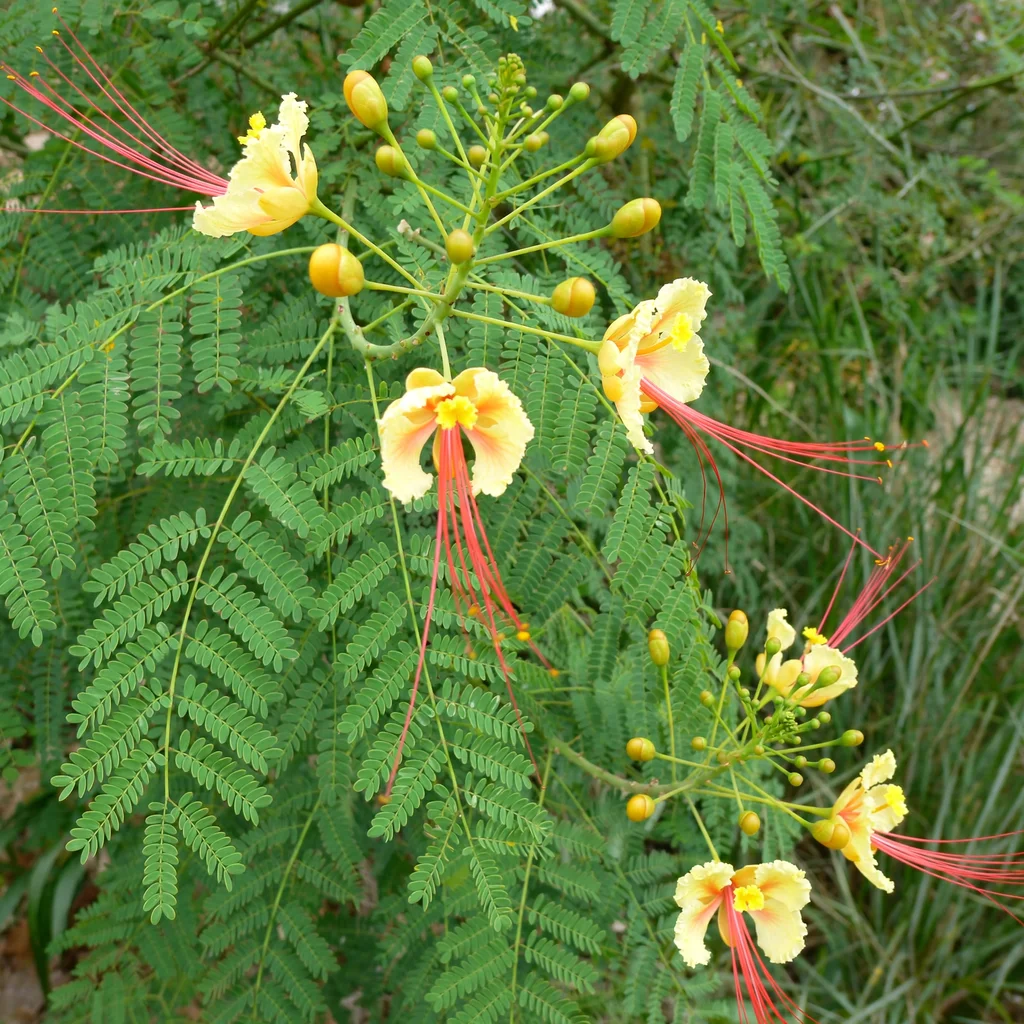
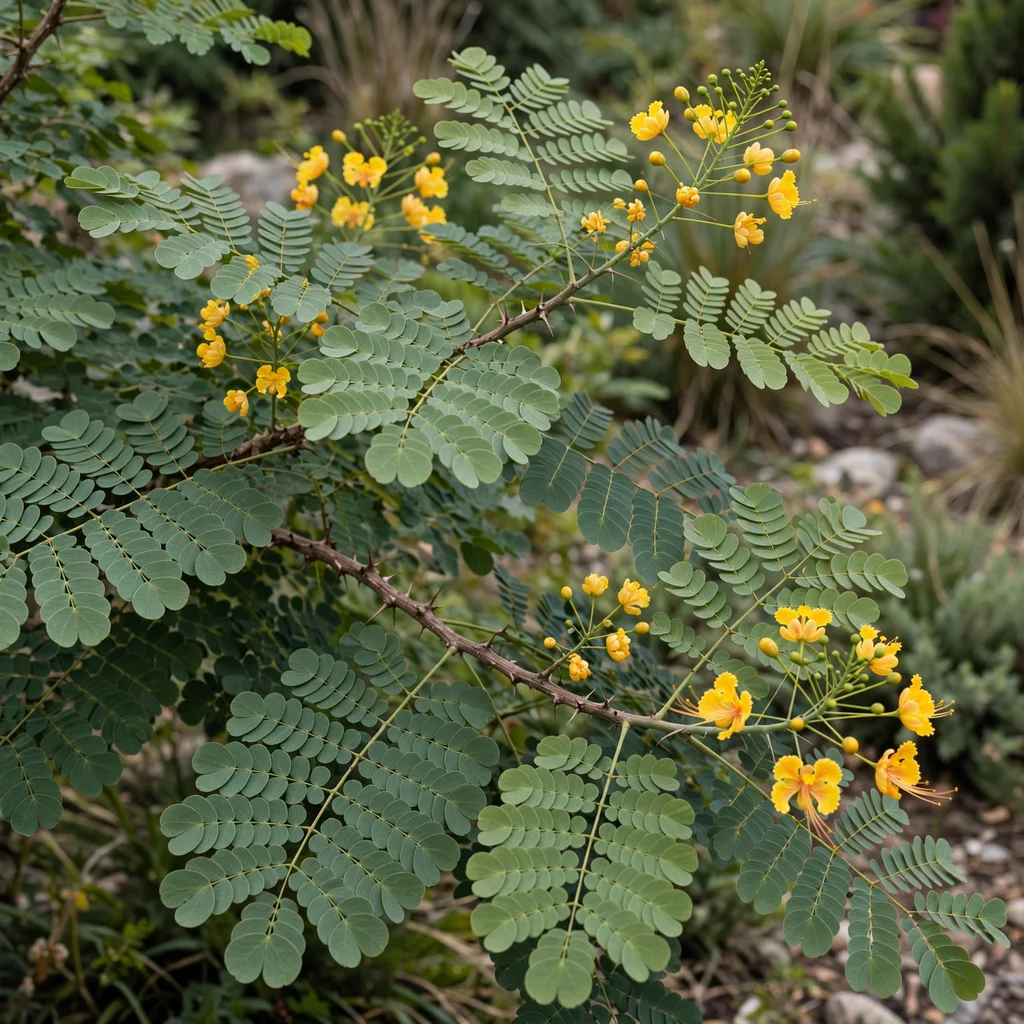
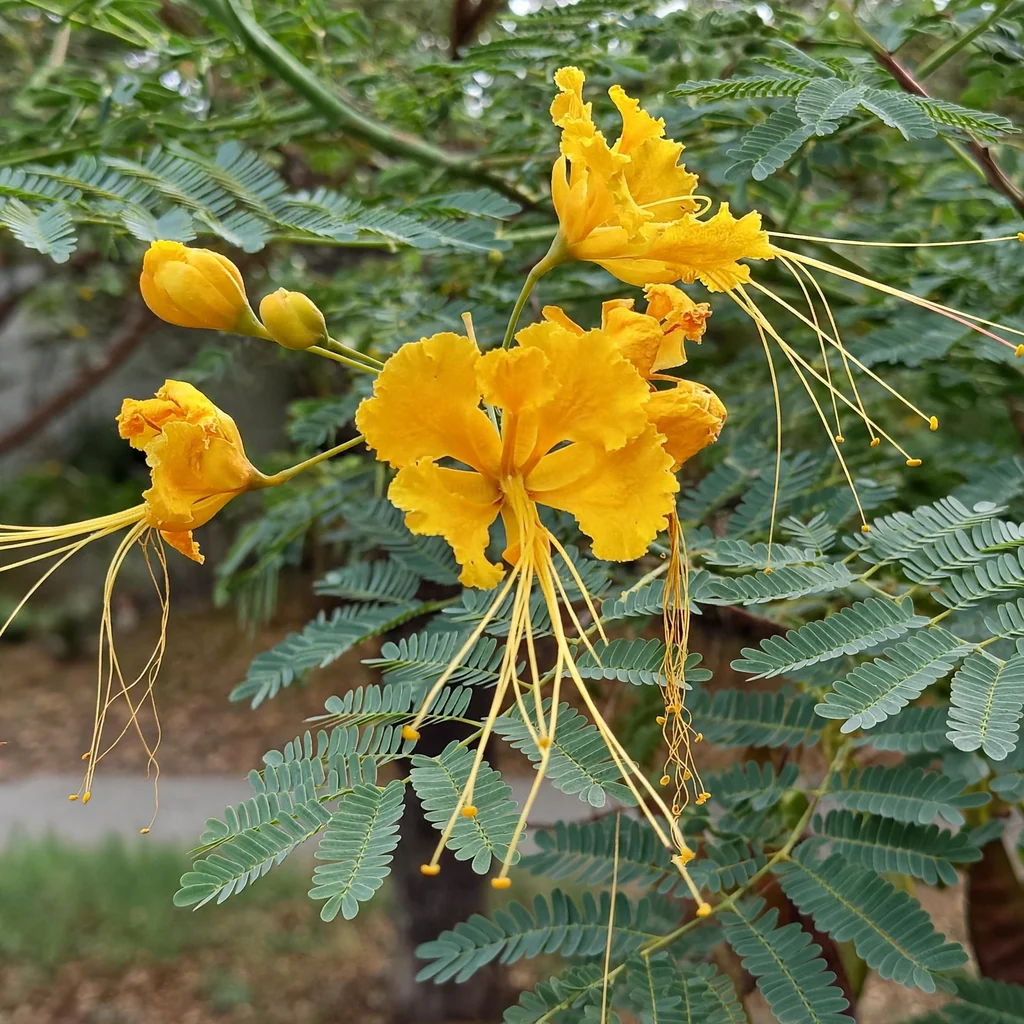
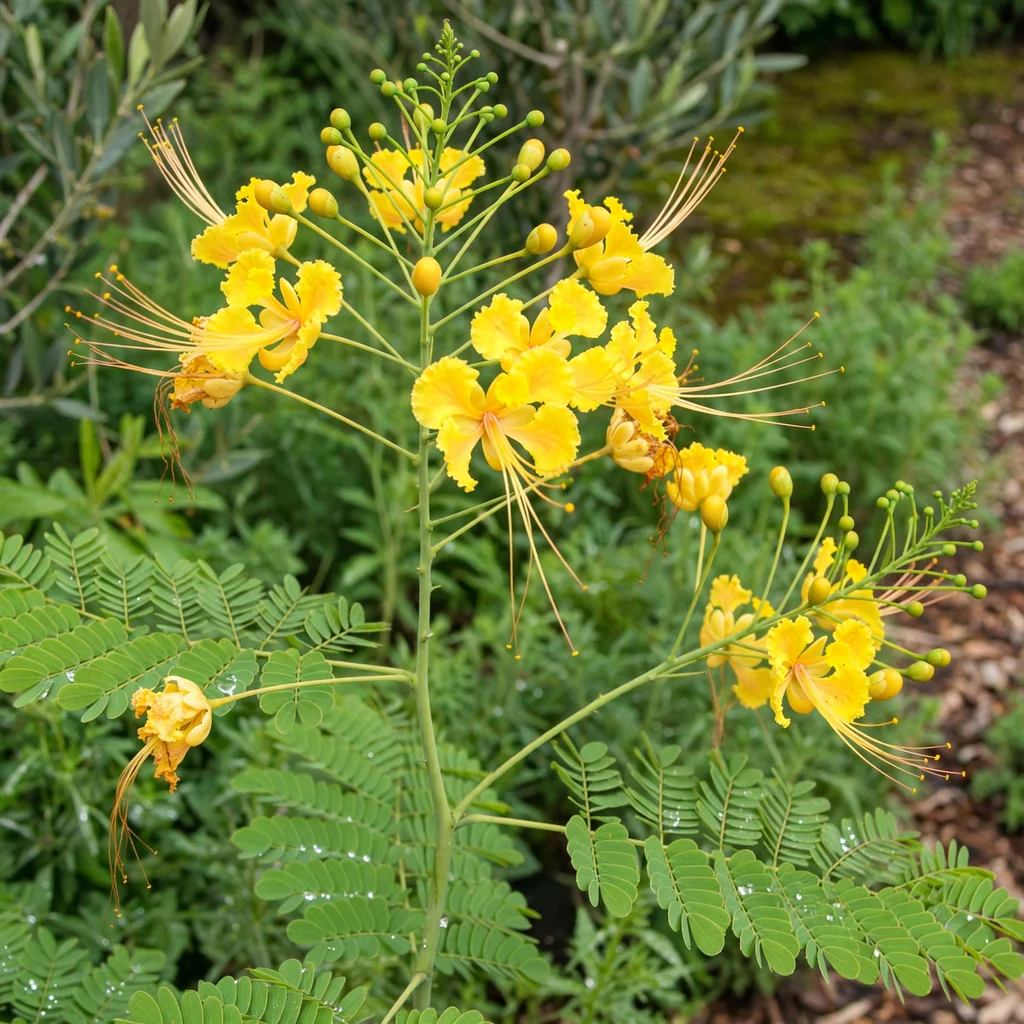
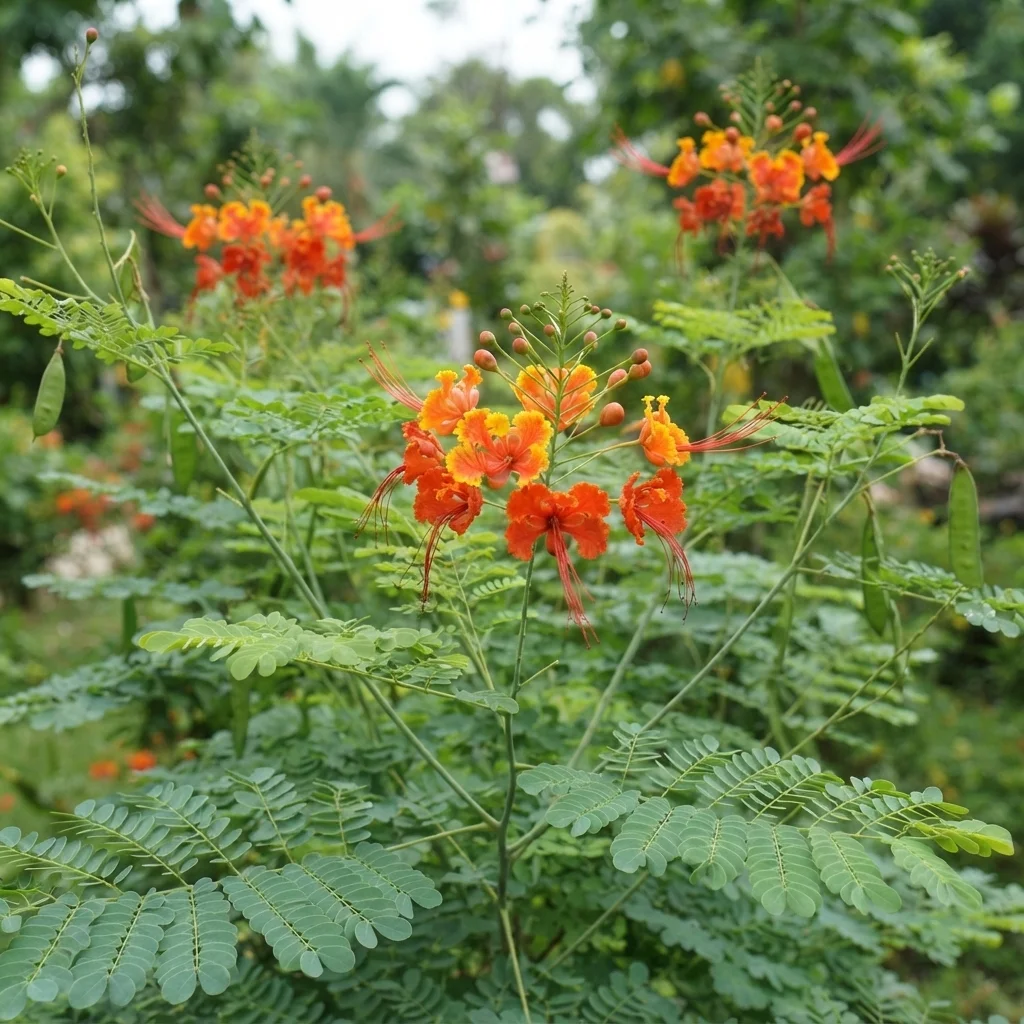
4 species of Caesalpinia
Each one is a parent of the varieties above.
Track your Caesalpinia in Sow
Save the Caesalpinia you grow and get care reminders timed to your zone.
How to grow Caesalpinia
Whats common across all Caesalpinia varieties in our catalog — drawn from the care records of the 5 most-grown of them.
The Caesalpinia year
- PruneFebruary–April100% of varieties
Remove frost-damaged branches in spring only; train to a single trunk.
- PlantApril and May80% of varieties
Plant container stock in fall into well-drained sandy soil.
- Check for PestsJune and July80% of varieties
Check leaf undersides for whiteflies; wash off minor buildup.
- Winter PrepNovember80% of varieties
Mulch the root zone and leave the canopy; tops die back near 15F and resprout from the base.
- FertilizeMarch60% of varieties
Fertilizer rarely needed; use light slow-release only if growth is pale.
- DeadheadJuly and August40% of varieties
Clip spent racemes and young pods to limit reseeding and litter.


Do
- Give full sun and sharp drainage in sandy soil.
- Water deeply then let soil dry between soakings.
- Train early to a single trunk for a patio tree form.
- Leave frost-damaged wood until spring, then cut to live tissue.
- Grow in full sun with excellent drainage
Avoid
- Do not shear or hard-prune every year.
- Do not overwater or keep soil constantly moist.
- Do not prune frost injury in fall or winter.
- Do not plant where children or pets chew the tannin-rich pods.
What goes wrong with Caesalpinia
| Problem | What you'll see | What to do |
|---|---|---|
| Aphids | Clusters on shoot tips and buds with sticky honeydew; rarely serious on this plant | Wash off with a strong jet of water and preserve ladybugs and other predators |
| Whiteflies | Small white flies lift from leaf undersides when disturbed, with sticky honeydew on leaves. | Spray leaf undersides with a strong water jet and conserve beneficials; rarely needs more in desert plantings. |
| Scale insects | Small waxy bumps on stems and leaf undersides with sticky honeydew and sooty mold. | Prune out heavily infested shoots and treat light infestations with horticultural oil when crawlers are active. |
| Spider mites | Fine webbing on leaf undersides and stippled, yellowing foliage during hot, dry periods. | Apply targeted insecticidal soaps or horticultural oils to the undersides of the leaves. |
| Root rot | Wilting and stem-base decay in waterlogged soil | Plant only in well-drained soil; avoid overwatering and correct low spots |
| No major diseases | Established plantings show no regular foliar disease in hot dry sites. | Keep soil well drained with infrequent deep watering and remove frost-injured wood in spring. |
| Mushroom root rot | Slow decline and wilting in wet soil with mushrooms at the base in fall. | Plant only in well-drained soil and avoid overwatering; remove and destroy severely affected plants. |
Making more Caesalpinia
Seed
- Nick or scarify the hard seed coat to break dormancy, then soak overnight.
- Sow scarified seed in fall in fast-draining sandy mix barely covered.
- Keep warm in full sun with light moisture until germination.
- Grow on in containers until roots fill the pot, then plant out in fall.
Softwood cuttings
- Take softwood tip cuttings in early summer.
- Strip lower leaves and insert in sandy mix.
- Keep humid and bright but out of direct midday sun.
- Pot up once rooted and plant out the following spring.
Caesalpinia questions
How many types of Caesalpinia are there?
The Sow catalog tracks 5 distinct Caesalpinia varieties. The most popular — ranked by 1 real gardeners — are shown first above.
What zones does Caesalpinia grow in?
Across its varieties, Caesalpinia covers USDA Zones 6–10. Individual varieties differ — each plant page lists its exact range, and Sow filters the catalog to your zone automatically.
When does Caesalpinia bloom?
Most Caesalpinia varieties bloom from summer to fall.
Which Caesalpinia should I choose?
Start from the most-saved varieties above — popularity across thousands of gardens is a strong signal of reliability — then filter by your zone and sun. In the Sow app you can preview any of them in a photo of your actual yard before you buy.