The Story
Plant Bio
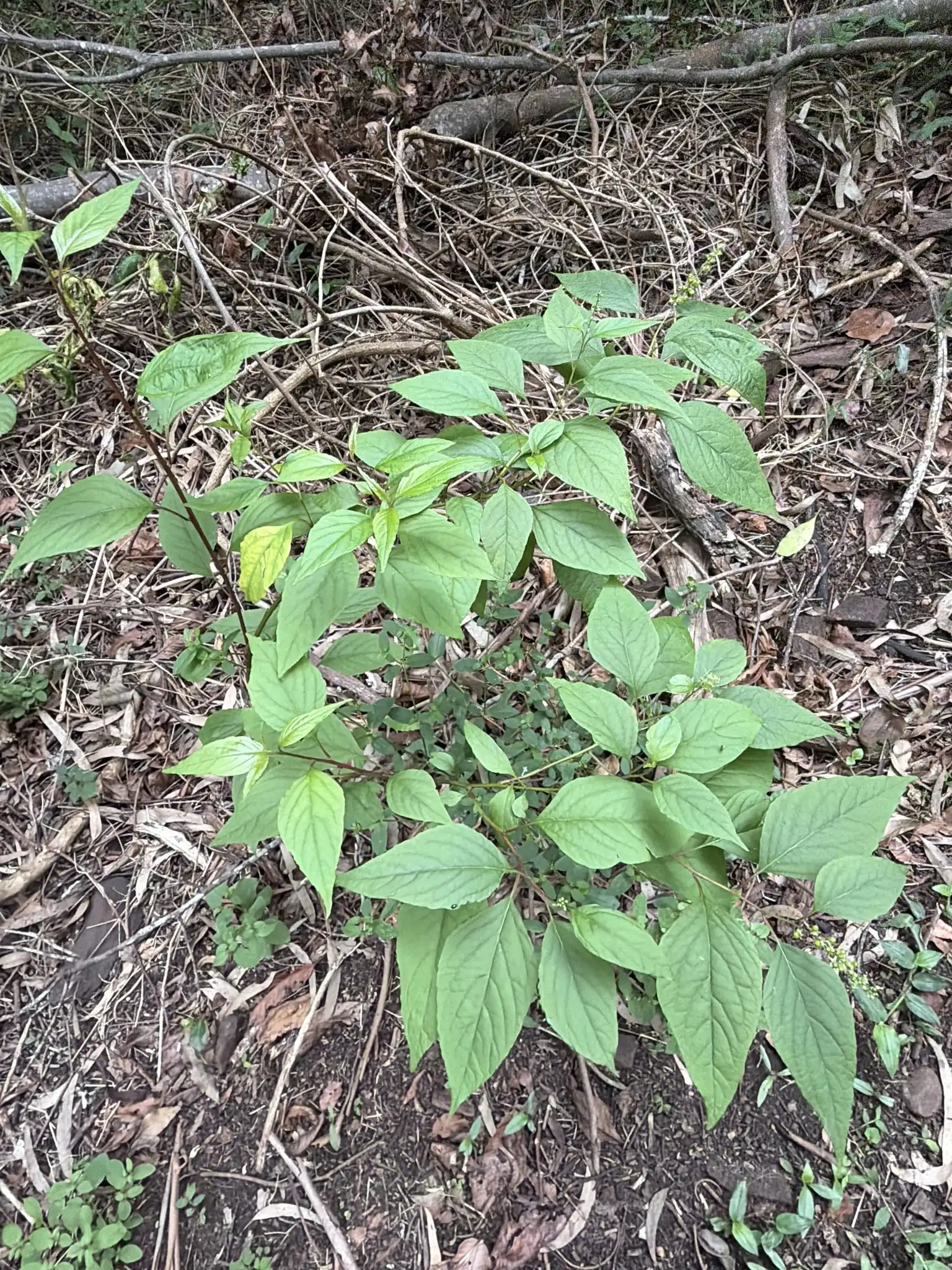
Deeringia amaranthoides is a scrambling woody climber native to tropical Asia and Australasia, bearing soft, ovate leaves on long ribbed stems with fine rusty hairs on young shoots. Inflorescences consist of long, slender spikes of tiny greenish-white flowers that develop into glossy, bright red succulent berries.
Unlike annual amaranths, this species forms a woody perennial framework capable of climbing up to twenty feet into trellises or surrounding trees. Its long-lasting clusters of colorful berries provide continuous visual interest and attract fruit-eating wildlife.
Uses & Benefits:
Essentials
At a Glance
Plant Type
Vine
Height
236"
Width
157"
Light
Full Sun, Partial Sun
Zones
9, 10
Water
Moderate
Humidity
High
Lifespan
Perennial
Native To
Asia and Australasia
Toxicity
Caution (contains oxalates)
Bloom period
Spring – Fall
In flower about 9 months of the year
Planting
How to Grow
- Plant in a well-draining, organic-rich soil mix in full sun or partial shade.
- Provide a sturdy trellis, fence, or arbor to support the sprawling stems.
- Water regularly during active growth, allowing the top layer of soil to dry slightly between waterings.
- Apply a balanced liquid fertilizer monthly throughout spring and summer.
- Move container specimens indoors before the first frost in autumn.
Pro Tip
Prune lightly after fruiting to manage spread; cutting hard into old, leafless wood results in slow and patchy regrowth.
Keep It Thriving
Care Guide
Do
- Provide solid structural support for stems to climb.
- Ensure soils drain rapidly to prevent root rot.
- Pinch young stem tips to encourage bushier growth.
Don't
- Do not allow roots to sit in soggy or waterlogged soil.
- Do not leave outdoors when temperatures drop toward freezing.
- Do not scalp severe wood back to leafless base stems.
Seasonal Care Calendar
| Task | Jan | Feb | Mar | Apr | May | Jun | Jul | Aug | Sep | Oct | Nov | Dec |
|---|---|---|---|---|---|---|---|---|---|---|---|---|
| Fertilize | ||||||||||||
| Pest Check | ||||||||||||
| Prune | ||||||||||||
| Winter Prep |
Watch Out For
Pests & Diseases
Common Pests
Common Diseases
In the Garden
Landscape Uses & Companions
Landscape Uses
Multiply
Propagation Methods
Good to Know
Common Questions
Redberry questions
What zones can Redberry grow in?
Redberry is hardy in USDA Zones 9–10: in that range it survives winter in the ground. Colder than Zone 9, grow it in a container you can move to shelter for the winter, or as an annual.
When does Redberry bloom?
Redberry typically blooms from spring to fall. Exact timing shifts a week or two with your zone — Sow's bloom calendar maps it to your garden.
Does Redberry need full sun?
Redberry does best in full sun to part shade. In hot climates, afternoon shade keeps blooms fresher longer.
Is Redberry drought tolerant?
Yes — once established (usually after the first full season), Redberry handles dry spells with minimal watering. Water deeply its first year to build the root system that makes that possible.
Keep exploring
Explore the genus
Hardy in your zone?
Grow Redberry with confidence
See it in a design of your actual yard, get zone-matched care reminders, and track it season by season in your garden journal.