
The Story
Plant Bio
Pelargonium ionidiflorum is an evergreen subshrub from the Eastern Cape that forms a spreading mound 12 to 18 inches tall, with trailing stems that root where they touch the soil. The foliage is small, deeply lobed and softly hairy, with a celery and parsley scent released when the leaves are brushed.
Older stems turn corky and gray-brown while the young growth stays yellow-green and glandular-hairy, keeping the plant compact rather than leggy. Flowers are borne in loose sprays on red stems, with narrow light pink to magenta petals marked wine-red on the upper two.
Uses & Benefits:
Essentials
At a Glance
Plant Type
Groundcover
Height
18"
Width
30"
Light
Full Sun, Partial Sun
Zones
9, 10
Water
Low
Humidity
Unknown
Lifespan
Perennial
Native To
South Africa (Eastern Cape)
Toxicity
Toxic to dogs, cats and horses
Bloom period
Spring – Fall
In flower about 9 months of the year
Planting
How to Grow
- Set plants in full sun to light shade after last frost, spacing 18 to 24 inches to allow trailing stems to root.
- Plant in sharply drained sandy or gritty loam, or in a container with drainage holes and a coarse mix.
- Water deeply at planting, then water only when dry; established plants need only occasional water.
- Pinch spent flower sprays to keep the mound dense and remove any damp or moldy foliage promptly.
Pro Tip
Plant in sharp drainage and full sun and water only when the soil is dry through, because heavy soil and frequent watering rot the crown.
Keep It Thriving
Care Guide
Do
- Give direct sun and sharp drainage
- Allow soil to dry between waterings
- Take stem cuttings to renew stock
Don't
- Do not overwater or plant in heavy clay that stays wet
- Do not cut back into old leafless wood
- Do not grow in deep shade where growth stretches
Seasonal Care Calendar
| Task | Jan | Feb | Mar | Apr | May | Jun | Jul | Aug | Sep | Oct | Nov | Dec |
|---|---|---|---|---|---|---|---|---|---|---|---|---|
| Fertilize | ||||||||||||
| Pest Check | ||||||||||||
| Plant | ||||||||||||
| Propagate | ||||||||||||
| Prune |
Watch Out For
Pests & Diseases
Common Pests
Common Diseases
In the Garden
Landscape Uses & Companions
Landscape Uses
Multiply
Propagation Methods
Good to Know
Common Questions
Celery-Scented Geranium questions
What zones can Celery-Scented Geranium grow in?
Celery-Scented Geranium is hardy in USDA Zones 9–10: in that range it survives winter in the ground. Colder than Zone 9, grow it in a container you can move to shelter for the winter, or as an annual.
When does Celery-Scented Geranium bloom?
Celery-Scented Geranium typically blooms from spring to fall. Exact timing shifts a week or two with your zone — Sow's bloom calendar maps it to your garden.
Does Celery-Scented Geranium need full sun?
Celery-Scented Geranium does best in full sun to part shade. In hot climates, afternoon shade keeps blooms fresher longer.
Is Celery-Scented Geranium drought tolerant?
Yes — once established (usually after the first full season), Celery-Scented Geranium handles dry spells with minimal watering. Water deeply its first year to build the root system that makes that possible.
More Pelargonium to compare
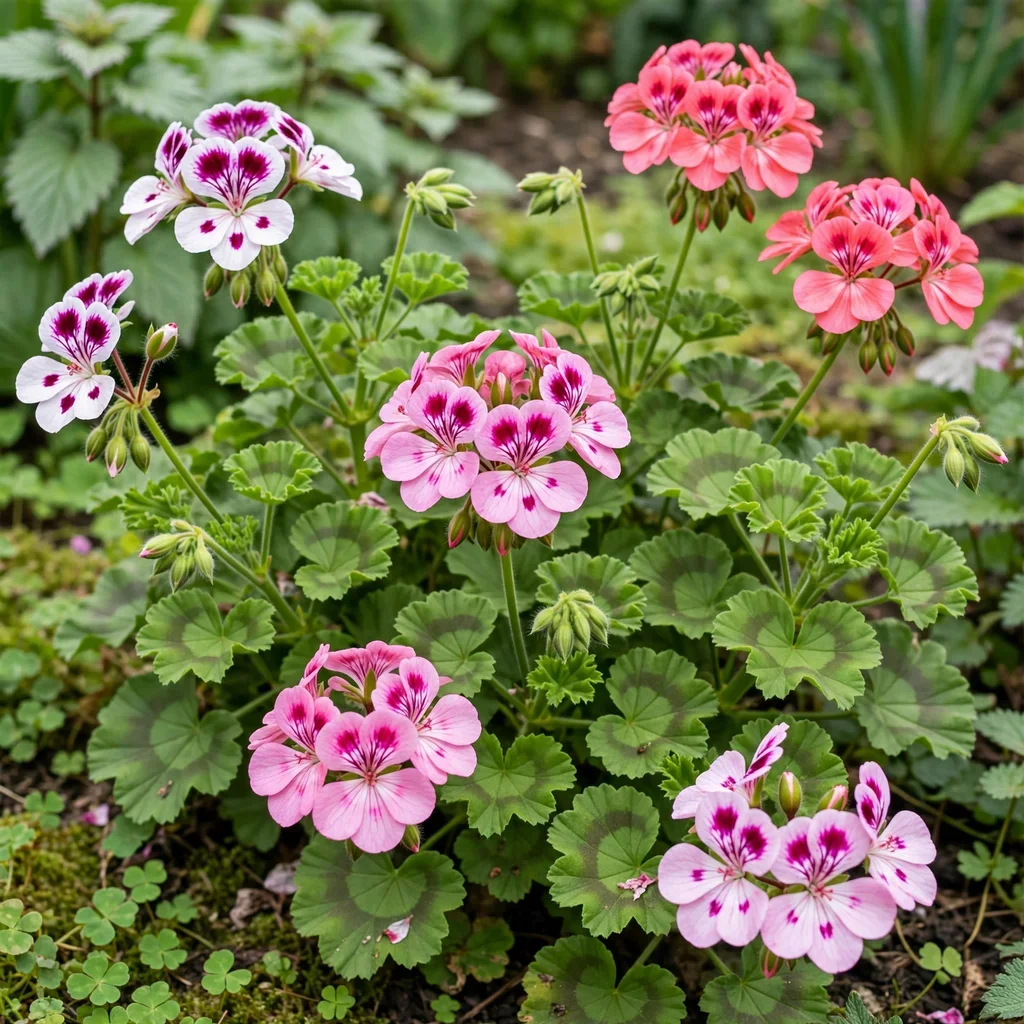
Breeders Mix Zonal Geranium
Pelargonium x hortorum 'Breeders Mix'
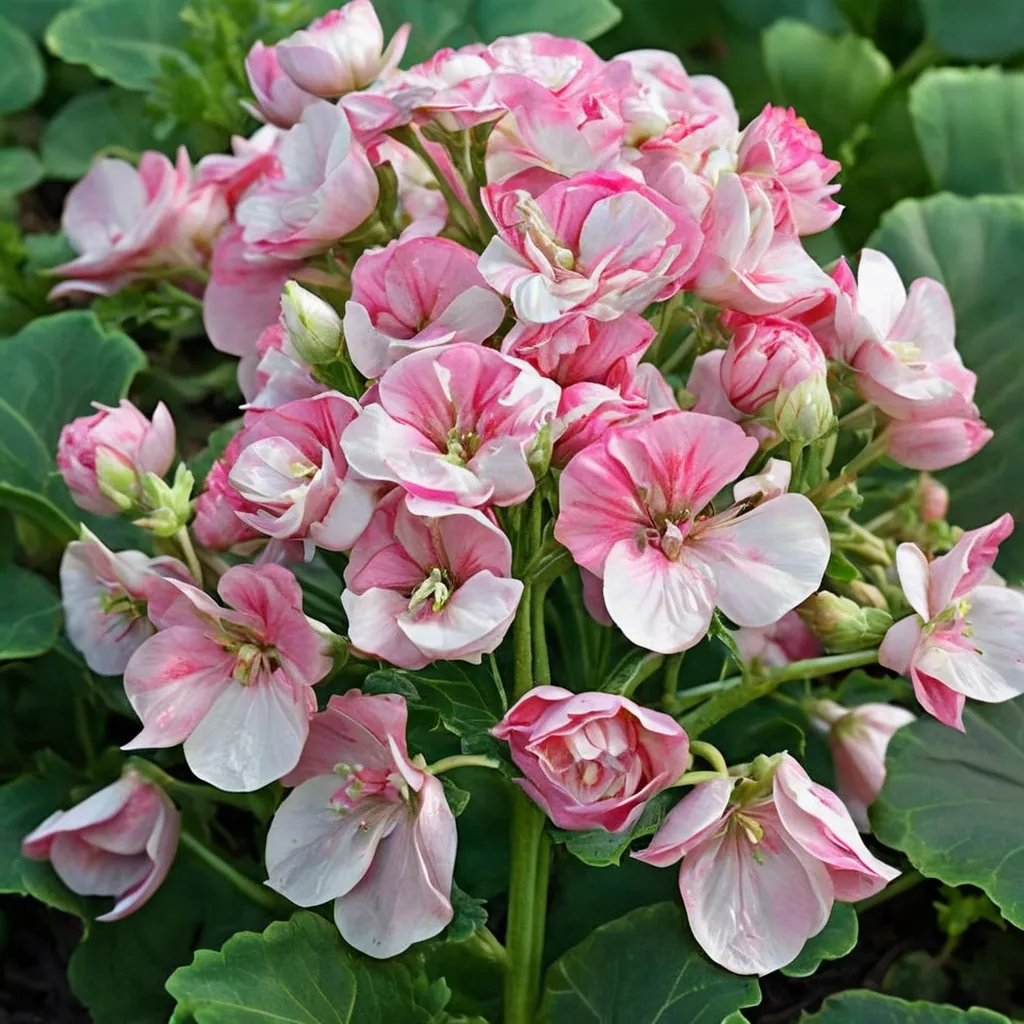
Zonal Geranium 'Appleblossom'
Pelargonium x hortorum 'Appleblossom'
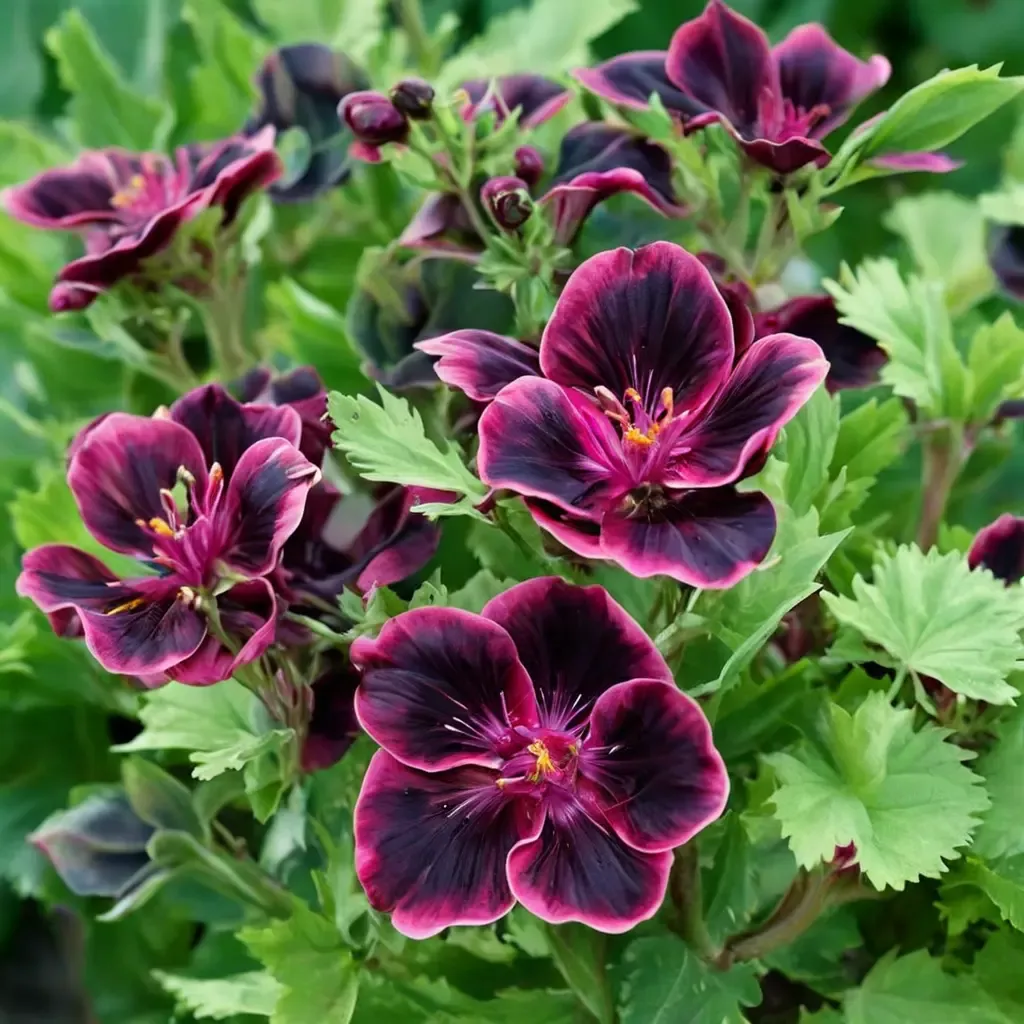
'Lord Bute' Regal Pelargonium
Pelargonium x hortorum 'Lord Bute'
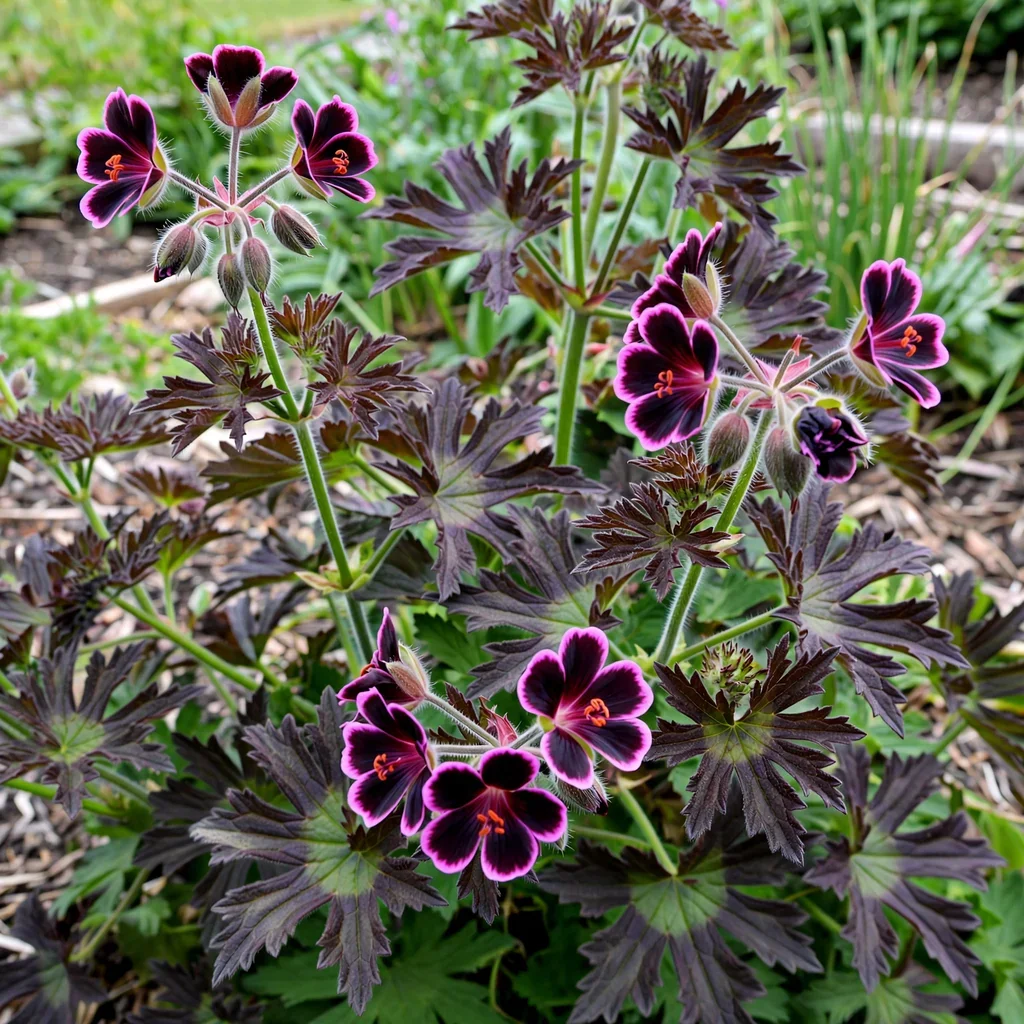
Midnight Ghost Geranium
Pelargonium x hortorum 'Midnight Ghost'
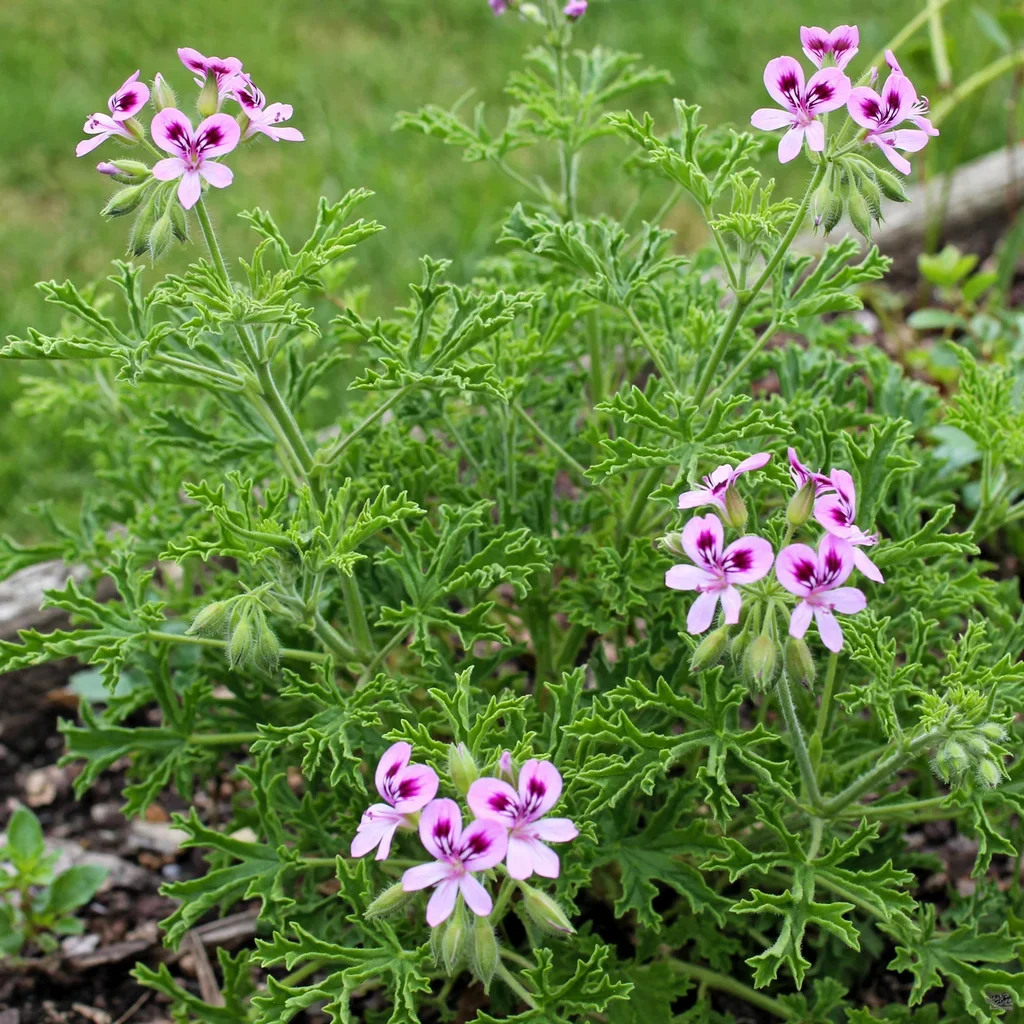
Citronella Plant
Pelargonium citrosum
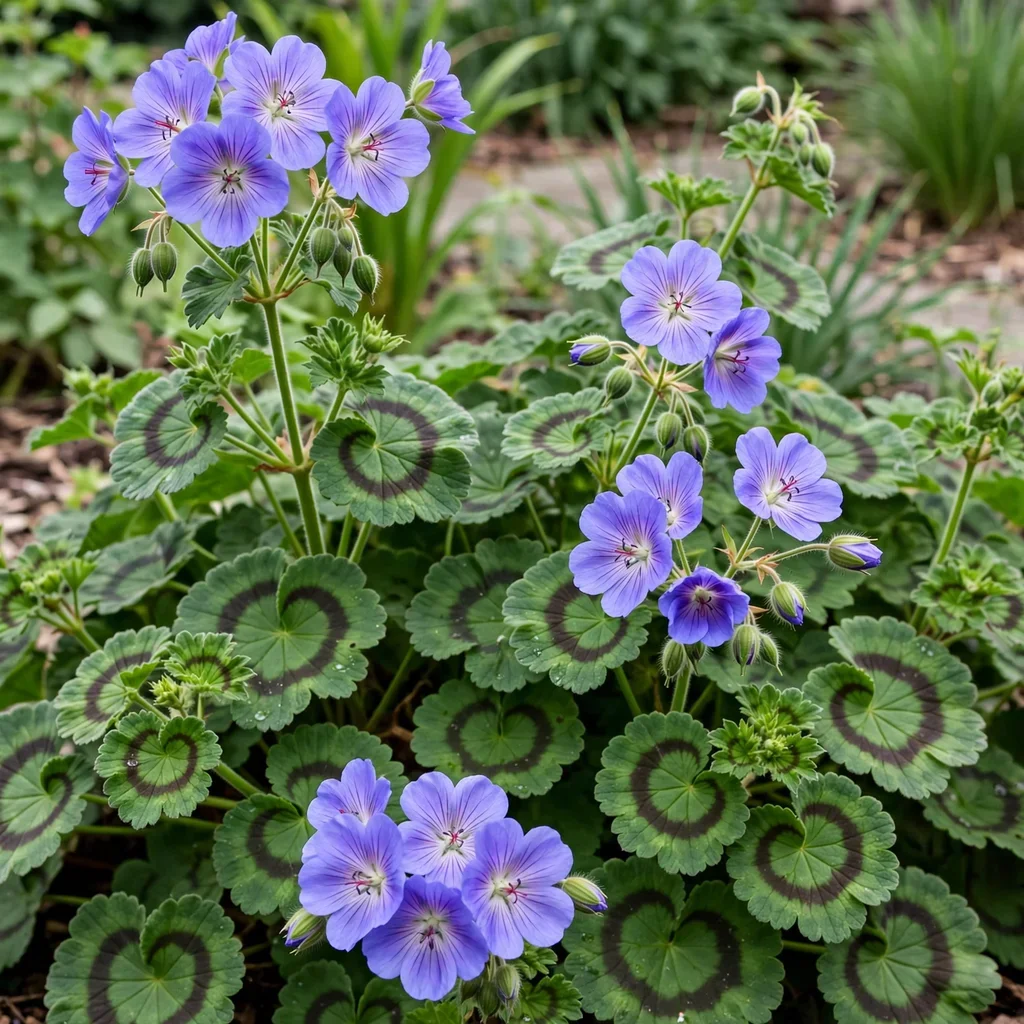
Azure Rush Zonal Geranium
Pelargonium x hortorum 'Azure Rush'
Keep exploring
Explore the genus
Hardy in your zone?
Grow Celery-Scented Geranium with confidence
See it in a design of your actual yard, get zone-matched care reminders, and track it season by season in your garden journal.