The Story
Plant Bio
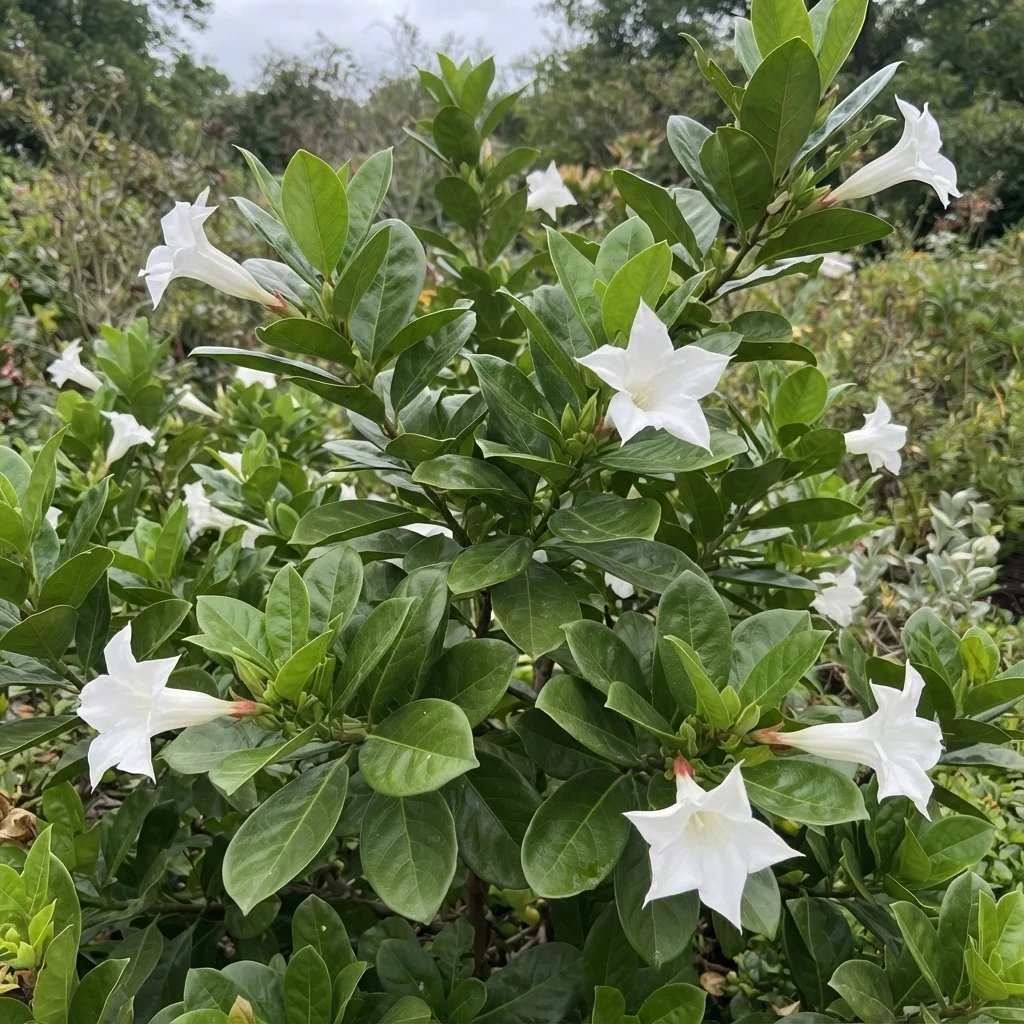
Portlandia grandiflora is a slow-growing evergreen shrub to small tree from Jamaica, reaching 6 to 15 feet in warm gardens with an erect trunk and fissured bark. The leaves are opposite, glossy dark green, thick and leathery, ovate-elliptic to 6 inches long with a flattened stalk.
The flowers are solitary white trumpets to 6 inches long and 2 inches wide, with a five-lobed calyx and five-pointed tube that release a vanilla to chocolate perfume strongest after dark. It holds a compact habit in full sun and requires calcareous, sharply drained soil, failing in acid mixes, waterlogged pots and salt wind.
Uses & Benefits:
Essentials
At a Glance
Plant Type
Shrub
Height
180"
Width
72"
Light
Full Sun, Partial Sun
Zones
10
Water
Moderate
Humidity
High
Lifespan
Long-lived evergreen shrub
Native To
Jamaica
Toxicity
Harmful if eaten
Bloom period
Spring – Fall
In flower about 9 months of the year
Planting
How to Grow
- Pot in alkaline limestone mix that drains sharply; keep roots undisturbed.
- Place in full sun for compact growth, with light afternoon shade in extreme heat.
- Water evenly to stay moist, never soggy; never leave the pot in standing water.
- Feed lightly with balanced slow-release fertilizer and avoid acid fertilizers.
- Bring indoors before nights near 50F and overwinter above 60F in bright light with humidity.
Pro Tip
Pot in alkaline fast-draining limestone mix, keep winter above 60F in bright light, and water evenly moist never soggy; give full sun for compact growth and night scent.
Keep It Thriving
Care Guide
Do
- Do grow in full sun for compact bloom.
- Do keep winter above 60F in bright humid air.
- Do water regularly to stay moist but drained.
Don't
- Do not plant in acid soil or use acid fertilizer.
- Do not overwater or leave roots waterlogged.
- Do not prune hard; growth is slow to replace.
- Do not expose to frost or salty wind.
Seasonal Care Calendar
| Task | Jan | Feb | Mar | Apr | May | Jun | Jul | Aug | Sep | Oct | Nov | Dec |
|---|---|---|---|---|---|---|---|---|---|---|---|---|
| Fertilize | ||||||||||||
| Pest Check | ||||||||||||
| Plant | ||||||||||||
| Propagate | ||||||||||||
| Winter Prep |
Watch Out For
Pests & Diseases
Common Pests
Common Diseases
In the Garden
Landscape Uses & Companions
Landscape Uses
Multiply
Propagation Methods
Good to Know
Common Questions
Jamaican Bellflower questions
What zones can Jamaican Bellflower grow in?
Jamaican Bellflower is hardy in USDA Zone 10: in that range it survives winter in the ground. Colder than Zone 10, grow it in a container you can move to shelter for the winter.
When does Jamaican Bellflower bloom?
Jamaican Bellflower typically blooms from spring to fall. Exact timing shifts a week or two with your zone — Sow's bloom calendar maps it to your garden.
Does Jamaican Bellflower need full sun?
Jamaican Bellflower does best in full sun to part shade. In hot climates, afternoon shade keeps blooms fresher longer.
Keep exploring
Explore the genus
Hardy in your zone?
Grow Jamaican Bellflower with confidence
See it in a design of your actual yard, get zone-matched care reminders, and track it season by season in your garden journal.