The Story
Plant Bio
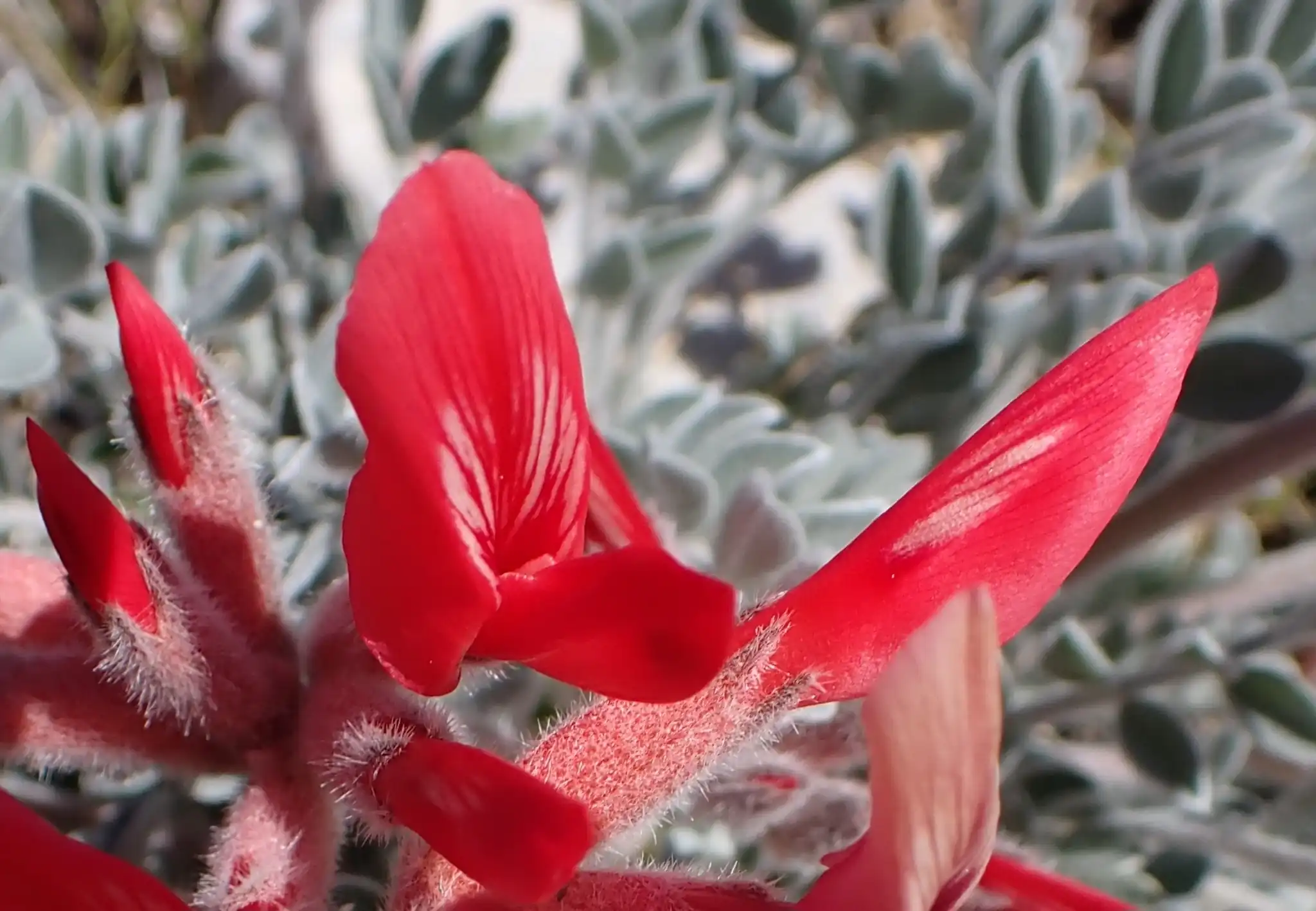
Astragalus coccineus is a low tufted perennial in the pea family, forming stemless crowns from a woody taproot and reaching 4 to 12 inches tall. The leaves are pinnate and densely white-woolly, to 4 inches long with 7 to 15 small oblanceolate leaflets.
It is the only milkvetch in the United States with scarlet-red flowers, borne as unusually long pea blooms angled upward in loose racemes above the foliage. The blooms mature into plump woolly pods, and the white villous-tomentose covering stays conspicuous through bloom in spring to early summer.
Uses & Benefits:
Essentials
At a Glance
Plant Type
Perennial
Height
12"
Width
12"
Light
Full Sun
Water
Low
Humidity
Low
Lifespan
Perennial
Native To
Southwestern USA and N Baja California
Toxicity
Toxic if ingested
Bloom period
Spring – Early summer
In flower about 4 months of the year
Planting
How to Grow
- Plant young potted stock in fall into full sun on a gravelly ridge or slope
- Set crown at soil level in sharply drained, low-fertility soil and water in once
- Withhold routine irrigation once established; allow dry intervals
- Leave crowns undisturbed; do not divide or move
Pro Tip
Leave established crowns undisturbed in full sun and sharp gravelly drainage; the woody taproot resents transplanting and rots with summer water.
Keep It Thriving
Care Guide
Do
- Plant in full sun with excellent drainage
- Leave taproot undisturbed once planted
- Enjoy hummingbird visits and woolly pods in place
Don't
- Do not overwater or plant in clay or wet soil
- Do not eat any part; all parts are toxic to people and livestock
- Do not divide mature crowns or cut into woody base
Seasonal Care Calendar
| Task | Jan | Feb | Mar | Apr | May | Jun | Jul | Aug | Sep | Oct | Nov | Dec |
|---|---|---|---|---|---|---|---|---|---|---|---|---|
| Mulch | ||||||||||||
| Pest Check | ||||||||||||
| Plant | ||||||||||||
| Spring Cleanup |
Watch Out For
Pests & Diseases
Common Pests
Common Diseases
In the Garden
Landscape Uses & Companions
Landscape Uses
Multiply
Propagation Methods
Good to Know
Common Questions
Scarlet Milkvetch questions
When does Scarlet Milkvetch bloom?
Scarlet Milkvetch typically blooms from early spring to early summer. Exact timing shifts a week or two with your zone — Sow's bloom calendar maps it to your garden.
Does Scarlet Milkvetch need full sun?
Scarlet Milkvetch does best in full sun (6+ hours).
Is Scarlet Milkvetch drought tolerant?
Yes — once established (usually after the first full season), Scarlet Milkvetch handles dry spells with minimal watering. Water deeply its first year to build the root system that makes that possible.
More Astragalus to compare
Keep exploring
Explore the genus
Grow Scarlet Milkvetch with confidence
See it in a design of your actual yard, get zone-matched care reminders, and track it season by season in your garden journal.