The Story
Plant Bio
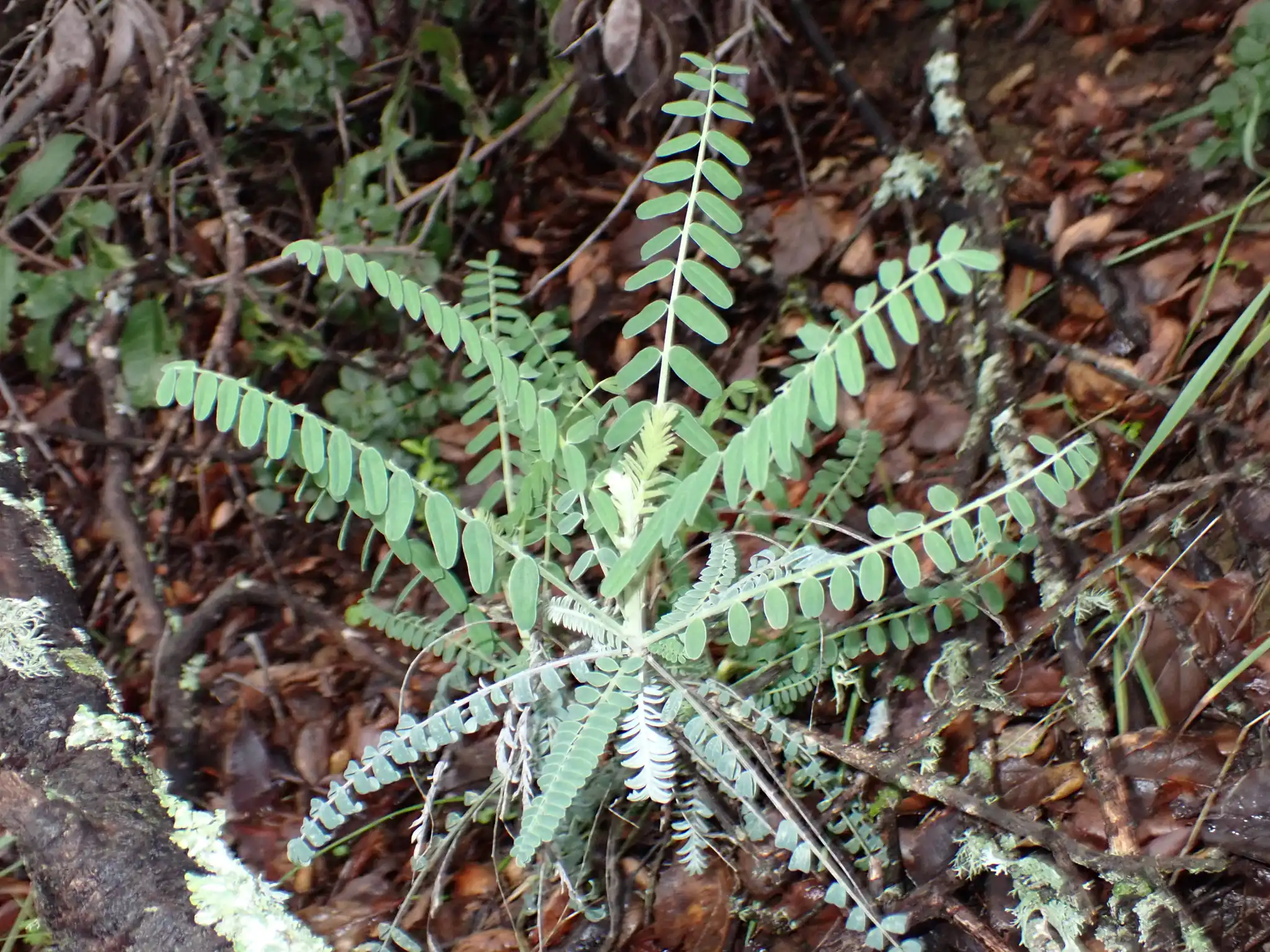
Astragalus trichopodus is a bushy, summer-deciduous perennial native to coastal bluffs, sage scrub, and rocky hillsides of southwestern California and Baja California. It forms branching stems clad in fine, silver-gray to green pinnate foliage and produces racemes of up to fifty cream-colored pea flowers followed by inflated, papery seed pods.
This species functions as a critical larval host plant for native blue butterflies, including the endangered Palos Verdes Blue, Silvery Blue, and Western Tailed Blue. Its silver-gray foliage drops during dry summer periods to conserve moisture, entering a dormant state until winter rains resume growth.
Uses & Benefits:
Essentials
At a Glance
Plant Type
Perennial
Height
39"
Width
47"
Light
Full Sun
Zones
8, 9, 10
Water
Low
Humidity
Low to Moderate
Lifespan
Perennial
Native To
Southwestern California and Baja California, Mexico
Toxicity
May be toxic to pets and livestock if ingested
Bloom period
Spring – Early summer
In flower about 4 months of the year
Planting
How to Grow
- Select a planting site in full sun with sandy, sharply draining soil.
- Plant container-grown specimens in fall or early spring to allow roots to establish before summer.
- Water sparingly during initial establishment, then cease watering once the plant enters natural summer dormancy.
- Refrain from applying fertilizers, which cause weak, leggy growth.
Pro Tip
Prune back dead stems only during complete late-summer dormancy, and never cut into old leafless wood as it will not regenerate.
Keep It Thriving
Care Guide
Do
- Plant in fast-draining, sandy or rocky soil in full sun.
- Allow the plant to go summer-deciduous during hot, dry weather.
- Prune dead stems lightly only when the plant is completely dormant.
Don't
- Do not overwater or plant in heavy, poorly drained clay soil.
- Do not apply fertilizer, as excess nutrients cause leggy growth.
- Do not cut hard into old bare wood when pruning.
Seasonal Care Calendar
| Task | Jan | Feb | Mar | Apr | May | Jun | Jul | Aug | Sep | Oct | Nov | Dec |
|---|---|---|---|---|---|---|---|---|---|---|---|---|
| Pest Check | ||||||||||||
| Plant | ||||||||||||
| Propagate | ||||||||||||
| Prune |
Watch Out For
Pests & Diseases
Common Pests
Common Diseases
In the Garden
Landscape Uses & Companions
Landscape Uses
Companion Plants
Multiply
Propagation Methods
Good to Know
Common Questions
Santa Barbara Milk Vetch questions
What zones can Santa Barbara Milk Vetch grow in?
Santa Barbara Milk Vetch is hardy in USDA Zones 8–10: in that range it survives winter in the ground. Colder than Zone 8, grow it in a container you can move to shelter for the winter, or as an annual.
Is Santa Barbara Milk Vetch deer resistant?
Not reliably. Deer may browse Santa Barbara Milk Vetch, especially tender spring growth — plan on repellents or fencing where pressure is high.
When does Santa Barbara Milk Vetch bloom?
Santa Barbara Milk Vetch typically blooms from early spring to early summer. Exact timing shifts a week or two with your zone — Sow's bloom calendar maps it to your garden.
Does Santa Barbara Milk Vetch need full sun?
Santa Barbara Milk Vetch does best in full sun (6+ hours).
Is Santa Barbara Milk Vetch drought tolerant?
Yes — once established (usually after the first full season), Santa Barbara Milk Vetch handles dry spells with minimal watering. Water deeply its first year to build the root system that makes that possible.
More Astragalus to compare
Keep exploring
Explore the genus
Hardy in your zone?
Grow Santa Barbara Milk Vetch with confidence
See it in a design of your actual yard, get zone-matched care reminders, and track it season by season in your garden journal.