The Story
Plant Bio
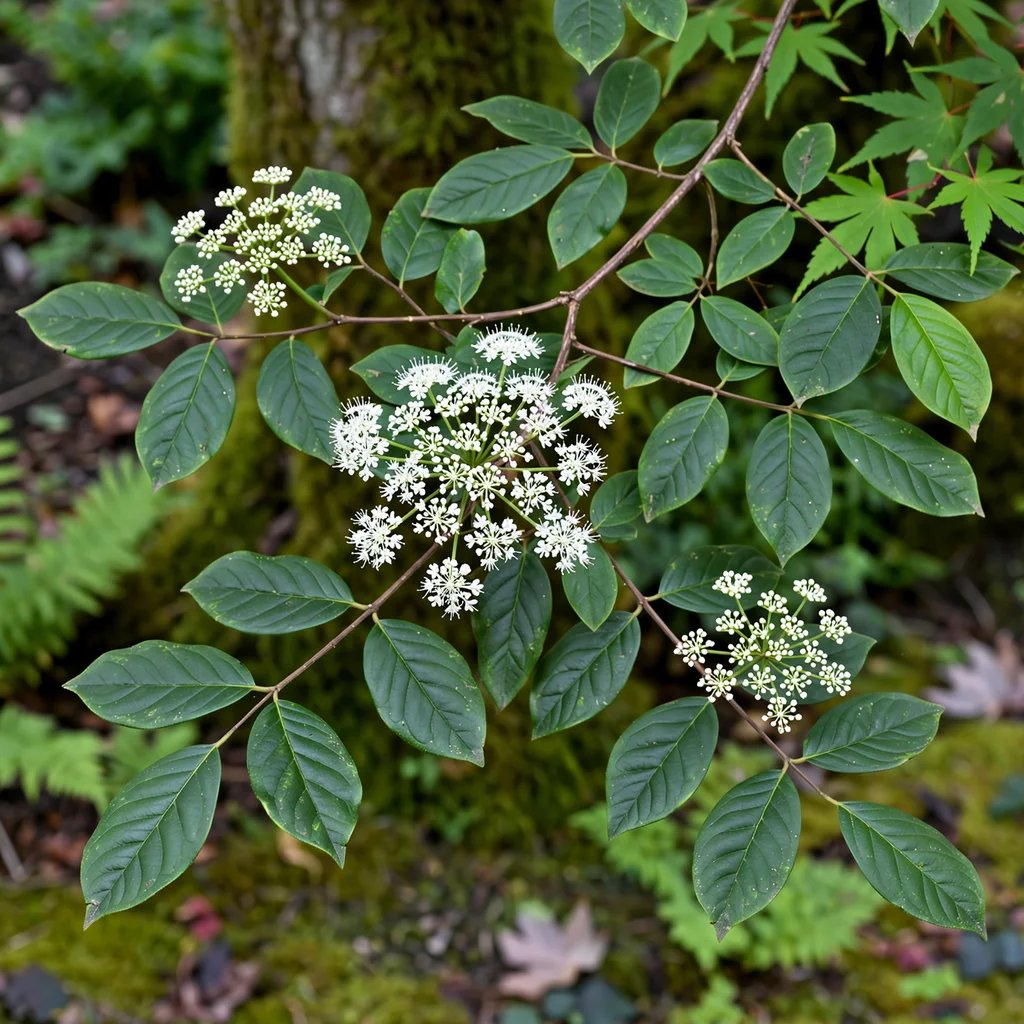
Decumaria barbara is a deciduous woody vine from the southeastern United States that climbs by dense aerial rootlets, reaching 15 to 30 feet on trees, brick, or rock. The opposite ovate to elliptic leaves are 2 to 6 inches long, glossy dark green in summer on stems that form a tight mat against vertical surfaces.
What distinguishes it is the terminal flat-topped corymbs 2 to 3 inches across of white fertile flowers with light fragrance in late spring, the spent florets holding purple-brown into fall. It climbs without ties, tolerates full shade on rich moist soil, and sits still for one to two years to root before climbing vigorously.
Uses & Benefits:
Essentials
At a Glance
Plant Type
Vine
Height
354"
Width
118"
Light
Partial Sun, Shade
Zones
5, 6, 7, 8, 9
Water
Medium to high
Humidity
High
Lifespan
Long-lived woody perennial vine
Native To
Southeastern United States
Toxicity
Non-toxic
Bloom period
Late spring – Early summer
In flower about 2 months of the year
Planting
How to Grow
- Plant in spring in part shade to full shade in rich, moist organic loam.
- Set the crown level with the soil and place the stems flat against the support so rootlets can grip.
- Mulch 2 to 3 inches with composted bark and water deeply to settle.
- Irrigate through the first two summers to keep soil evenly moist.
- Guide new shoots to the wall and prune only after flowering to hold bounds.
Pro Tip
Prune only to hold bounds right after flowering; cutting back into old leafless stems regrows slowly if at all.
Keep It Thriving
Care Guide
Do
- Keep soil evenly moist with organic mulch, especially in morning sun.
- Feed once in spring with compost or balanced slow-release organic fertilizer.
- Leave the aerial rootlets attached and avoid pulling stems off masonry.
Don't
- Do not plant in stagnant, waterlogged clay where roots suffocate.
- Do not shear heavily into old bare wood to reduce size.
- Do not let young plants dry out during summer heat.
Seasonal Care Calendar
| Task | Jan | Feb | Mar | Apr | May | Jun | Jul | Aug | Sep | Oct | Nov | Dec |
|---|---|---|---|---|---|---|---|---|---|---|---|---|
| Mulch | ||||||||||||
| Pest Check | ||||||||||||
| Plant | ||||||||||||
| Propagate | ||||||||||||
| Prune |
Watch Out For
Pests & Diseases
Common Pests
Common Diseases
In the Garden
Landscape Uses & Companions
Landscape Uses
Multiply
Propagation Methods
Good to Know
Common Questions
Woodvamp questions
What zones can Woodvamp grow in?
Woodvamp is hardy in USDA Zones 5–9: in that range it survives winter in the ground. Colder than Zone 5, grow it in a container you can move to shelter for the winter, or as an annual. Warmer than Zone 9, winter isn't the problem: it prefers colder winters, and summer heat can shorten its life.
Is Woodvamp deer resistant?
Not reliably. Deer may browse Woodvamp, especially tender spring growth — plan on repellents or fencing where pressure is high.
When does Woodvamp bloom?
Woodvamp typically blooms from late spring to early summer. Exact timing shifts a week or two with your zone — Sow's bloom calendar maps it to your garden.
Does Woodvamp need full sun?
Woodvamp does best in part shade.
Keep exploring
Explore the genus
Hardy in your zone?
Grow Woodvamp with confidence
See it in a design of your actual yard, get zone-matched care reminders, and track it season by season in your garden journal.