The Story
Plant Bio
Stictocardia beraviensis is an evergreen twining vine in the morning-glory family with thick, pithy stems that climb by wrapping around a trellis, arbor or fence. The leaves are large, heart-shaped and fleshy with a velvet texture, about 6 inches across in sun and to 12 inches across in shade.
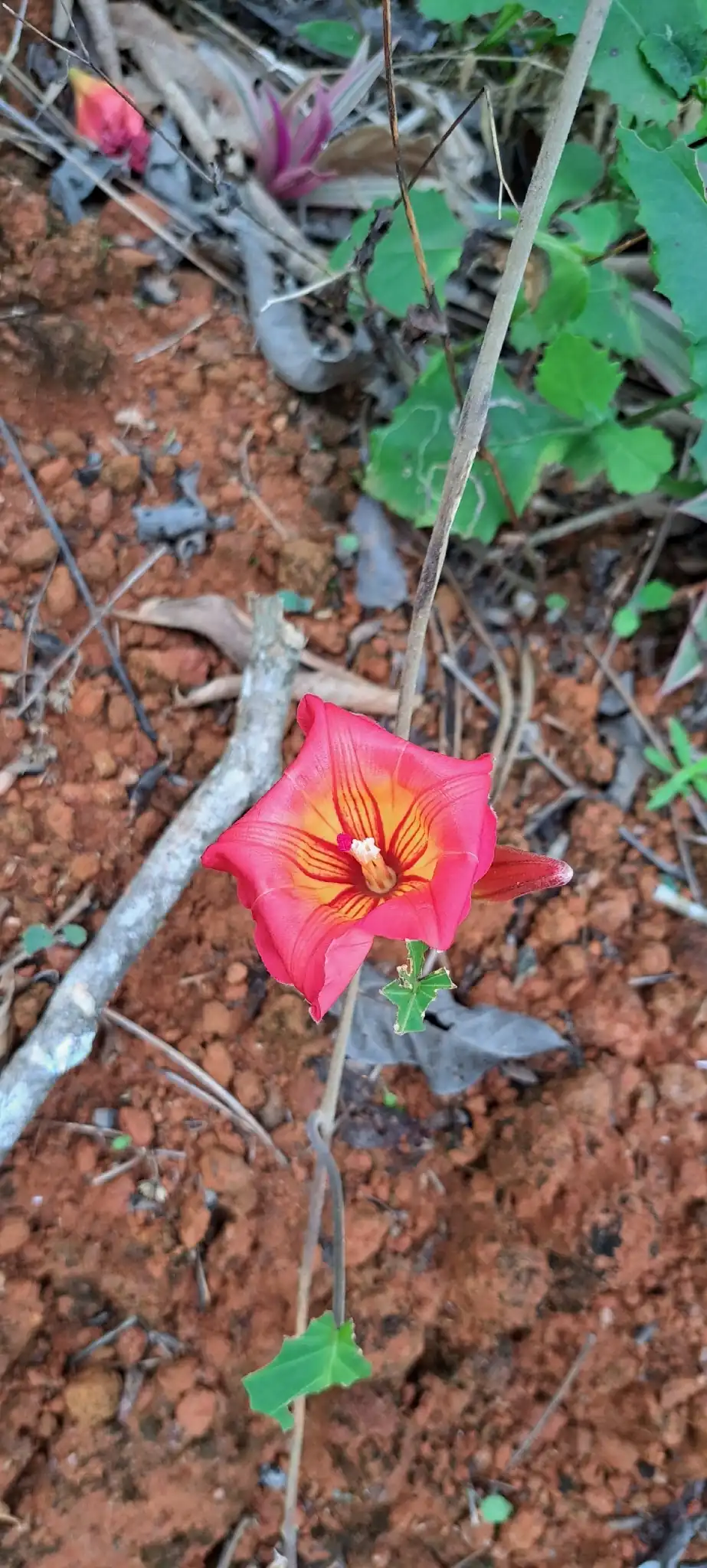
It is grown for cup-shaped morning-glory flowers 2 to 3 inches wide, crimson to red-purple with yellow-orange streaking toward a gold center, scented and borne in clusters at the leaf axils. Pruned plants hold as a 5 to 10 foot bushy vine, but unpruned stems run vigorously to 45 feet and quickly outgrow their support unless cut back.
Uses & Benefits:
Essentials
At a Glance
Plant Type
Vine
Height
120"
Width
96"
Light
Full Sun, Partial Sun, Shade
Zones
9, 10
Water
High, keep moist
Humidity
High
Lifespan
Long-lived evergreen vine
Native To
West Africa and Madagascar
Toxicity
Toxic if ingested, seeds hallucinogenic
Bloom period
Winter – Spring
In flower about 6 months of the year
Planting
How to Grow
- Plant in full sun to partial shade in rich, well-drained soil that stays moist but never soggy.
- Set beside a strong trellis, arbor or fence and tie new stems until they twine on their own.
- Water regularly and deeply; do not let the root zone dry out during heat or active growth.
- Prune regularly to contain size and cut back after flowering if bloom slows.
Pro Tip
Prune hard after flowering to hold the 5 to 10 foot frame; vines left a week in active growth tangle and flower less, and young plants need frost protection even where mature wood takes a brief freeze to 30F.
Keep It Thriving
Care Guide
Do
- Give full sun for heaviest bloom, with afternoon shade in hot climates.
- Keep soil evenly moist with good drainage.
- Provide a sturdy support and train stems early.
- Protect young plants from frost and move containers to a frost-free conservatory below zone 9.
Don't
- Do not let soil dry out completely or stay waterlogged.
- Do not leave vines unpruned through the growing season.
- Do not expose young plants to freezing temperatures.
- Do not ingest seeds, which contain hallucinogenic alkaloids.
Seasonal Care Calendar
| Task | Jan | Feb | Mar | Apr | May | Jun | Jul | Aug | Sep | Oct | Nov | Dec |
|---|---|---|---|---|---|---|---|---|---|---|---|---|
| Fertilize | ||||||||||||
| Mulch | ||||||||||||
| Pest Check | ||||||||||||
| Prune | ||||||||||||
| Winter Prep |
Watch Out For
Pests & Diseases
Common Pests
Common Diseases
In the Garden
Landscape Uses & Companions
Landscape Uses
Multiply
Propagation Methods
Good to Know
Common Questions
Hawaiian Sunset Vine questions
What zones can Hawaiian Sunset Vine grow in?
Hawaiian Sunset Vine is hardy in USDA Zones 9–10: in that range it survives winter in the ground. Colder than Zone 9, grow it in a container you can move to shelter for the winter, or as an annual.
Is Hawaiian Sunset Vine deer resistant?
Yes — Hawaiian Sunset Vine is rated deer-resistant. Deer typically pass it over, though extreme hunger can override any plant's defenses.
When does Hawaiian Sunset Vine bloom?
Hawaiian Sunset Vine typically blooms from winter to spring. Exact timing shifts a week or two with your zone — Sow's bloom calendar maps it to your garden.
Does Hawaiian Sunset Vine need full sun?
Hawaiian Sunset Vine does best in full sun to part shade. In hot climates, afternoon shade keeps blooms fresher longer.
Keep exploring
Explore the genus
Hardy in your zone?
Grow Hawaiian Sunset Vine with confidence
See it in a design of your actual yard, get zone-matched care reminders, and track it season by season in your garden journal.