The Story
Plant Bio
Blitum capitatum is an erect annual herb native to broad subarctic and temperate regions of North America, growing between eight and thirty-nine inches tall on succulent, hairless stems. Its triangular to arrowhead-shaped green leaves feature sharply toothed margins that set a lush backdrop for its summer fruit production.
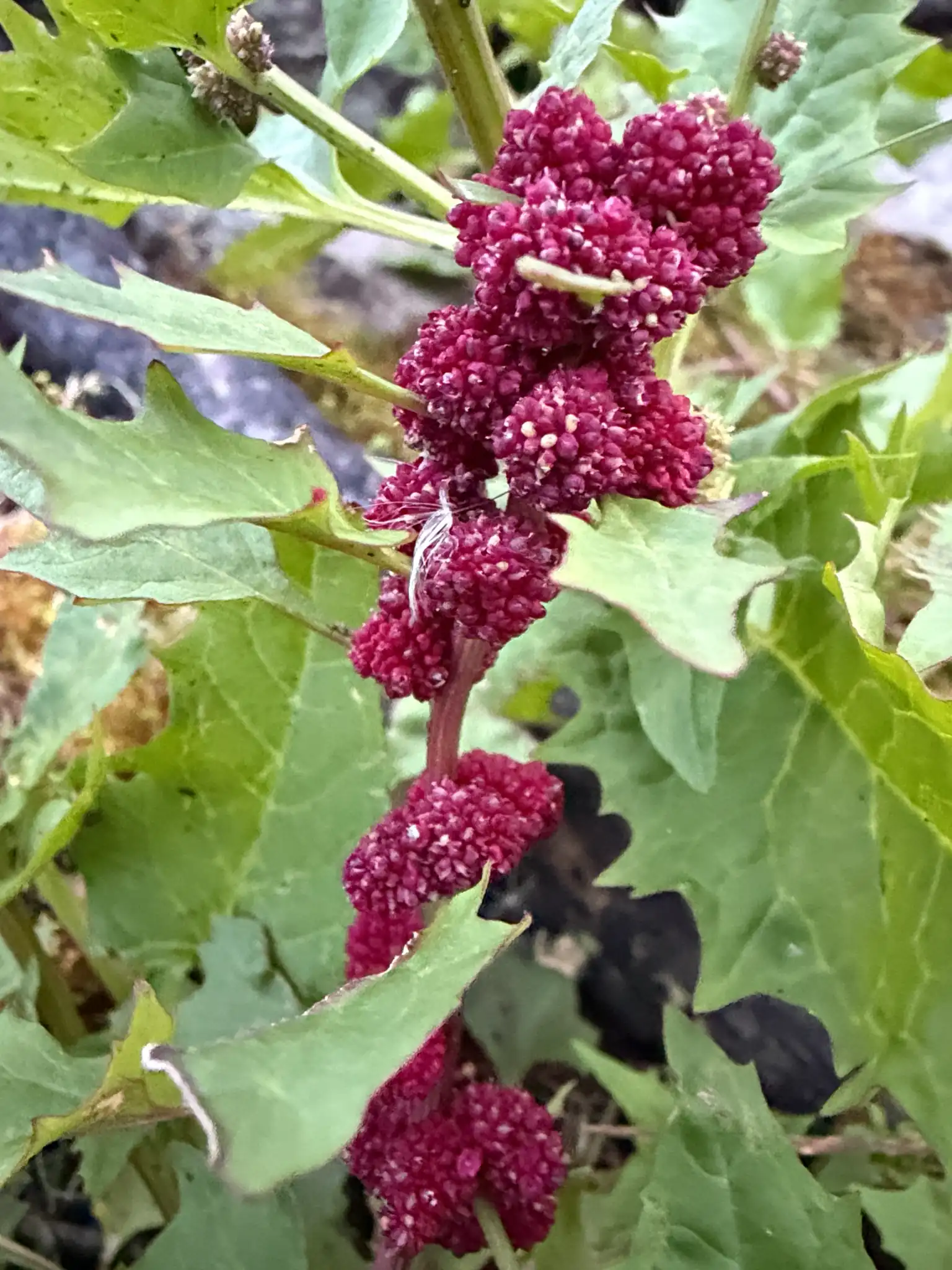
In late summer, inconspicuous flowers swell into fleshy, bright scarlet sepals that closely resemble small wild strawberries lining the leaf axils. These eye-catching fruiting clusters provide visual interest in edible beds and serve as a food source for seed- and fruit-eating birds.
Uses & Benefits:
Essentials
At a Glance
Plant Type
Annual
Height
39"
Width
16"
Light
Full Sun, Partial Sun
Zones
4, 5, 6, 7, 8, 9, 10
Water
Average to low
Humidity
Adaptable
Lifespan
Annual
Native To
North America
Toxicity
Contains oxalates; seeds toxic in very large quantities
Bloom period
Summer
In flower about 3 months of the year
Planting
How to Grow
- Select a site receiving full sun to light shade with well-draining soil.
- Sow seeds directly onto lightly raked, moist soil in early spring.
- Water gently to keep the seedbed barely moist until germination occurs.
- Thin emerging seedlings to ten inches apart to allow room for branched stem development.
Pro Tip
Sow seed directly into moist, disturbed soil in early spring; once established, avoid overwatering to protect the taproot from rot.
Keep It Thriving
Care Guide
Do
- Allow plants to drop seed at the end of the season if self-sowing is desired.
- Provide well-drained loamy or sandy soil to encourage deep taproot growth.
Don't
- Do not overwater or let soil stay waterlogged, which triggers root rot.
- Do not prune into older woody tissue, as soft-stemmed annuals do not recover.
Seasonal Care Calendar
| Task | Jan | Feb | Mar | Apr | May | Jun | Jul | Aug | Sep | Oct | Nov | Dec |
|---|---|---|---|---|---|---|---|---|---|---|---|---|
| Harvest | ||||||||||||
| Pest Check | ||||||||||||
| Plant | ||||||||||||
| Winter Prep |
Watch Out For
Pests & Diseases
Common Pests
Common Diseases
In the Garden
Landscape Uses & Companions
Landscape Uses
Companion Plants
Multiply
Propagation Methods
Good to Know
Common Questions
Strawberry Spinach questions
What zones can Strawberry Spinach grow in?
Strawberry Spinach is an annual: it grows, flowers and sets seed in one season, so winter cold doesn't limit where it grows. Gardeners in any zone can grow it by planting at the right time, usually after the last spring frost.
Is Strawberry Spinach deer resistant?
Not reliably. Deer may browse Strawberry Spinach, especially tender spring growth — plan on repellents or fencing where pressure is high.
When does Strawberry Spinach bloom?
Strawberry Spinach typically blooms in summer. Exact timing shifts a week or two with your zone — Sow's bloom calendar maps it to your garden.
Does Strawberry Spinach need full sun?
Strawberry Spinach does best in full sun to part shade. In hot climates, afternoon shade keeps blooms fresher longer.
Is Strawberry Spinach drought tolerant?
Yes — once established (usually after the first full season), Strawberry Spinach handles dry spells with minimal watering. Water deeply its first year to build the root system that makes that possible.
Keep exploring
Explore the genus
Grow Strawberry Spinach with confidence
See it in a design of your actual yard, get zone-matched care reminders, and track it season by season in your garden journal.