The Story
Plant Bio
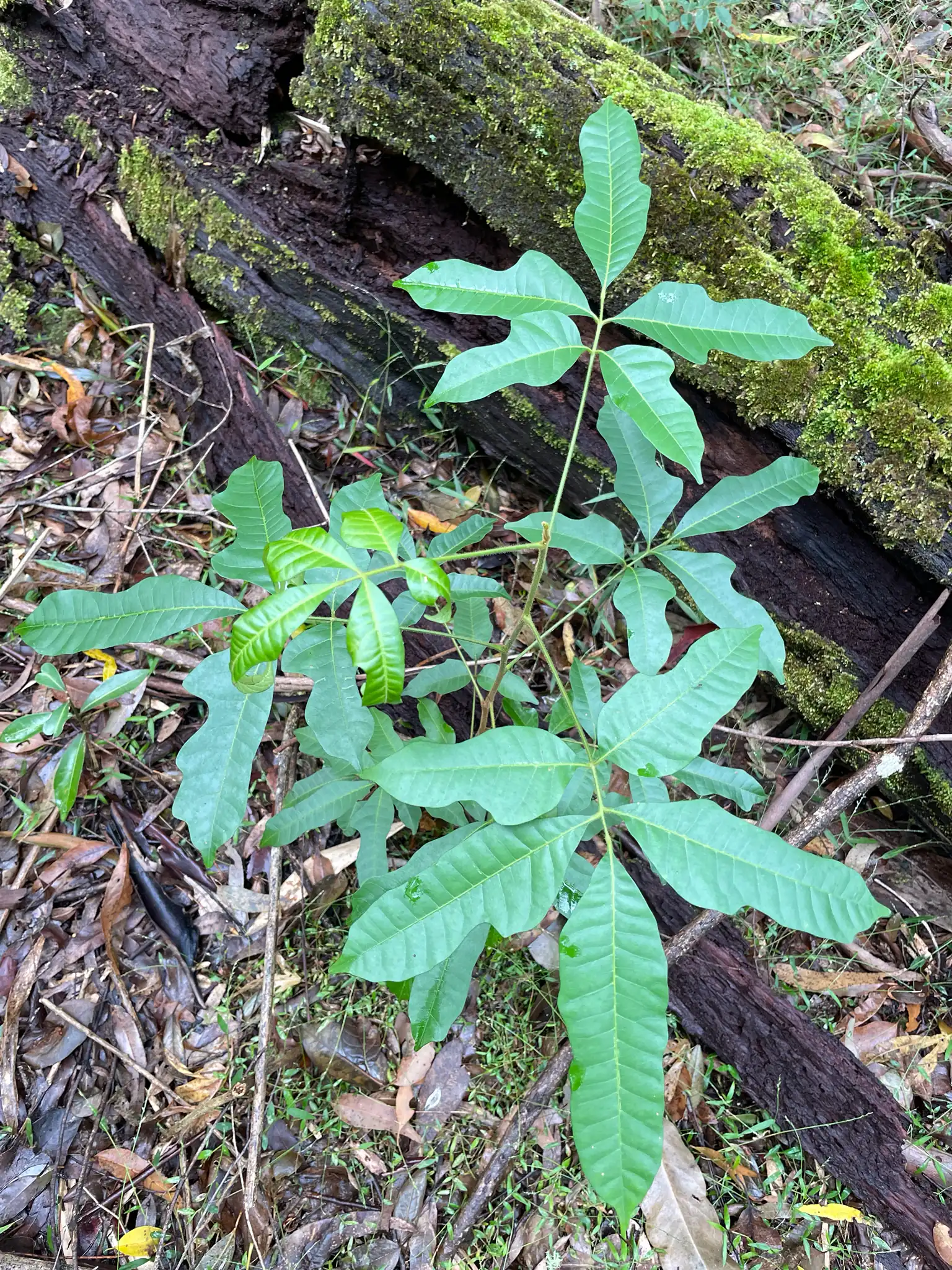
Rhodosphaera rhodanthema is an evergreen tree native to Australian subtropical and dry rainforests, developing an upright form with a rounded canopy up to forty feet tall in cultivation. Its compound foliage consists of glossy deep green leaflets with rusty-haired undersides, preceded by deeply lobed oak-like juvenile leaves on young shoots.
This dioecious species produces large panicles of small pinkish-red flowers in spring, followed by persistent shiny brown fruit clusters on female trees when a male pollinator is present. Damaged stems exude a sticky white latex sap that irritates the skin.
Uses & Benefits:
Essentials
At a Glance
Plant Type
Tree
Height
472"
Width
472"
Light
Full Sun, Partial Sun
Zones
10
Water
Low to Moderate
Humidity
High
Lifespan
Perennial
Native To
Eastern Australia
Toxicity
Skin irritant latex sap
Bloom period
Spring
In flower about 3 months of the year
Planting
How to Grow
- Select a planting site in full sun or light shade with well-drained soil.
- Dig a hole twice as wide as the container root ball and set the stem at its original planting depth.
- Backfill with native soil and soak the root zone thoroughly after planting.
- Apply a two-inch layer of organic mulch around the base while keeping it away from the trunk bark.
Pro Tip
Nicking or soaking the hard seed coats for 48 hours prior to sowing in warm, well-drained media is required to break seed dormancy and achieve uniform germination.
Keep It Thriving
Care Guide
Do
- Ensure soil drains freely to prevent root rot pathogens.
- Protect young, establishing plants from cold winter winds and frost.
- Wear gloves when pruning to avoid contact with irritating latex sap.
Don't
- Do not plant in low-lying sites prone to standing water or waterlogging.
- Do not prune heavily into old, leafless wood.
- Do not over-fertilize, as establishing trees require minimal supplemental nutrients.
Seasonal Care Calendar
| Task | Jan | Feb | Mar | Apr | May | Jun | Jul | Aug | Sep | Oct | Nov | Dec |
|---|---|---|---|---|---|---|---|---|---|---|---|---|
| Fertilize | ||||||||||||
| Pest Check | ||||||||||||
| Propagate | ||||||||||||
| Prune |
Watch Out For
Pests & Diseases
Common Pests
Common Diseases
In the Garden
Landscape Uses & Companions
Landscape Uses
Multiply
Propagation Methods
Good to Know
Common Questions
Deep Yellowwood questions
What zones can Deep Yellowwood grow in?
Deep Yellowwood is hardy in USDA Zone 10: in that range it survives winter in the ground. Colder than Zone 10, winters are too cold for it to survive outdoors.
When does Deep Yellowwood bloom?
Deep Yellowwood typically blooms in spring. Exact timing shifts a week or two with your zone — Sow's bloom calendar maps it to your garden.
Does Deep Yellowwood need full sun?
Deep Yellowwood does best in full sun to part shade. In hot climates, afternoon shade keeps blooms fresher longer.
Is Deep Yellowwood drought tolerant?
Yes — once established (usually after the first full season), Deep Yellowwood handles dry spells with minimal watering. Water deeply its first year to build the root system that makes that possible.
Keep exploring
Explore the genus
Hardy in your zone?
Grow Deep Yellowwood with confidence
See it in a design of your actual yard, get zone-matched care reminders, and track it season by season in your garden journal.