The Story
Plant Bio
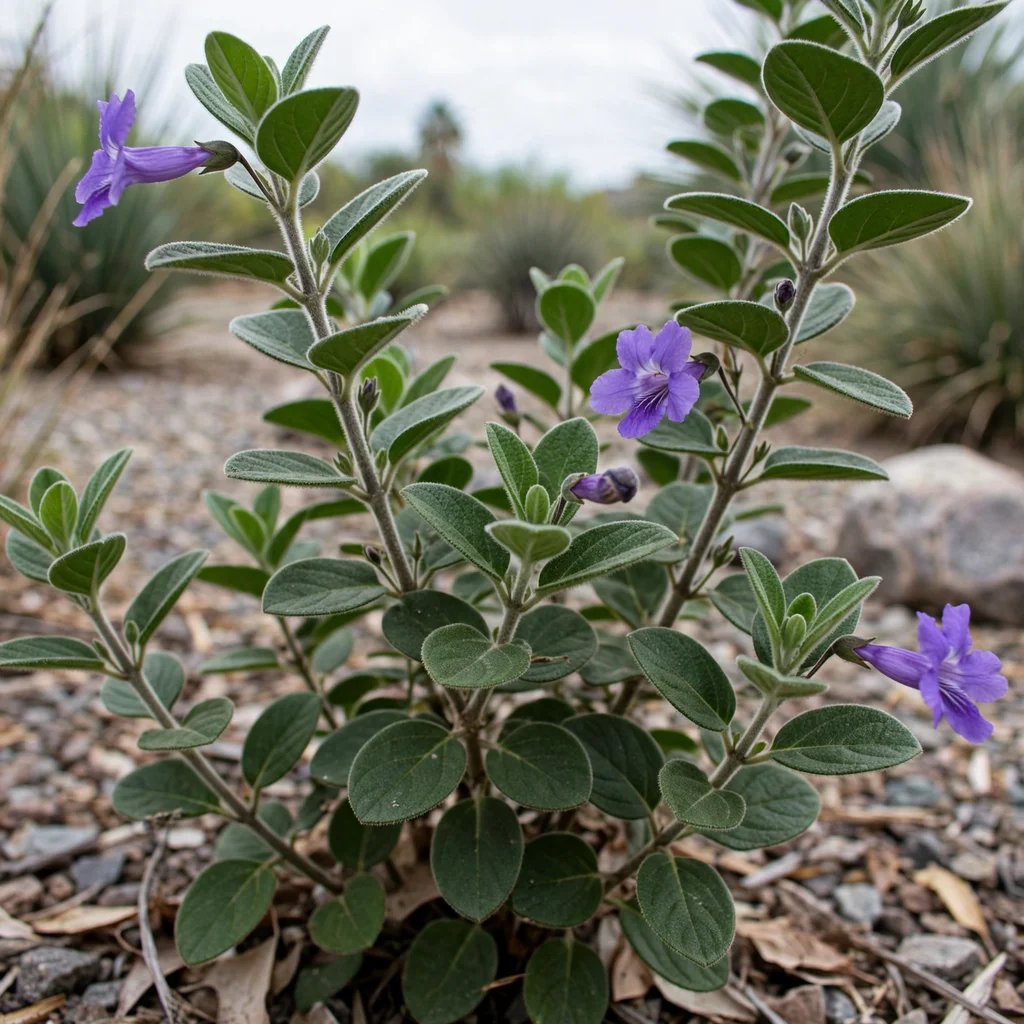
Ruellia peninsularis is an evergreen to semi-deciduous woody shrub from the Sonoran Desert, forming an upright to rounded mound three to four feet tall with wiry bright gray stems. Leaves are opposite, one-inch ovate to lance-shaped and softly hairy when young, and tubular funnel-shaped violet-purple flowers about one inch wide open singly or in pairs from the leaf axils.
Unlike the aggressive Mexican petunia sold as Ruellia simplex, it stays in place and does not readily self-seed, with smaller pale purple trumpets on purple stalks and dry dehiscent capsules. It holds up to reflected heat, drought and frost to about 25 degrees, defoliating in hard cold and leafing back from the base in spring.
Uses & Benefits:
Essentials
At a Glance
Plant Type
Shrub
Height
48"
Width
36"
Light
Full Sun
Zones
9, 10
Water
Low
Humidity
Low
Lifespan
Long-lived shrub
Native To
Baja California and Sonora, Mexico
Toxicity
Non-toxic
Bloom period
Spring – Fall
In flower about 9 months of the year
Marketplace
Where to Buy
Shipping costs Year-round shipping Free shipping
Planting
How to Grow
- Plant in full sun in sharply drained sandy, rocky or loam soil, spacing 3 feet apart for a hedge.
- Dig the hole no deeper than the pot and set the crown level, backfilling with native soil.
- Water deeply at planting, then water sparingly once established, letting soil dry between waterings.
- Top with a thin gravel mulch and keep water away from the crown in winter.
Pro Tip
Head back lightly in spring after the last frost to thicken growth; shearing it into tight tables forces weak regrowth and fewer flowers.
Keep It Thriving
Care Guide
Do
- Give full sun and sharp drainage to keep flowering strong.
- Water deeply but infrequently once established.
- Head back lightly in spring to increase density.
Don't
- Do not plant in shade, which produces oversized leaves and few flowers.
- Do not overwater or keep soil soggy, which causes yellow chlorotic growth.
- Do not shear routinely into tight tables or beer-keg shapes.
Seasonal Care Calendar
| Task | Jan | Feb | Mar | Apr | May | Jun | Jul | Aug | Sep | Oct | Nov | Dec |
|---|---|---|---|---|---|---|---|---|---|---|---|---|
| Deadhead | ||||||||||||
| Plant | ||||||||||||
| Propagate | ||||||||||||
| Prune |
Watch Out For
Pests & Diseases
Common Pests
Common Diseases
In the Garden
Landscape Uses & Companions
Landscape Uses
Multiply
Propagation Methods
Good to Know
Common Questions
Baja Ruellia questions
What zones can Baja Ruellia grow in?
Baja Ruellia is hardy in USDA Zones 9–10: in that range it survives winter in the ground. Colder than Zone 9, grow it in a container you can move to shelter for the winter.
When does Baja Ruellia bloom?
Baja Ruellia typically blooms from spring to fall. Exact timing shifts a week or two with your zone — Sow's bloom calendar maps it to your garden.
Does Baja Ruellia need full sun?
Baja Ruellia does best in full sun (6+ hours).
Is Baja Ruellia drought tolerant?
Yes — once established (usually after the first full season), Baja Ruellia handles dry spells with minimal watering. Water deeply its first year to build the root system that makes that possible.
More Ruellia to compare
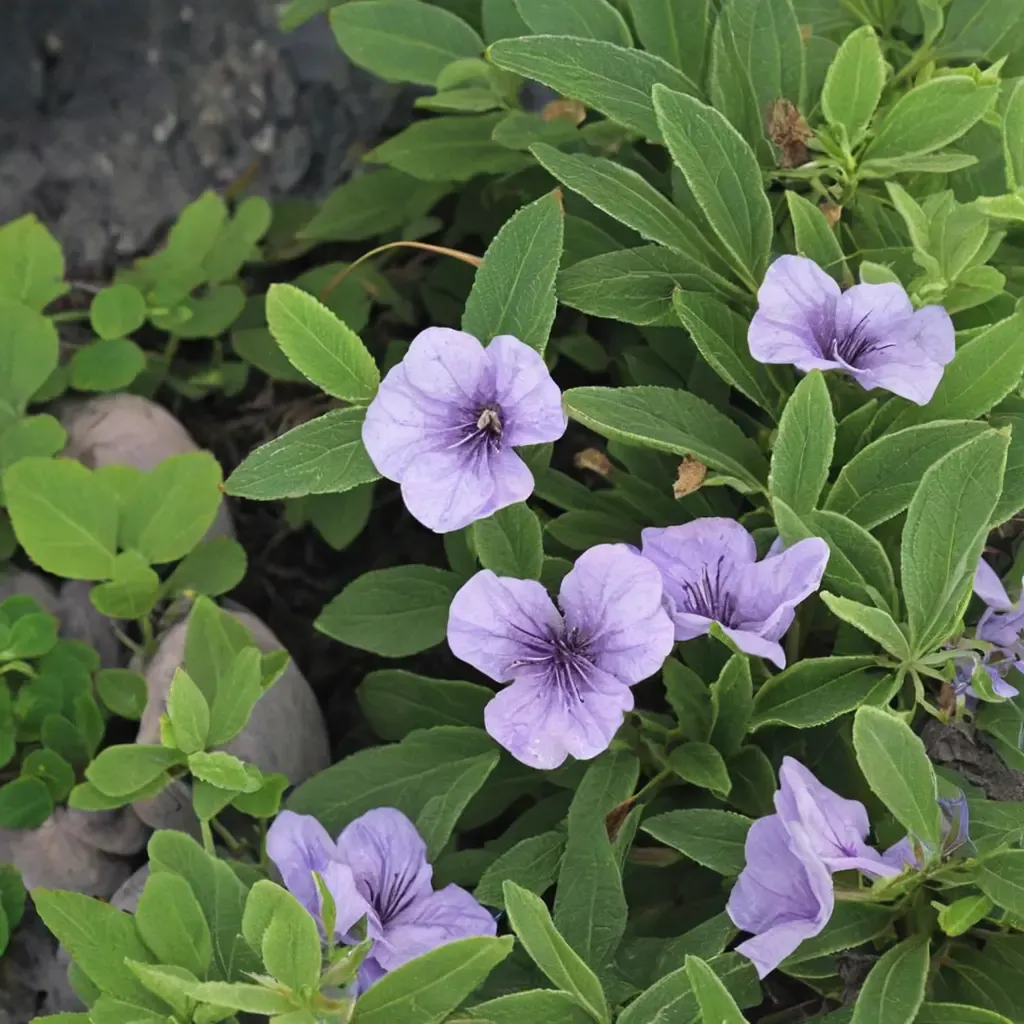
Wild Petunia
Ruellia humilis
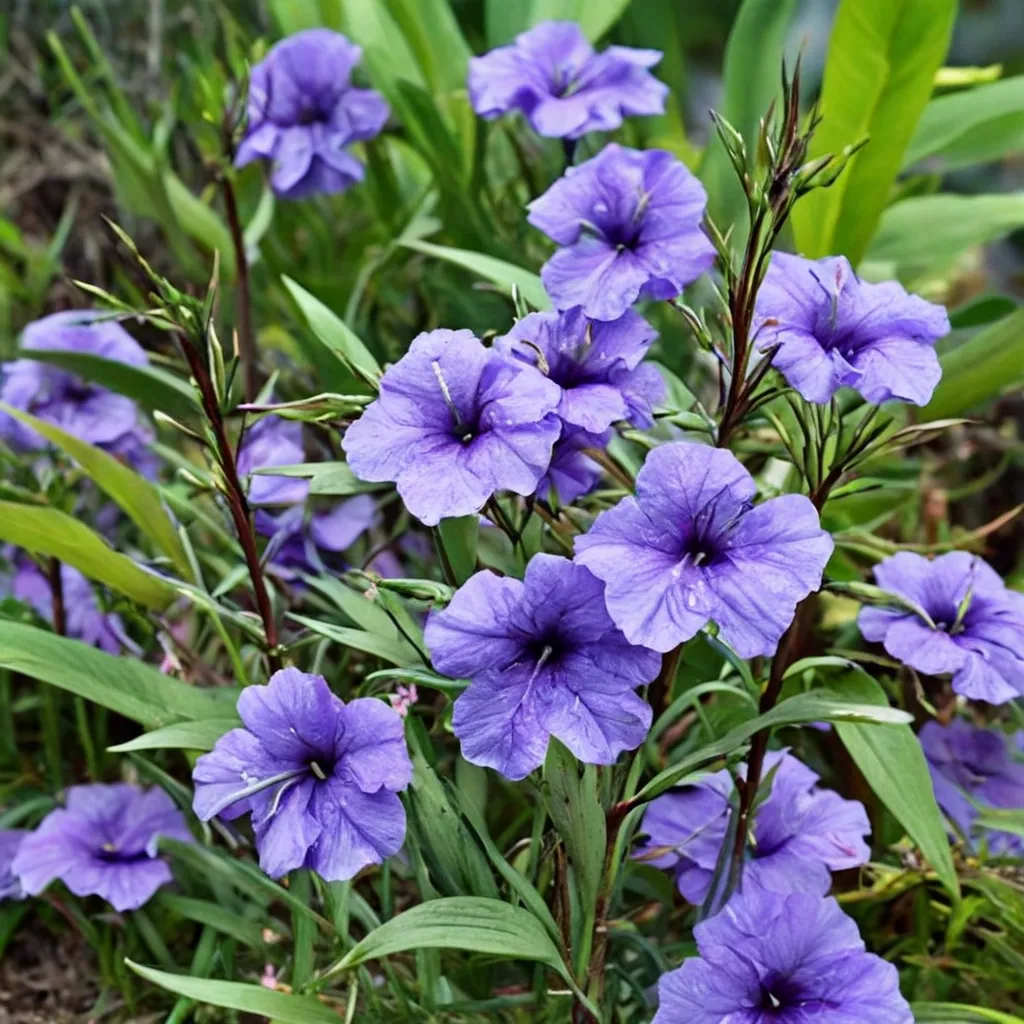
Tall Purple Ruellia
Ruellia brittoniana 'Tall Purple Form'
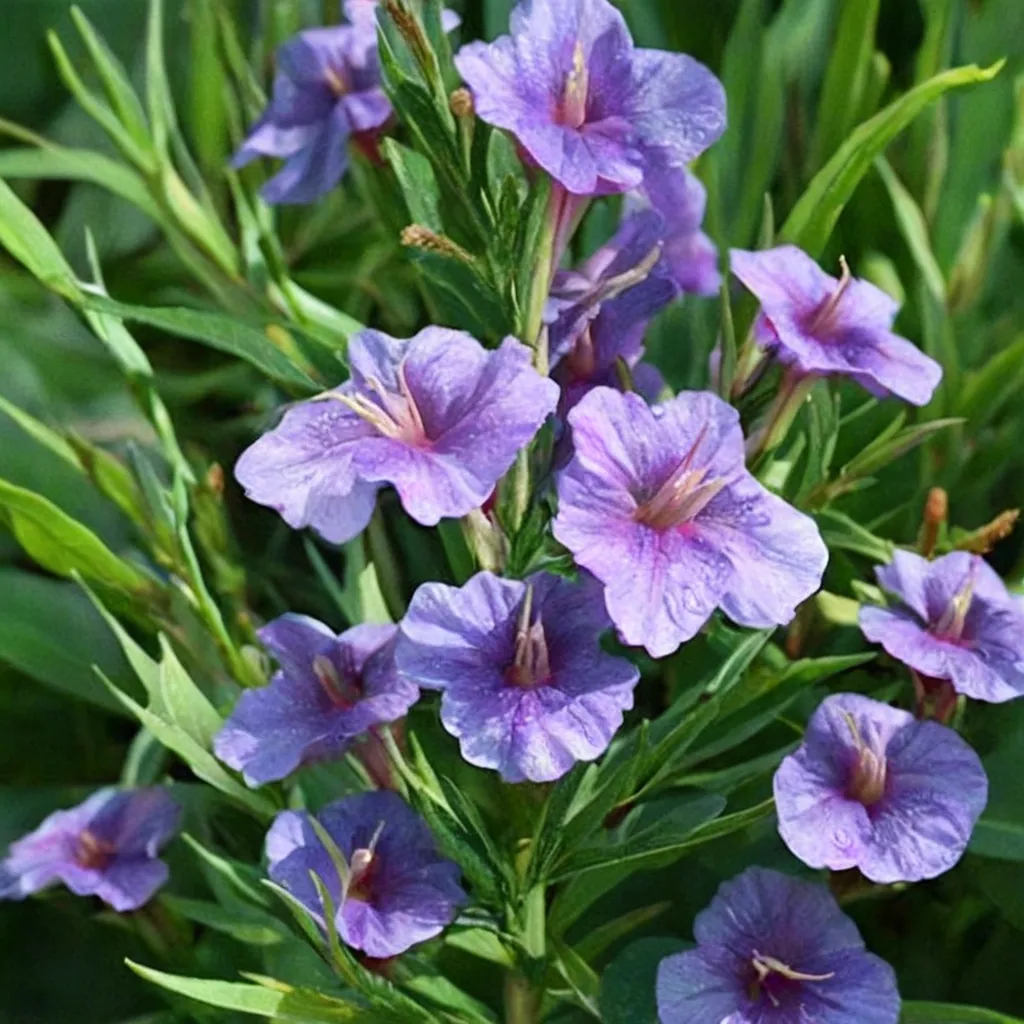
Ruellia Strawberries and Cream
Ruellia brittoniana 'Strawberries and Cream'
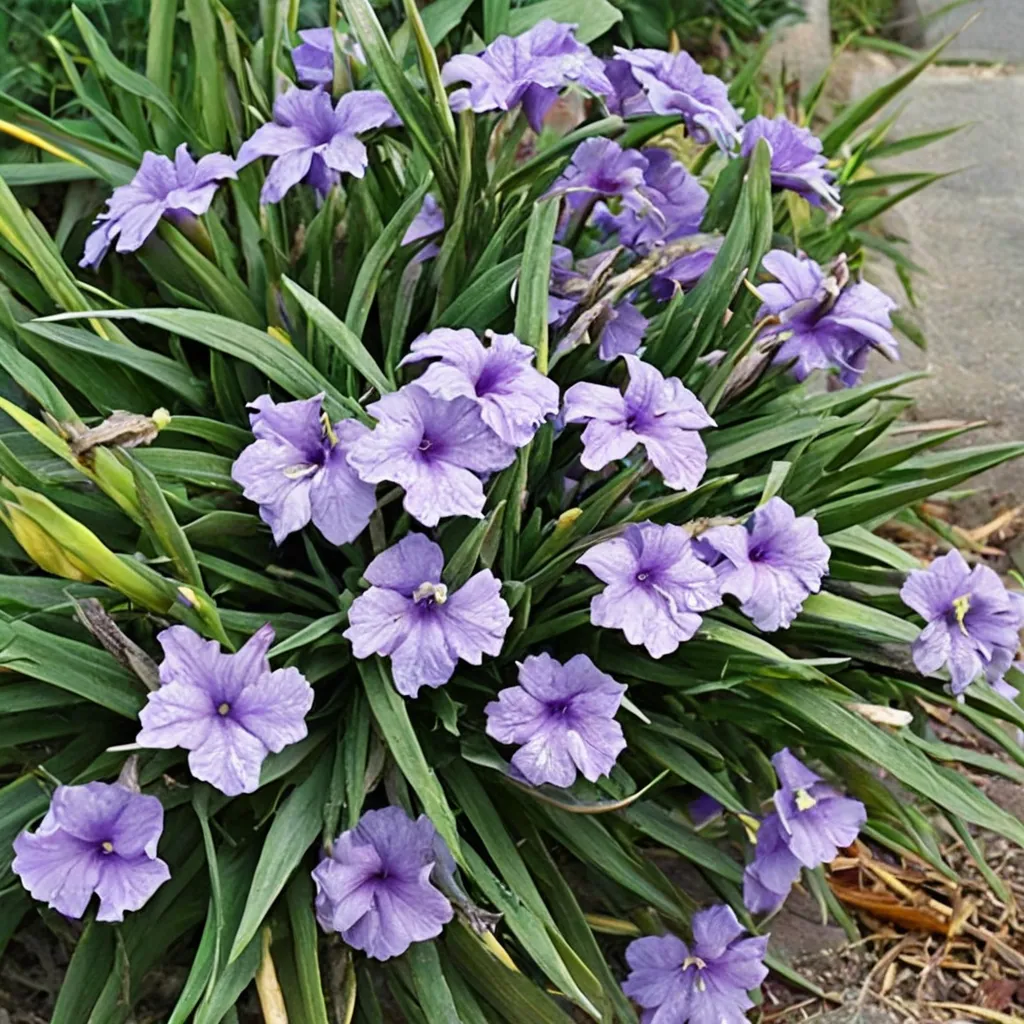
Katie Ruellia
Ruellia brittoniana 'Katie'
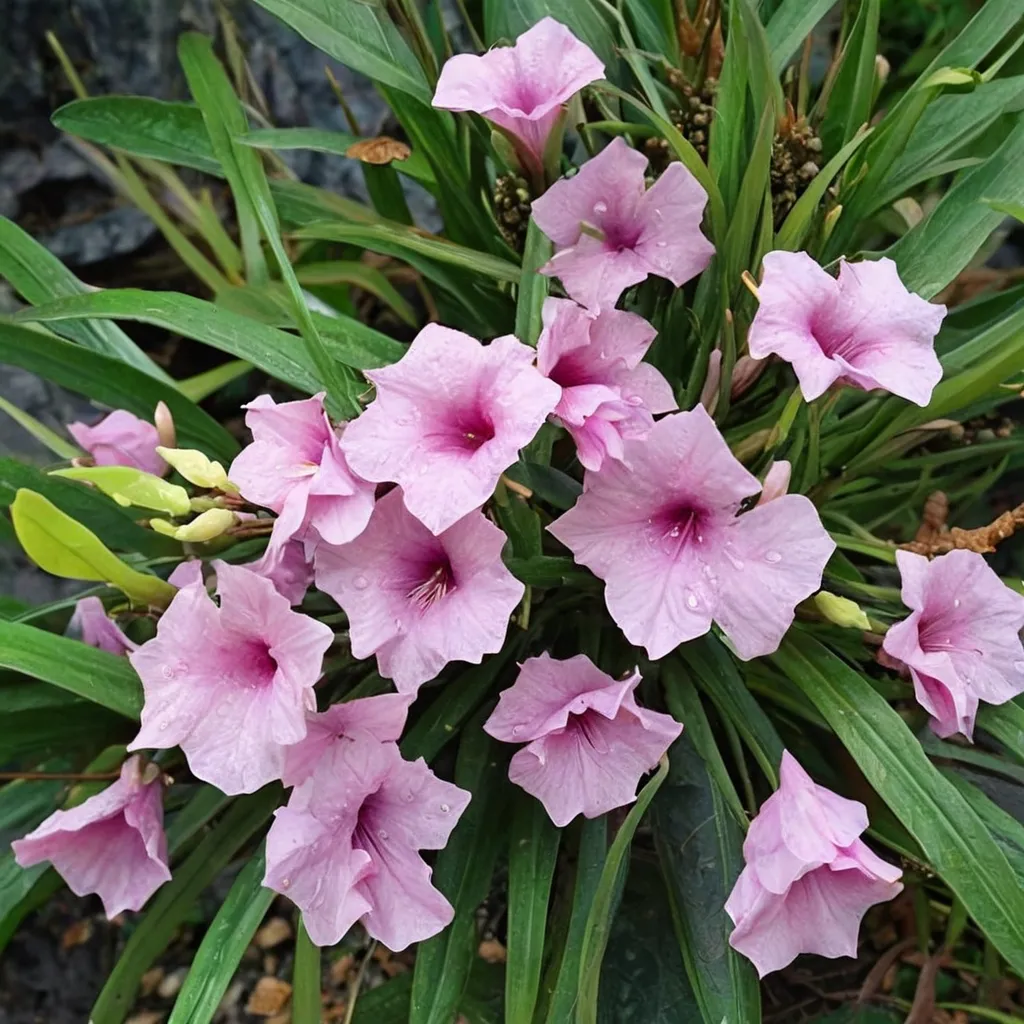
Pink Mexican Petunia
Ruellia brittoniana 'Colobe Pink'
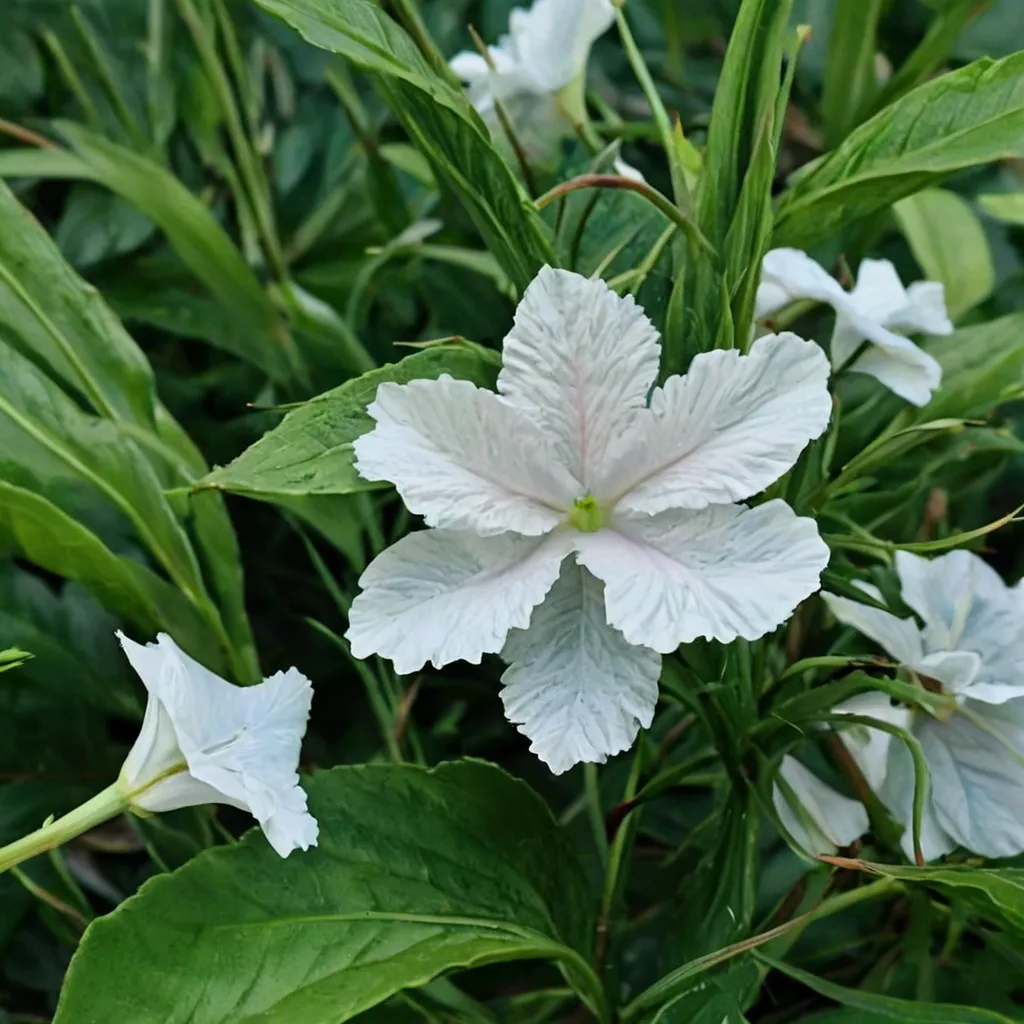
White Wild Petunia
Ruellia malacosperma 'White Flower Form'
Keep exploring
Explore the genus
Hardy in your zone?
Grow Baja Ruellia with confidence
See it in a design of your actual yard, get zone-matched care reminders, and track it season by season in your garden journal.