0 saves
Fouquieria
We track 3 varieties; the ones most used by real gardeners.
The 3 most-saved Fouquieria varieties
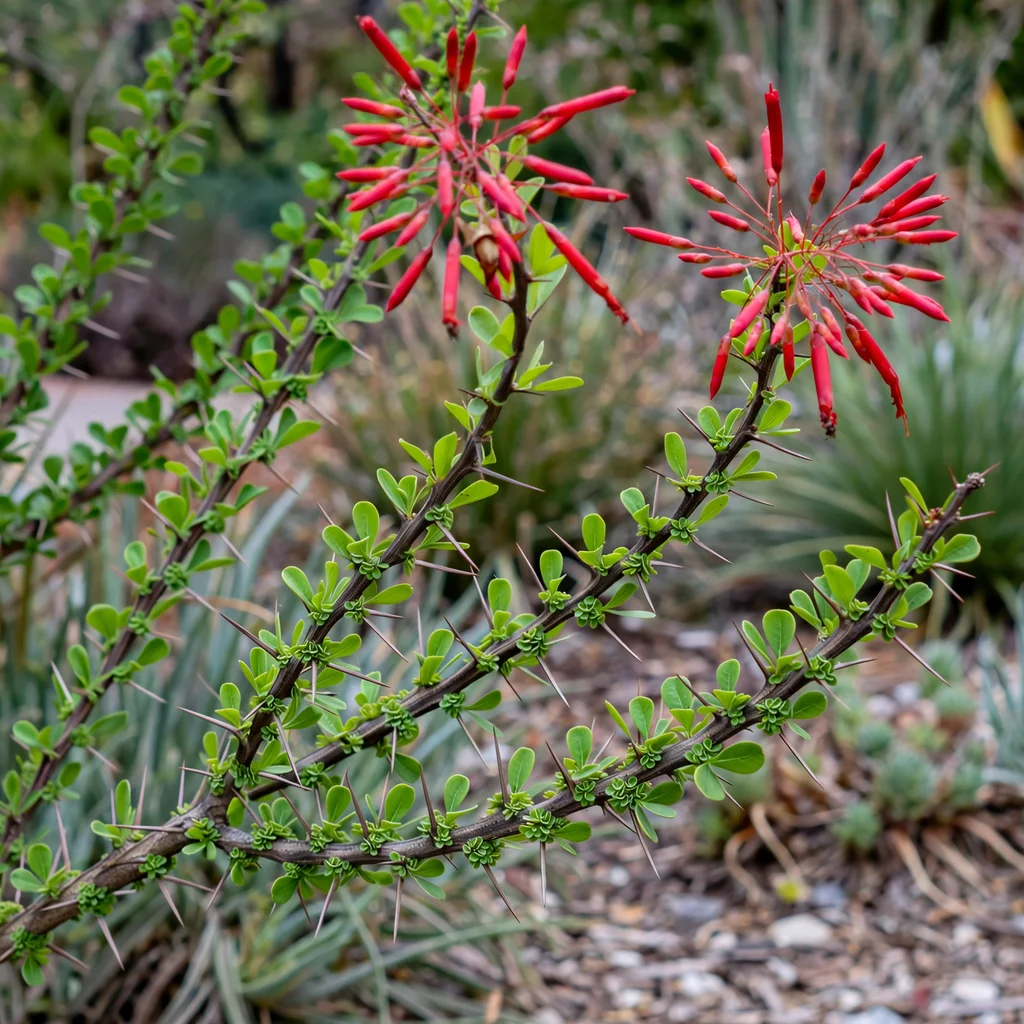
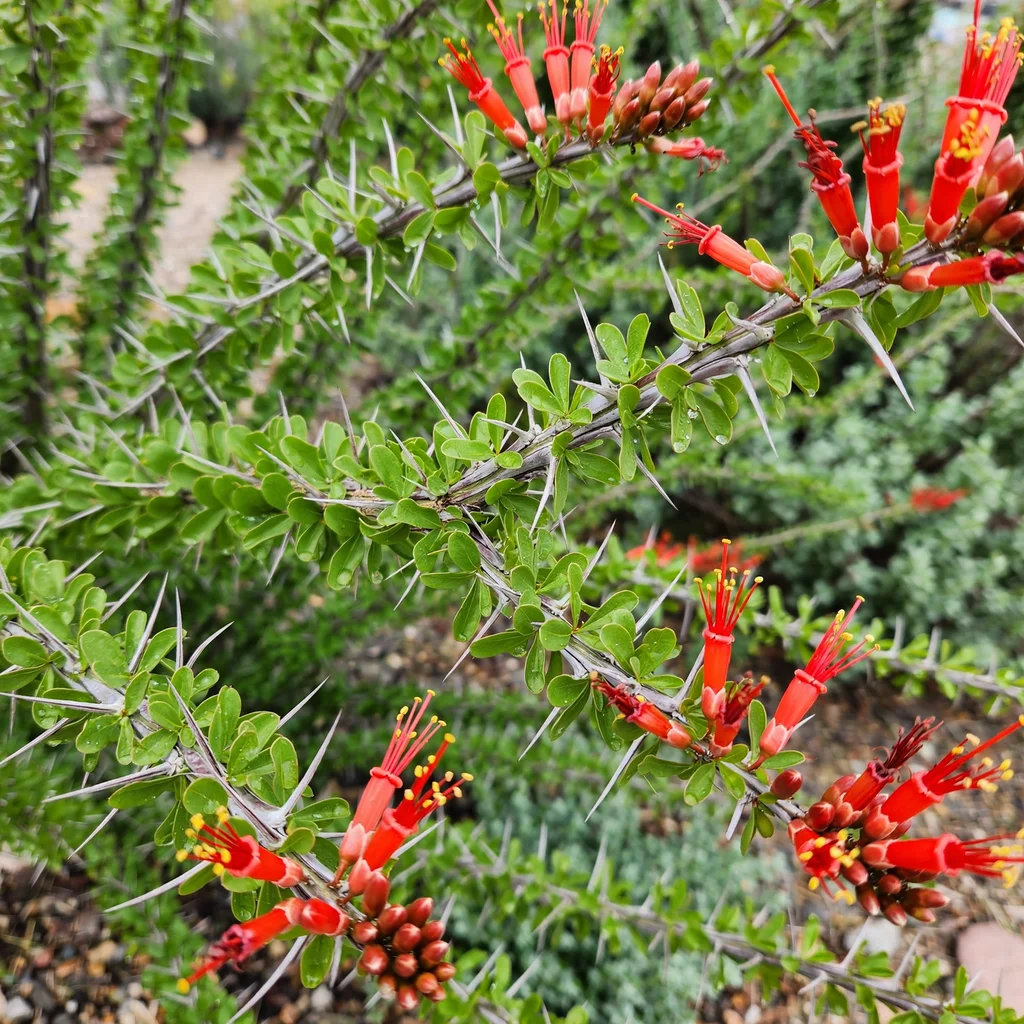
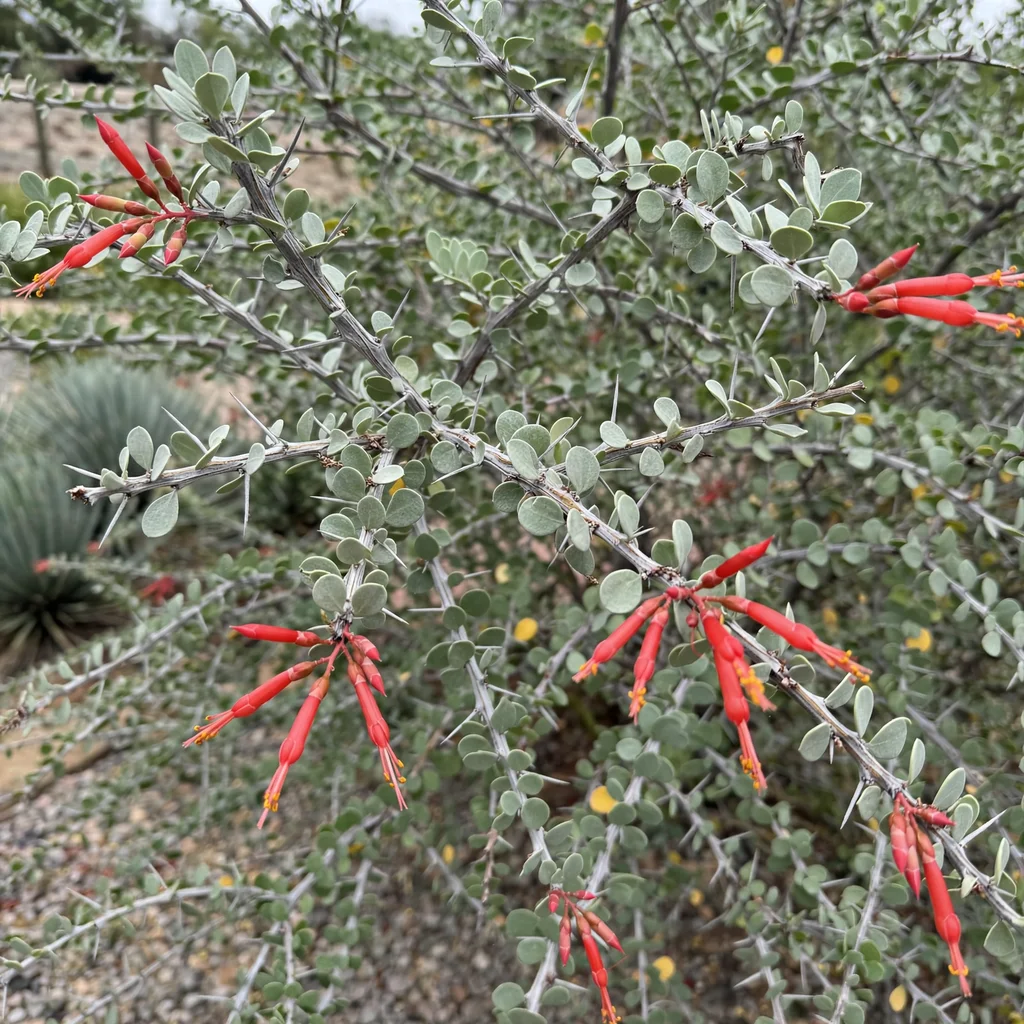
3 species of Fouquieria
Each one is a parent of the varieties above.
Track your Fouquieria in Sow
Save the Fouquieria you grow and get care reminders timed to your zone.
How to grow Fouquieria
Whats common across all Fouquieria varieties in our catalog — drawn from the care records of the 3 most-grown of them.
The Fouquieria year
- PlantMarch and April100% of varieties
Plant container stock after frost danger in sharply drained soil by a south wall.
- PruneMay and June100% of varieties
Prune to shape after spring bloom; cut back wayward canes to encourage branching.
- Check for PestsJune and July100% of varieties
Check canes and spine bases for scale during hot dry weather.
- Winter PrepNovember and December100% of varieties
Withhold water and confirm sharp drainage; shelter containers before hard frost.


Do
- Give full sun and freely circulating air.
- Use very well-drained soil, especially in containers.
- Water deeply but infrequently to trigger leafing and bloom.
- Give maximum sun and heat with open air movement
- Use a gritty mineral mix or rockery pocket with fast drainage
Avoid
- Do not overwater when leafless or in winter cold.
- Do not plant in heavy clay or low spots that stay wet.
- Do not cut hard into old bare trunks expecting dense regrowth.
- Do not water on schedule when leafless or in cold wet soil
What goes wrong with Fouquieria
| Problem | What you'll see | What to do |
|---|---|---|
| Scale insects | Raised bumps on canes and leaf bases with sticky residue; rarely serious on healthy plants. | Wipe off light infestations or prune affected cane tips; improve air flow and avoid overhead watering. |
| Mealybugs | White cottony masses in cane joints and leaf axils with sticky honeydew | Dab with alcohol, wash with insecticidal soap or neem and inspect new growth |
| Scale | Hard brown bumps on canes; yellowing and sticky residue | Scrape off, treat with horticultural oil or insecticidal soap and improve air flow |
| Desert jackrabbits and rodents | Chewed bark or missing tender new leaves along lower cane sections. | Install a temporary wire mesh barrier around the base of young or establishing plants. |
| Root rot | Soft or dark trunk base and collapsing canes in wet or poorly drained soil. | Grow only in sharply draining sandy or rocky soil with crown above grade; withhold water while leafless. |
| Powdery mildew | White-gray powdery coating on leaves and young stems | Improve air flow, keep foliage dry and thin lightly for circulation |
| Root and crown rot | Soft, discolored cane bases and rapid stem decay caused by excess soil moisture. | Plant on sloped mounds, amend planting site with coarse gravel, and eliminate supplemental irrigation during dormant periods. |
Making more Fouquieria
Seed
- Collect seed at maturity and sow soon after harvest in late summer.
- Sow thinly on gritty, well-drained mix and cover lightly.
- Keep warm with light moisture until germination, then reduce water.
- Grow on in bright sun and pot up before taproot binds.
Cuttings
- Take firm cane cuttings in warm weather.
- Let the cut end callus for several days in dry shade.
- Insert in sharply drained sand mix and water sparingly.
- Hold warm and bright until rooted, then transplant.
Fouquieria questions
How many types of Fouquieria are there?
The Sow catalog tracks 3 distinct Fouquieria varieties. The most popular — ranked by 0 real gardeners — are shown first above.
What zones does Fouquieria grow in?
Across its varieties, Fouquieria covers USDA Zones 8–10. Individual varieties differ — each plant page lists its exact range, and Sow filters the catalog to your zone automatically.
When does Fouquieria bloom?
Most Fouquieria varieties bloom from spring to fall.
Which Fouquieria should I choose?
Start from the most-saved varieties above — popularity across thousands of gardens is a strong signal of reliability — then filter by your zone and sun. In the Sow app you can preview any of them in a photo of your actual yard before you buy.