The Story
Plant Bio
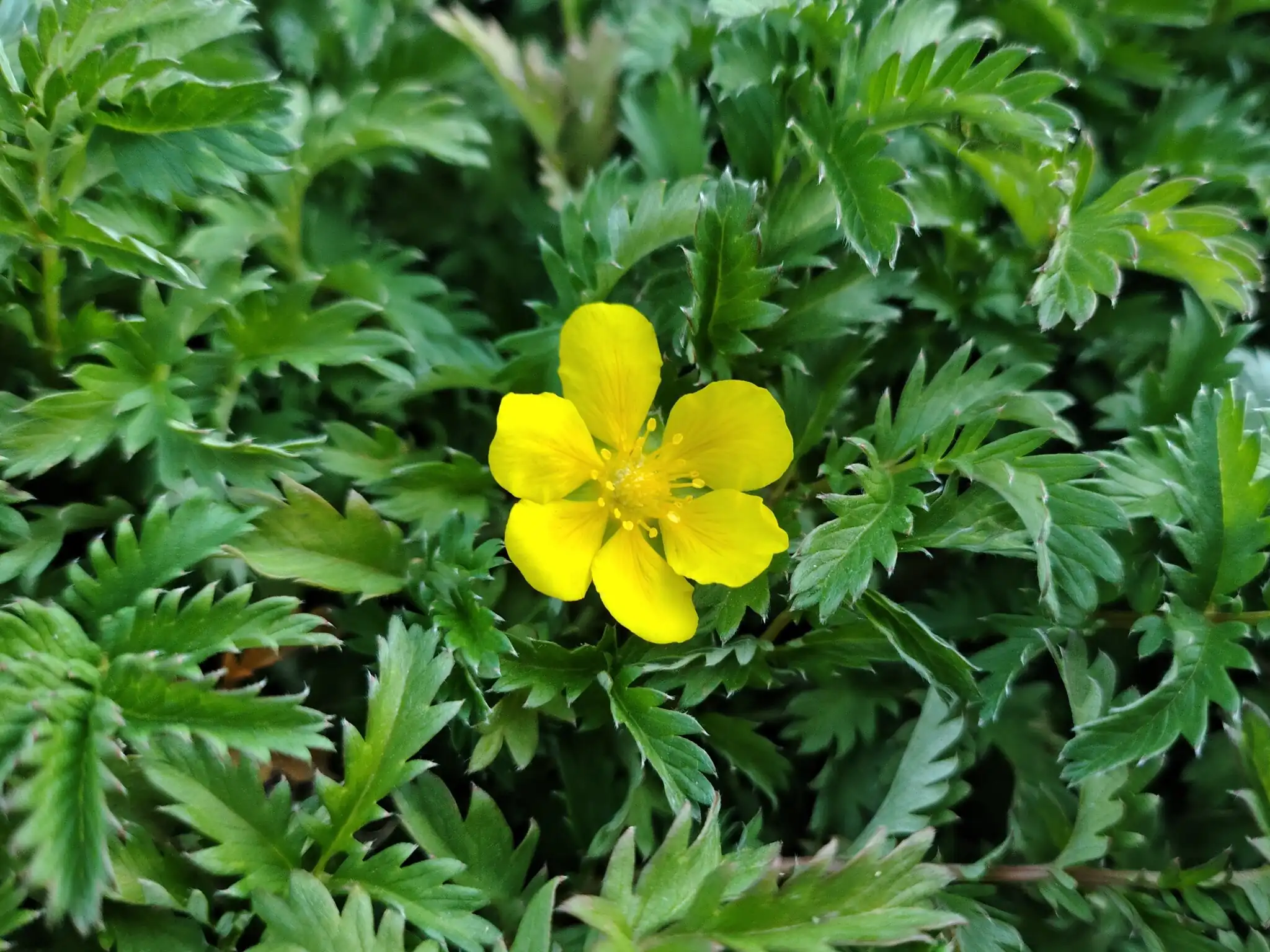
Argentina anserina is a prostrate herbaceous perennial that spreads indefinitely via long above-ground stolons to form a dense mat. The basal rosettes bear pinnately compound leaves with green upper surfaces and silvery-white, silky-hairy undersides, accompanied by shallow, bright yellow five-petaled flowers produced on leafless stalks.
The leaf undersides glisten when turned by wind, giving established colonies a distinct silvery sheen. Its extensive stoloniferous rooting makes it highly effective at binding soil in moist, saline, or periodically flooded depressions.
Uses & Benefits:
Essentials
At a Glance
Plant Type
Groundcover
Height
12"
Width
39"
Light
Full Sun, Partial Sun
Zones
4, 5, 6, 7
Water
Moist to wet
Humidity
Prefers cool northern climates
Lifespan
Perennial
Native To
Northern Hemisphere
Toxicity
Non-toxic
Bloom period
Late spring – Late summer
In flower about 4 months of the year
Planting
How to Grow
- Select a site in full sun or light shade with moist, clay-rich, or poorly drained soil.
- Space plants 12 to 18 inches apart to leave room for runner extension and node rooting.
- Settle plants into the soil at the depth of their container root ball and firm gently.
- Water thoroughly after planting and maintain moist soil conditions during root establishment.
Pro Tip
Deploy this species in poorly drained, heavy clay or brackish coastal sites where delicate groundcovers fail, and trim invading stolons with a spade rather than cutting into old leafless stems.
Keep It Thriving
Care Guide
Do
- Plant in wet ground, pond margins, or heavy clay depressions.
- Trim trailing stolons back with a spade along lawn boundaries.
- Allow soil to remain moist to wet during spring and summer growth.
Don't
- Do not plant in dense shade where stolons become sparse.
- Do not cut back into old, bare leafless wood.
- Do not apply heavy fertilizers, as average native soils supply sufficient nutrients.
Seasonal Care Calendar
| Task | Jan | Feb | Mar | Apr | May | Jun | Jul | Aug | Sep | Oct | Nov | Dec |
|---|---|---|---|---|---|---|---|---|---|---|---|---|
| Divide | ||||||||||||
| Prune | ||||||||||||
| Spring Cleanup | ||||||||||||
| Winter Prep |
Watch Out For
Pests & Diseases
Common Pests
Common Diseases
In the Garden
Landscape Uses & Companions
Landscape Uses
Companion Plants
Multiply
Propagation Methods
Good to Know
Common Questions
Common Silverweed questions
What zones can Common Silverweed grow in?
Common Silverweed is hardy in USDA Zones 4–7: in that range it survives winter in the ground. Warmer than Zone 7, winter isn't the problem: it prefers colder winters, and summer heat can shorten its life.
Is Common Silverweed deer resistant?
Not reliably. Deer may browse Common Silverweed, especially tender spring growth — plan on repellents or fencing where pressure is high.
When does Common Silverweed bloom?
Common Silverweed typically blooms from late spring to late summer. Exact timing shifts a week or two with your zone — Sow's bloom calendar maps it to your garden.
Does Common Silverweed need full sun?
Common Silverweed does best in full sun to part shade. In hot climates, afternoon shade keeps blooms fresher longer.
Is Common Silverweed drought tolerant?
Yes — once established (usually after the first full season), Common Silverweed handles dry spells with minimal watering. Water deeply its first year to build the root system that makes that possible.
Keep exploring
Explore the genus
Hardy in your zone?
Grow Common Silverweed with confidence
See it in a design of your actual yard, get zone-matched care reminders, and track it season by season in your garden journal.