The Story
Plant Bio
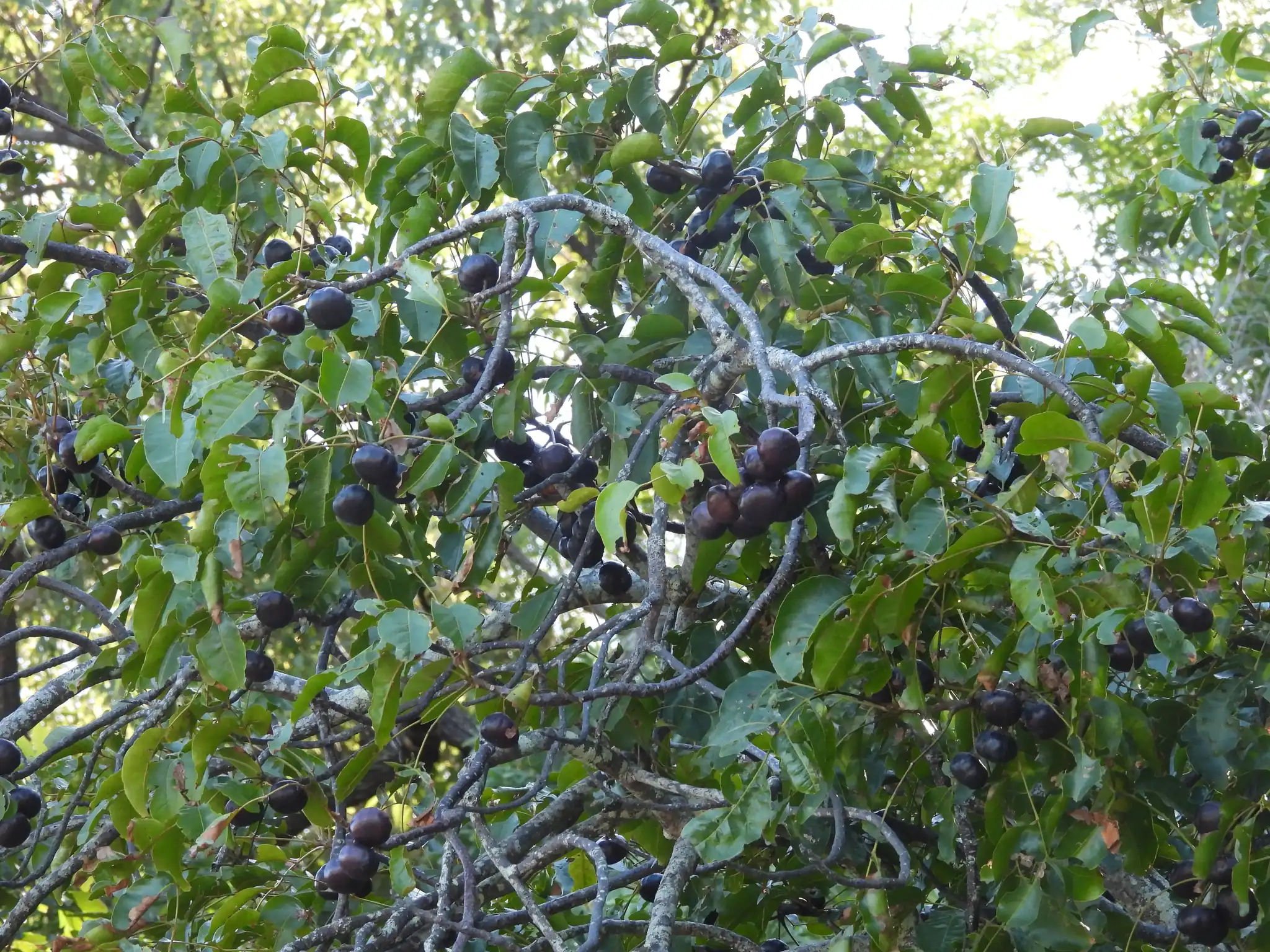
Pleiogynium timoriense, commonly known as the Burdekin plum, is a large evergreen tree native to tropical rainforests and coastal regions of Queensland, Malesia, and the Pacific islands. It forms a dense, bushy canopy up to forty feet tall in cultivated settings, featuring dark gray bark, gently weeping branchlets, and glossy pinnate foliage.
Dioecious in nature, individual trees produce separate male or female clusters of tiny yellow-green flowers followed on female trees by heavy crops of purple-black, pumpkin-shaped stone fruits. The firm, tart flesh surrounding a massive hard stone softens after picking, yielding a sweet-sour fruit traditionally processed into preserves.
Uses & Benefits:
Essentials
At a Glance
Plant Type
Tree
Height
472"
Width
354"
Light
Full Sun
Zones
10
Water
Low
Humidity
High
Lifespan
Perennial
Native To
Southeast Asia, Australia, Pacific Islands
Toxicity
Non-toxic
Bloom period
Summer – Fall
In flower about 6 months of the year
Planting
How to Grow
- Choose a full-sun location with deep, freely draining soil to allow proper taproot establishment.
- Dig a planting pit twice as wide as the root ball and set the crown flush with the surrounding soil grade.
- Water deeply at planting and maintain consistent soil moisture during the first year of growth.
- Apply a slow-release balanced fertilizer in early spring to support canopy development and leaf flushes.
Pro Tip
Plant male and female specimens together if fruit production is desired, as solitary female trees will not set viable seed or full crops without a cross-pollination partner.
Keep It Thriving
Care Guide
Do
- Provide full sun to maximize growth rate, flowering, and fruit development.
- Ensure excellent soil drainage to prevent root decay in wet weather.
- Store harvested fruit at room temperature for several days to soften before eating.
Don't
- Do not expose young saplings to hard frost or prolonged freezing temperatures.
- Do not plant in permanently waterlogged or soggy soils once established.
- Do not prune heavily into old, leafless wood.
Seasonal Care Calendar
| Task | Jan | Feb | Mar | Apr | May | Jun | Jul | Aug | Sep | Oct | Nov | Dec |
|---|---|---|---|---|---|---|---|---|---|---|---|---|
| Fertilize | ||||||||||||
| Harvest | ||||||||||||
| Mulch | ||||||||||||
| Pest Check | ||||||||||||
| Prune |
Watch Out For
Pests & Diseases
Common Pests
Common Diseases
In the Garden
Landscape Uses & Companions
Landscape Uses
Multiply
Propagation Methods
Good to Know
Common Questions
Burdekin Plum questions
What zones can Burdekin Plum grow in?
Burdekin Plum is hardy in USDA Zone 10: in that range it survives winter in the ground. Colder than Zone 10, winters are too cold for it to survive outdoors.
Is Burdekin Plum deer resistant?
Not reliably. Deer may browse Burdekin Plum, especially tender spring growth — plan on repellents or fencing where pressure is high.
When does Burdekin Plum bloom?
Burdekin Plum typically blooms from summer to fall. Exact timing shifts a week or two with your zone — Sow's bloom calendar maps it to your garden.
Does Burdekin Plum need full sun?
Burdekin Plum does best in full sun (6+ hours).
Is Burdekin Plum drought tolerant?
Yes — once established (usually after the first full season), Burdekin Plum handles dry spells with minimal watering. Water deeply its first year to build the root system that makes that possible.
Keep exploring
Explore the genus
Hardy in your zone?
Grow Burdekin Plum with confidence
See it in a design of your actual yard, get zone-matched care reminders, and track it season by season in your garden journal.